

 Copy to clipboard

As a Wall Street analyst covering the orthopedic industry, Jeff Frelick knew the potential for orthobiologics to become an important area of innovation. When he learned about Bone Biologics’ rhNELL-1-based bone graft, he saw an opportunity to help bring the technology out of the lab and into the market. That was 11 years ago.
Today, Bone Biologics is working to reach a major milestone: completing enrollment in its first-in-human pilot clinical trial for NB1. The bone graft combines the NELL-1 protein with demineralized bone matrix.
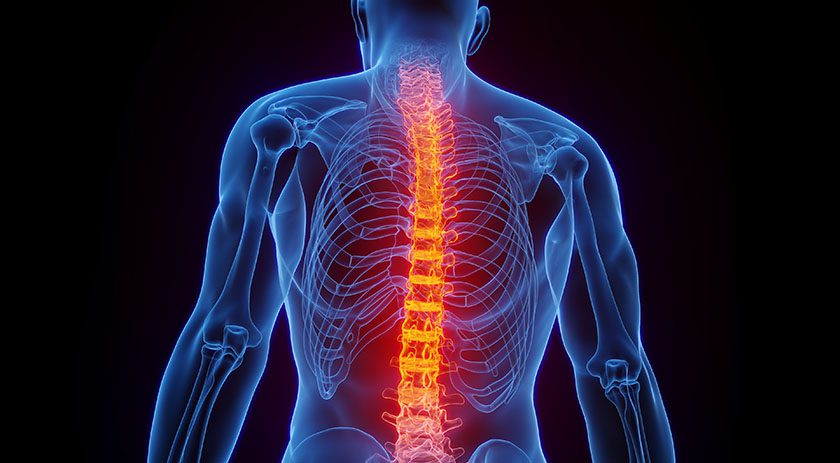
In early September, Bone Biologics announced it expanded its trial to six hospital sites in Australia with the goal of enrolling 30 patients by the end of 2026. The trial is evaluating the safety and preliminary effectiveness of NB1 in adults with degenerative disc disease who are undergoing transforaminal lumbar interbody fusion. The primary clinical endpoints include fusion success at 12 and 24 months following surgery and change from baseline in the Oswestry Disability Index.
Bone Biologics expects to report 12-month data from the trial in the fourth quarter of 2027. The company then plans to submit an Investigational Device Exemption application to FDA to conduct a pivotal trial in the U.S., followed by a Premarket Approval application.
The NELL-1 protein Bone Biologics uses is naturally occurring in the body and operates later in the bone formation pathway than other growth factors, ensuring that bone growth only occurs at the site of injury, which reduces the risk of inflammation or unwanted tissue formation. We spoke with Mr. Frelick, CEO and President of Bone Biologics, about the company’s technology, as well as its current priorities and what it will take to be a successful orthobiologics startup in today’s market.
Excerpts from our conversation follow, and were edited for clarity and brevity.
Why did the company pick NELL-1 over other proteins to build its technology strategy around?
Mr. Frelick: The technology actually picked the company. Researchers out of UCLA and Osaka, Japan, were studying craniosynostosis, which is the premature closure of an infant’s skull, when they discovered that the NELL-1 protein was upregulated in these patients.
It changed their thinking to ask, ‘Where can this protein help us grow bones?’ And they decided to look at orthopedics. They started the company in 2004, and we now have more than 45 peer-reviewed publications. Most startups have two or three publications. Our mechanism of action is very well studied.
The earlier researchers didn’t know how to bring the technology to market and work through the clinical and regulatory pathways. When I came to the company, the technology was still on the research bench, and we started moving it into true manufacturing and regulatory discussions.
How do you describe the technology?
Mr. Frelick: We’re developing a technology that helps patients grow bone. We licensed the technology from UCLA and have exclusive worldwide rights for spine fusion, trauma, and osteoporosis. While it is a platform technology, we’re laser-focused on spine fusion.
We decided to focus on spine because it’s the hardest healing environment in the body. The founders’ early work was also in spine models and small animal studies. We discussed starting with craniomaxillofacial or another application, but we believed spine was an attractive market with a clear unmet need.
Where do you believe NB1 has the greatest potential advantage over other products on the market or in development?
Mr. Frelick: Our differentiation will play out in the data, but we believe we have a strong safety profile based on our preclinical work.
You have to be effective, no doubt, but safety is critical. There have been strong players that have demonstrated success in growing bone, but struggled with side effects and were challenged by safety.
Today, you can’t get into the hospital door without questions about safety. We see this in our trial. Surgeons ask, ‘How was your animal safety data?’ We had strong results. We didn’t see ectopic bone growth or inflammation, even at the cellular level.
Our advantage over the broader biologics market is that the majority of products today are osteoconductive. They provide that lattice effect that allows a patient’s own bone to grow and interdigitate through the product. Our technology is osteopromotive. There’s an osteogenic lineage where our mechanism of action occurs not only to grow, but to regenerate bone.
There are hundreds of companies with orthobiologics for spine procedures, including numerous startups with products in development. Is there something that the current products on the market are getting wrong?
Mr. Frelick: When we ask surgeons about their greatest challenge, they say that it’s treating hard healers. These are the patients who are diabetic, obese, and immunocompromised. I mentioned earlier that the majority of orthobiologics on the market are osteoconductive, and they present a challenge for patients who struggle to grow bone on their own.
Hard healers make up 25% to 35%-plus of cases, depending on their classification. Being able to help surgeons solve these challenges and treat patients is the unmet need our product answers.
Other than the trial, what are some of your priorities for the next year?
Mr. Frelick: We continue to advance and improve on the technology side. We recently extended the shelf life of our product to 32 months. When you get to the commercial stage, you want to have at least a 12- to 18-month shelf life. We’re well beyond that, which will be a great selling point for distributors and as we continue clinical trials. The shelf life will provide us with a product runway.
We also continue to improve our formulation. We’re working on a few areas in potency assay development. Our trial is priority number one, but right behind it is continuing to advance the technology.
Where do you see the orthobiologics market moving in the next five to 10 years?
Mr. Frelick: I’ve been in the life sciences industry for more than 35 years, and not too many products come along that are revolutionary. Most products are evolutionary or incremental—they’re improving safety or efficacy or cost.
When you bring a product to market, you have to ask: Does it address the need? Do you have compelling data? Is the price reasonable? Can you get the hospital system to adopt it? Does it make the surgeon’s life easier?
It’s the saying: better, faster, cheaper. Companies that launch a product that touches on those elements will be more successful when they enter the market.
What ultimately separates the companies that succeed in this space from those that don’t?
Mr. Frelick: You need to figure out what you’re trying to do to differentiate yourself in the market and stay laser-focused on it. Don’t get distracted. Keep your resources really directed on your priorities. It’s also important to form really strong, reliable partnerships, whether with surgeons, vendors or distributors.
That might sound a bit basic, but the analogy in sports is: don’t do anything fancy—execute really well.
As a Wall Street analyst covering the orthopedic industry, Jeff Frelick knew the potential for orthobiologics to become an important area of innovation. When he learned about Bone Biologics’ rhNELL-1-based bone graft, he saw an opportunity to help bring the technology out of the lab and into the market. That was 11 years ago.
Today, Bone...
As a Wall Street analyst covering the orthopedic industry, Jeff Frelick knew the potential for orthobiologics to become an important area of innovation. When he learned about Bone Biologics’ rhNELL-1-based bone graft, he saw an opportunity to help bring the technology out of the lab and into the market. That was 11 years ago.
Today, Bone Biologics is working to reach a major milestone: completing enrollment in its first-in-human pilot clinical trial for NB1. The bone graft combines the NELL-1 protein with demineralized bone matrix.
In early September, Bone Biologics announced it expanded its trial to six hospital sites in Australia with the goal of enrolling 30 patients by the end of 2026. The trial is evaluating the safety and preliminary effectiveness of NB1 in adults with degenerative disc disease who are undergoing transforaminal lumbar interbody fusion. The primary clinical endpoints include fusion success at 12 and 24 months following surgery and change from baseline in the Oswestry Disability Index.
Bone Biologics expects to report 12-month data from the trial in the fourth quarter of 2027. The company then plans to submit an Investigational Device Exemption application to FDA to conduct a pivotal trial in the U.S., followed by a Premarket Approval application.
The NELL-1 protein Bone Biologics uses is naturally occurring in the body and operates later in the bone formation pathway than other growth factors, ensuring that bone growth only occurs at the site of injury, which reduces the risk of inflammation or unwanted tissue formation. We spoke with Mr. Frelick, CEO and President of Bone Biologics, about the company’s technology, as well as its current priorities and what it will take to be a successful orthobiologics startup in today’s market.
Excerpts from our conversation follow, and were edited for clarity and brevity.
Why did the company pick NELL-1 over other proteins to build its technology strategy around?
Mr. Frelick: The technology actually picked the company. Researchers out of UCLA and Osaka, Japan, were studying craniosynostosis, which is the premature closure of an infant’s skull, when they discovered that the NELL-1 protein was upregulated in these patients.
It changed their thinking to ask, ‘Where can this protein help us grow bones?’ And they decided to look at orthopedics. They started the company in 2004, and we now have more than 45 peer-reviewed publications. Most startups have two or three publications. Our mechanism of action is very well studied.
The earlier researchers didn’t know how to bring the technology to market and work through the clinical and regulatory pathways. When I came to the company, the technology was still on the research bench, and we started moving it into true manufacturing and regulatory discussions.
How do you describe the technology?
Mr. Frelick: We’re developing a technology that helps patients grow bone. We licensed the technology from UCLA and have exclusive worldwide rights for spine fusion, trauma, and osteoporosis. While it is a platform technology, we’re laser-focused on spine fusion.
We decided to focus on spine because it’s the hardest healing environment in the body. The founders’ early work was also in spine models and small animal studies. We discussed starting with craniomaxillofacial or another application, but we believed spine was an attractive market with a clear unmet need.
Where do you believe NB1 has the greatest potential advantage over other products on the market or in development?
Mr. Frelick: Our differentiation will play out in the data, but we believe we have a strong safety profile based on our preclinical work.
You have to be effective, no doubt, but safety is critical. There have been strong players that have demonstrated success in growing bone, but struggled with side effects and were challenged by safety.
Today, you can’t get into the hospital door without questions about safety. We see this in our trial. Surgeons ask, ‘How was your animal safety data?’ We had strong results. We didn’t see ectopic bone growth or inflammation, even at the cellular level.
Our advantage over the broader biologics market is that the majority of products today are osteoconductive. They provide that lattice effect that allows a patient’s own bone to grow and interdigitate through the product. Our technology is osteopromotive. There’s an osteogenic lineage where our mechanism of action occurs not only to grow, but to regenerate bone.
There are hundreds of companies with orthobiologics for spine procedures, including numerous startups with products in development. Is there something that the current products on the market are getting wrong?
Mr. Frelick: When we ask surgeons about their greatest challenge, they say that it’s treating hard healers. These are the patients who are diabetic, obese, and immunocompromised. I mentioned earlier that the majority of orthobiologics on the market are osteoconductive, and they present a challenge for patients who struggle to grow bone on their own.
Hard healers make up 25% to 35%-plus of cases, depending on their classification. Being able to help surgeons solve these challenges and treat patients is the unmet need our product answers.
Other than the trial, what are some of your priorities for the next year?
Mr. Frelick: We continue to advance and improve on the technology side. We recently extended the shelf life of our product to 32 months. When you get to the commercial stage, you want to have at least a 12- to 18-month shelf life. We’re well beyond that, which will be a great selling point for distributors and as we continue clinical trials. The shelf life will provide us with a product runway.
We also continue to improve our formulation. We’re working on a few areas in potency assay development. Our trial is priority number one, but right behind it is continuing to advance the technology.
Where do you see the orthobiologics market moving in the next five to 10 years?
Mr. Frelick: I’ve been in the life sciences industry for more than 35 years, and not too many products come along that are revolutionary. Most products are evolutionary or incremental—they’re improving safety or efficacy or cost.
When you bring a product to market, you have to ask: Does it address the need? Do you have compelling data? Is the price reasonable? Can you get the hospital system to adopt it? Does it make the surgeon’s life easier?
It’s the saying: better, faster, cheaper. Companies that launch a product that touches on those elements will be more successful when they enter the market.
What ultimately separates the companies that succeed in this space from those that don’t?
Mr. Frelick: You need to figure out what you’re trying to do to differentiate yourself in the market and stay laser-focused on it. Don’t get distracted. Keep your resources really directed on your priorities. It’s also important to form really strong, reliable partnerships, whether with surgeons, vendors or distributors.
That might sound a bit basic, but the analogy in sports is: don’t do anything fancy—execute really well.

You’ve reached your limit.
We’re glad you’re finding value in our content — and we’d love for you to keep going.
Subscribe now for unlimited access to orthopedic business intelligence.

CL
Carolyn LaWell is ORTHOWORLD's Chief Content Officer. She joined ORTHOWORLD in 2012 to oversee its editorial and industry education. She previously served in editor roles at B2B magazines and newspapers.