Copy to clipboard

Bone Biologics announced that six hospital sites in Australia are now under agreement to participate in its first-in-human pilot clinical trial of NB1, the company’s rhNELL-1-based bone graft product for spinal fusion. The expanded network doubles the number of participating centers and is expected to accelerate patient screening and surgical scheduling, strengthening the company’s expectation to complete enrollment by year-end 2026.
NB1, the Company’s lead product candidate, combines the recombinant human NELL-1 protein (rhNELL-1) with demineralized bone matrix for use in spinal procedures.
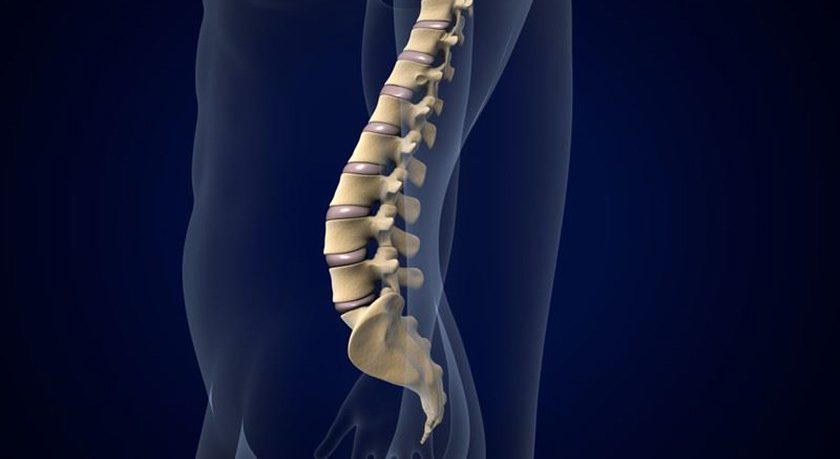
The pilot study is a multicenter, prospective, parallel-group, randomized trial conducted in Australia that evaluates the safety and preliminary effectiveness of NB1 in up to 30 adult subjects with degenerative disc disease (DDD) undergoing transforaminal lumbar interbody fusion (TLIF). Inclusion criteria include patients with DDD at one level from L2-S1 who may also have up to Grade 1 spondylolisthesis or Grade 1 retrolisthesis at the involved level. Primary clinical endpoints include fusion success at 12 and 24 months following surgery, and change from baseline in the Oswestry Disability Index, a standard measure of functional disability.
“We believe the additional hospital sites in our study meaningfully increases our access to qualified patients and reduces our reliance on patient flow at any individual center,” said Bone Biologics CEO Jeff Frelick. “This expansion strengthens our anticipation of reaching full enrollment by the end 2026 and brings us closer to the 12-month follow-up data.”
Source: Bone Biologics
Bone Biologics announced that six hospital sites in Australia are now under agreement to participate in its first-in-human pilot clinical trial of NB1, the company’s rhNELL-1-based bone graft product for spinal fusion. The expanded network doubles the number of participating centers and is expected to accelerate patient screening and surgical...
Bone Biologics announced that six hospital sites in Australia are now under agreement to participate in its first-in-human pilot clinical trial of NB1, the company’s rhNELL-1-based bone graft product for spinal fusion. The expanded network doubles the number of participating centers and is expected to accelerate patient screening and surgical scheduling, strengthening the company’s expectation to complete enrollment by year-end 2026.
NB1, the Company’s lead product candidate, combines the recombinant human NELL-1 protein (rhNELL-1) with demineralized bone matrix for use in spinal procedures.
The pilot study is a multicenter, prospective, parallel-group, randomized trial conducted in Australia that evaluates the safety and preliminary effectiveness of NB1 in up to 30 adult subjects with degenerative disc disease (DDD) undergoing transforaminal lumbar interbody fusion (TLIF). Inclusion criteria include patients with DDD at one level from L2-S1 who may also have up to Grade 1 spondylolisthesis or Grade 1 retrolisthesis at the involved level. Primary clinical endpoints include fusion success at 12 and 24 months following surgery, and change from baseline in the Oswestry Disability Index, a standard measure of functional disability.
“We believe the additional hospital sites in our study meaningfully increases our access to qualified patients and reduces our reliance on patient flow at any individual center,” said Bone Biologics CEO Jeff Frelick. “This expansion strengthens our anticipation of reaching full enrollment by the end 2026 and brings us closer to the 12-month follow-up data.”
Source: Bone Biologics

You’ve reached your limit.
We’re glad you’re finding value in our content — and we’d love for you to keep going.
Subscribe now for unlimited access to orthopedic business intelligence.

JV
Julie Vetalice is ORTHOWORLD's Editorial Assistant. She has covered the orthopedic industry for over 20 years, having joined the company in 1999.