

 Copy to clipboard

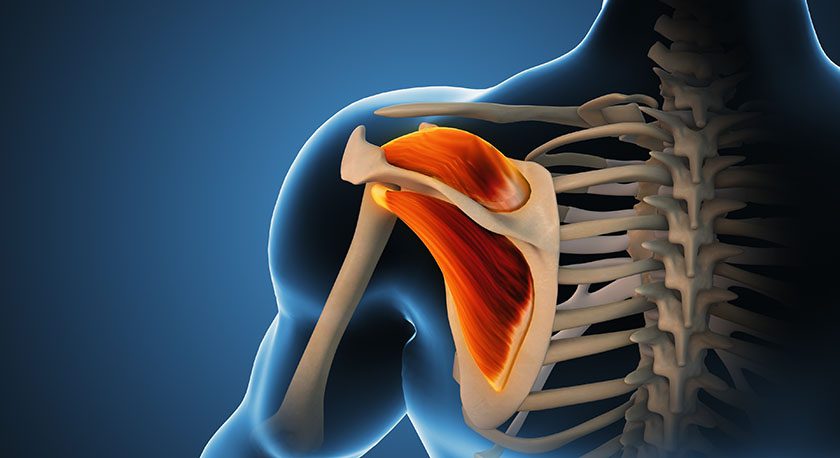
Shoulder surgery presents orthopedic companies, surgeons, and patients with several unresolved challenges, from the durability of rotator cuff repairs to the long-term implications of reverse shoulder replacements in younger patients.
For Jessica Churchill, M.D., a significant unmet need is the gap between rotator cuff repair and reverse shoulder replacement. Despite advances in surgical techniques, mechanical fixation and biologic augmentation, she said surgeons still lack a consistently effective solution for patients who fall between the treatment options due to their age or the severity of their issue.
Dr. Churchill is an orthopedic surgeon at Denver Health, a Level 1 trauma center that provides an opportunity to see numerous types of cases. Her elective practice is 10% elbow and 90% shoulder, encompassing replacement, instability, and rotator cuff repair. Her proclaimed early-adopter personality and drive to innovate have also led her to participate in companies’ surgeon design teams to offer perspective on challenges she experiences in the operating room, including those unique to the fewer than 8% of orthopedic surgeons who are female.
“What drew me to orthopedics was that you can use your hands to solve concrete, structural problems. Engineering is really just a sidestep to that,” said Dr. Churchill, whose father was a physician engineer. “When I started my practice, I realized that I had ideas on how to improve the systems I used. And thought, ‘Why not me.’ ”
We asked Dr. Churchill for her thoughts on the current state and future of shoulder technology, as well as what is needed to make a strong surgeon/industry partnership. Her comments are lightly edited for length and clarity.
What makes a problem worth solving?
Dr. Churchill: For me, it comes down to: Can I make a patient’s outcome or experience better? That could mean a new implant, technique, or technology that makes a surgery that wasn’t doable, doable.
The reverse shoulder solved the problem of not being able to perform an arthroplasty on someone with a torn rotator cuff or with a significant deformity. InSet glenoids are solving the rocking and porous loosening of the glenoid. Those options provide patients with an option for surgery, or they make the surgery more successful for many more years. Those are two big problems that were worth solving.
I like solutions that solve accuracy and time in the operating room because they help us deliver better care, but those are secondary to innovations that can solve or bridge a clinical problem.
What problems in the shoulder are still poorly addressed by technology?
Dr. Churchill: The biggest problem in the shoulder is the bridge between a rotator cuff repair and a reverse total shoulder. I joined Capitan Orthopedics’ design team to work on an implant that meets that clinical need.
We’ve tried to solve this problem with technique and anchoring technology to increase the compression in rotator cuff repairs, and we’ve put time and money into studying the biology and biomechanics of the rotator cuff, but our results are the same. Biologic patches have made small improvements, but they are not applicable to every surgeon or healthcare system. For me, that’s an unsolved problem.
In addition, we have room to improve the reverse shoulder. They do well in younger patients, but we still have to revise them at 15 years. Is there a way to make the reverse or the rotator cuff repairs more durable or better for motion?
The glaring hole is what comes between a rotator cuff repair, revision rotator cuff repair, and a reverse.
What do engineers sometimes misunderstand about the realities of surgery?
Dr. Churchill: Engineers are often looking at a model of a body part and not at the patient position or the soft tissue that’s in the way of the bone. They’re not thinking about how to access the bone through a specific approach window. If I can’t get into the space with the instrument, your idea isn’t going to work, especially today as we seek to perform more minimally invasive surgeries.
I really enjoy having engineers in my operating room, and I do quite frequently because it’s powerful for them to see what I see. The first time I had an engineer in my room, he wanted to see the socket on the shoulder blade. He didn’t realize that I just see the glenoid during surgery. Accuracy seems very easy when you’re looking at the entire skeleton model.
How are you embracing minimally invasive approaches?
Dr. Churchill: What’s great about the shoulder and elbow is that we have minimally invasive arthroscopes. Even when we’re performing open arthroplasty procedures, we’re constantly pushing the boundaries to disrupt less tissue and make smaller incisions.
I’m exploring the subscapularis-sparing total shoulder because it helps accelerate the patient’s rehab post-surgery and disrupts less of their tissue. Technology will play a hugely important role as we look for new ways to perform bigger surgeries through smaller windows. If we can’t see what we normally see, we’ll need assistive devices, whether it’s robotics or different instrumentation.
What role do you think enabling technology will play in shoulder procedures?
Dr. Churchill: It’s where we’re headed in the future. The question is: Can the robot give the surgeon the information we are using inference for today?
Shoulder Innovations’ ShARC database is collecting data about how we put in implants. The conclusions we draw from that massive data set are going to be applicable when we have assistive technology that reliably can take that data and tell us proper implant placement for a specific patient’s anatomy.
I don’t think we’re ever going to be in a situation where surgery is automated. But technology-assisted surgery will help surgeons get better outcomes, decrease O.R. time, reduce burnout, and allow us to perform more minimally invasive surgery. I don’t know whether technology will take shape through mixed reality or a robot. Each company is going to have to adjust its technology based on the strong and weak points of its implant and instrument system and its surgeon users.
What makes a strong surgery-industry partnership?
Dr. Churchill: Trust and transparency. Even though both sides share a common goal to get a good outcome for the patient, the secondary goals are often different.
As humans, we want to give the people-pleasing answer, but sometimes the right answer is that this won’t work. People don’t always want to hear that, but you have to be in a trust-based relationship where both sides are impartial and honest. The business side has to tell a surgeon if something isn’t feasible, whether because of the number of SKUs that would be needed, or if the implant is too modular, or couldn’t be stored properly. Surgeons need to share whether the technology presents too much of a workflow change, whether it will be accepted by hospital committees, and whether it can be reimbursed.
No one wants a product that doesn’t launch or gain adoption.
Is there anything else that you’d like to share on this topic?
Dr. Churchill: Every surgeon has something to bring to the table. If they are critically experiencing their operating room and critically analyzing what they like and don’t like in a system, they have something to offer companies.
As we continue to innovate in this space, companies need to realize that they need not only a sound product but surgeon buy-in. The landscape is changing because physicians are showing up in public spaces. Who you have as your champion for your device is important, because surgeons who believe them are going to believe you. That has changed over the last 10 years, and it can’t be ignored.
I can hear companies saying, “I don’t want an Instagram influencer being the surgeon I pick.” But maybe you do. Companies need to bring marketing, business development, and engineers to the table to figure out who or what combination of surgeons on your advisory board or your design team is going to get you where you need to go.
Shoulder surgery presents orthopedic companies, surgeons, and patients with several unresolved challenges, from the durability of rotator cuff repairs to the long-term implications of reverse shoulder replacements in younger patients.
For Jessica Churchill, M.D., a significant unmet need is the gap between rotator cuff repair and reverse...
Shoulder surgery presents orthopedic companies, surgeons, and patients with several unresolved challenges, from the durability of rotator cuff repairs to the long-term implications of reverse shoulder replacements in younger patients.
For Jessica Churchill, M.D., a significant unmet need is the gap between rotator cuff repair and reverse shoulder replacement. Despite advances in surgical techniques, mechanical fixation and biologic augmentation, she said surgeons still lack a consistently effective solution for patients who fall between the treatment options due to their age or the severity of their issue.
Dr. Churchill is an orthopedic surgeon at Denver Health, a Level 1 trauma center that provides an opportunity to see numerous types of cases. Her elective practice is 10% elbow and 90% shoulder, encompassing replacement, instability, and rotator cuff repair. Her proclaimed early-adopter personality and drive to innovate have also led her to participate in companies’ surgeon design teams to offer perspective on challenges she experiences in the operating room, including those unique to the fewer than 8% of orthopedic surgeons who are female.
“What drew me to orthopedics was that you can use your hands to solve concrete, structural problems. Engineering is really just a sidestep to that,” said Dr. Churchill, whose father was a physician engineer. “When I started my practice, I realized that I had ideas on how to improve the systems I used. And thought, ‘Why not me.’ ”
We asked Dr. Churchill for her thoughts on the current state and future of shoulder technology, as well as what is needed to make a strong surgeon/industry partnership. Her comments are lightly edited for length and clarity.
What makes a problem worth solving?
Dr. Churchill: For me, it comes down to: Can I make a patient’s outcome or experience better? That could mean a new implant, technique, or technology that makes a surgery that wasn’t doable, doable.
The reverse shoulder solved the problem of not being able to perform an arthroplasty on someone with a torn rotator cuff or with a significant deformity. InSet glenoids are solving the rocking and porous loosening of the glenoid. Those options provide patients with an option for surgery, or they make the surgery more successful for many more years. Those are two big problems that were worth solving.
I like solutions that solve accuracy and time in the operating room because they help us deliver better care, but those are secondary to innovations that can solve or bridge a clinical problem.
What problems in the shoulder are still poorly addressed by technology?
Dr. Churchill: The biggest problem in the shoulder is the bridge between a rotator cuff repair and a reverse total shoulder. I joined Capitan Orthopedics’ design team to work on an implant that meets that clinical need.
We’ve tried to solve this problem with technique and anchoring technology to increase the compression in rotator cuff repairs, and we’ve put time and money into studying the biology and biomechanics of the rotator cuff, but our results are the same. Biologic patches have made small improvements, but they are not applicable to every surgeon or healthcare system. For me, that’s an unsolved problem.
In addition, we have room to improve the reverse shoulder. They do well in younger patients, but we still have to revise them at 15 years. Is there a way to make the reverse or the rotator cuff repairs more durable or better for motion?
The glaring hole is what comes between a rotator cuff repair, revision rotator cuff repair, and a reverse.
What do engineers sometimes misunderstand about the realities of surgery?
Dr. Churchill: Engineers are often looking at a model of a body part and not at the patient position or the soft tissue that’s in the way of the bone. They’re not thinking about how to access the bone through a specific approach window. If I can’t get into the space with the instrument, your idea isn’t going to work, especially today as we seek to perform more minimally invasive surgeries.
I really enjoy having engineers in my operating room, and I do quite frequently because it’s powerful for them to see what I see. The first time I had an engineer in my room, he wanted to see the socket on the shoulder blade. He didn’t realize that I just see the glenoid during surgery. Accuracy seems very easy when you’re looking at the entire skeleton model.
How are you embracing minimally invasive approaches?
Dr. Churchill: What’s great about the shoulder and elbow is that we have minimally invasive arthroscopes. Even when we’re performing open arthroplasty procedures, we’re constantly pushing the boundaries to disrupt less tissue and make smaller incisions.
I’m exploring the subscapularis-sparing total shoulder because it helps accelerate the patient’s rehab post-surgery and disrupts less of their tissue. Technology will play a hugely important role as we look for new ways to perform bigger surgeries through smaller windows. If we can’t see what we normally see, we’ll need assistive devices, whether it’s robotics or different instrumentation.
What role do you think enabling technology will play in shoulder procedures?
Dr. Churchill: It’s where we’re headed in the future. The question is: Can the robot give the surgeon the information we are using inference for today?
Shoulder Innovations’ ShARC database is collecting data about how we put in implants. The conclusions we draw from that massive data set are going to be applicable when we have assistive technology that reliably can take that data and tell us proper implant placement for a specific patient’s anatomy.
I don’t think we’re ever going to be in a situation where surgery is automated. But technology-assisted surgery will help surgeons get better outcomes, decrease O.R. time, reduce burnout, and allow us to perform more minimally invasive surgery. I don’t know whether technology will take shape through mixed reality or a robot. Each company is going to have to adjust its technology based on the strong and weak points of its implant and instrument system and its surgeon users.
What makes a strong surgery-industry partnership?
Dr. Churchill: Trust and transparency. Even though both sides share a common goal to get a good outcome for the patient, the secondary goals are often different.
As humans, we want to give the people-pleasing answer, but sometimes the right answer is that this won’t work. People don’t always want to hear that, but you have to be in a trust-based relationship where both sides are impartial and honest. The business side has to tell a surgeon if something isn’t feasible, whether because of the number of SKUs that would be needed, or if the implant is too modular, or couldn’t be stored properly. Surgeons need to share whether the technology presents too much of a workflow change, whether it will be accepted by hospital committees, and whether it can be reimbursed.
No one wants a product that doesn’t launch or gain adoption.
Is there anything else that you’d like to share on this topic?
Dr. Churchill: Every surgeon has something to bring to the table. If they are critically experiencing their operating room and critically analyzing what they like and don’t like in a system, they have something to offer companies.
As we continue to innovate in this space, companies need to realize that they need not only a sound product but surgeon buy-in. The landscape is changing because physicians are showing up in public spaces. Who you have as your champion for your device is important, because surgeons who believe them are going to believe you. That has changed over the last 10 years, and it can’t be ignored.
I can hear companies saying, “I don’t want an Instagram influencer being the surgeon I pick.” But maybe you do. Companies need to bring marketing, business development, and engineers to the table to figure out who or what combination of surgeons on your advisory board or your design team is going to get you where you need to go.

You’ve reached your limit.
We’re glad you’re finding value in our content — and we’d love for you to keep going.
Subscribe now for unlimited access to orthopedic business intelligence.

CL
Carolyn LaWell is ORTHOWORLD's Chief Content Officer. She joined ORTHOWORLD in 2012 to oversee its editorial and industry education. She previously served in editor roles at B2B magazines and newspapers.