

 Copy to clipboard
Small orthopedic companies find it increasingly difficult to secure hospital adoption of new products. As healthcare systems face mounting financial pressures, they have tightened technology reviews through value analysis committees, reduced surgeons’ influence over purchasing decisions and narrowed the number of vendors they work with. The challenge is compounded by the fact that each health system follows its own approval process, leaving small and emerging companies to navigate a fragmented and often unclear path to market access.
So where should companies begin?
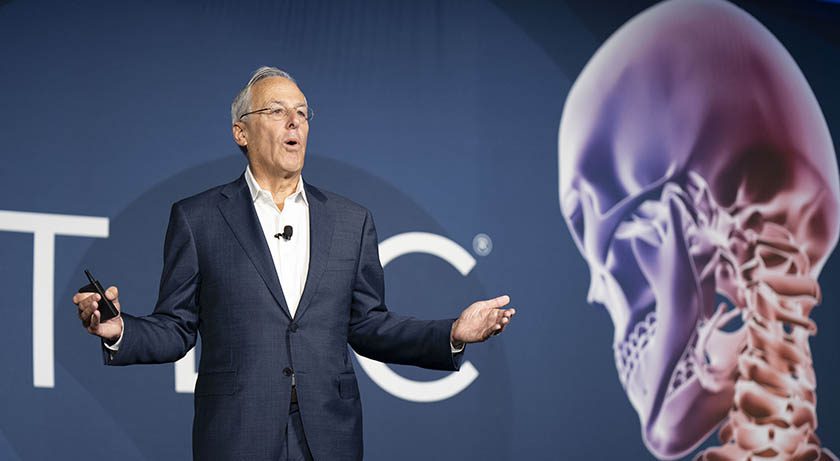
According to speakers at the NASS Innovation NetWORK Summit earlier this month, the answer is: understand the needs of the hospital stakeholders before pitching your technology.
Surgeons, healthcare system administrators and OEM executives told a room full of startups that many companies lead discussions with product features while failing to address the priorities driving hospital decision-making.
They suggested companies prioritize several questions: Who are the key influencers across clinical, financial, supply chain and operational functions, and what challenges are those groups trying to solve? How does the technology fit within the health system’s existing workflows? What resources will be required for device implementation? How will the hospital measure success over time? And, of course, what is the advantage to the patient?
“Where many folks in this room are thinking about novelty, I’m thinking about reliability,” said Timothy Liesching, M.D., Chief Medical Officer of BayCare Health System. “While you’re talking about product, I’m talking about workforce workflows.”
That distinction underscores a shift in healthcare purchasing. Hospital leaders may appreciate innovation, but adoption decisions increasingly hinge on whether a technology can improve outcomes without creating operational disruption.
Dr. Liesching spends much of his time identifying opportunities to eliminate friction across BayCare’s 16 hospitals. While the $7 billion health system wants to be recognized by patients and physicians as an innovator, technology adoption cannot come at the expense of workforce sustainability or financial performance, he said.
Across presentations and panel discussions, speakers repeatedly emphasized that successful commercialization requires companies to think beyond the implant itself.
Know the Influencers. Know the Numbers.
While surgeon champions remain important advocates, their authority over purchasing decisions has diminished. A respected surgeon can still open doors and introduce a technology to the right stakeholders, but approval typically requires support from a broader group that may include finance, supply chain, nursing, operations and clinical leadership.
Building relationships with these stakeholders before entering a formal value analysis process can provide significant advantages for a company. Understanding each group’s priorities allows companies to tailor their message and anticipate objections before they arise.
Equally important is arriving with data. Hospital leaders want to understand the total financial and operational impact of a technology, not just its clinical benefits. Companies should be prepared to discuss system-wide device costs, reimbursement, procedure volume, operating room time, and potential impacts on complication or revision rates.
The companies that succeed are often those that can connect these data points to broader organizational goals. In some cases, that may require companies bringing together stakeholders from multiple departments to demonstrate how their technology creates value across the system rather than for a single physician or service line.
Define the Implementation Plan
Hospital leaders also want to know what happens after approval.
Companies should clearly outline how their technology will integrate into existing workflows without creating new burdens for supply chain teams, operating room staff or physicians. They should be prepared to discuss training requirements, the expected learning curve and how many procedures may be needed before surgeons return to baseline efficiency.
For companies or technologies that are new to a healthcare system, speakers recommended requesting a limited pilot program and establishing clear success metrics before the first case is performed. Too often, administrators said, companies ask for an evaluation without defining what a successful outcome would look like from the hospital’s perspective.
A well-structured pilot creates alignment, establishes expectations and provides objective criteria for determining whether broader adoption makes sense.
Think Beyond Clinical Outcomes
Clinical performance remains essential, but it is no longer sufficient on its own.
If a hospital agrees to evaluate a technology, companies must demonstrate both clinical and economic value while supporting the hospital throughout the implementation process. That means helping address challenges that occur before, during and after the procedure.
Speakers encouraged companies to take a hands-on approach, assisting with reimbursement approvals, supply chain coordination and claims processing. Sharing reimbursement projections is helpful, but demonstrating that hospitals can reliably capture that payment is far more compelling.
Hospital procurement and OEM leaders also recommended frequent check-ins throughout a pilot program. Reviewing the results together every few cases creates opportunities to identify obstacles, refine processes and build trust before scaling adoption.
Hospital purchasing decisions are no longer driven solely by innovative technology. Executives are looking for partners who understand their clinical, operational and financial realities. Orthopedic companies that can align their solutions with those priorities will be better positioned to gain adoption in an increasingly competitive environment.
Small orthopedic companies find it increasingly difficult to secure hospital adoption of new products. As healthcare systems face mounting financial pressures, they have tightened technology reviews through value analysis committees, reduced surgeons’ influence over purchasing decisions and narrowed the number of vendors they work with....
Small orthopedic companies find it increasingly difficult to secure hospital adoption of new products. As healthcare systems face mounting financial pressures, they have tightened technology reviews through value analysis committees, reduced surgeons’ influence over purchasing decisions and narrowed the number of vendors they work with. The challenge is compounded by the fact that each health system follows its own approval process, leaving small and emerging companies to navigate a fragmented and often unclear path to market access.
So where should companies begin?
According to speakers at the NASS Innovation NetWORK Summit earlier this month, the answer is: understand the needs of the hospital stakeholders before pitching your technology.
Surgeons, healthcare system administrators and OEM executives told a room full of startups that many companies lead discussions with product features while failing to address the priorities driving hospital decision-making.
They suggested companies prioritize several questions: Who are the key influencers across clinical, financial, supply chain and operational functions, and what challenges are those groups trying to solve? How does the technology fit within the health system’s existing workflows? What resources will be required for device implementation? How will the hospital measure success over time? And, of course, what is the advantage to the patient?
“Where many folks in this room are thinking about novelty, I’m thinking about reliability,” said Timothy Liesching, M.D., Chief Medical Officer of BayCare Health System. “While you’re talking about product, I’m talking about workforce workflows.”
That distinction underscores a shift in healthcare purchasing. Hospital leaders may appreciate innovation, but adoption decisions increasingly hinge on whether a technology can improve outcomes without creating operational disruption.
Dr. Liesching spends much of his time identifying opportunities to eliminate friction across BayCare’s 16 hospitals. While the $7 billion health system wants to be recognized by patients and physicians as an innovator, technology adoption cannot come at the expense of workforce sustainability or financial performance, he said.
Across presentations and panel discussions, speakers repeatedly emphasized that successful commercialization requires companies to think beyond the implant itself.
Know the Influencers. Know the Numbers.
While surgeon champions remain important advocates, their authority over purchasing decisions has diminished. A respected surgeon can still open doors and introduce a technology to the right stakeholders, but approval typically requires support from a broader group that may include finance, supply chain, nursing, operations and clinical leadership.
Building relationships with these stakeholders before entering a formal value analysis process can provide significant advantages for a company. Understanding each group’s priorities allows companies to tailor their message and anticipate objections before they arise.
Equally important is arriving with data. Hospital leaders want to understand the total financial and operational impact of a technology, not just its clinical benefits. Companies should be prepared to discuss system-wide device costs, reimbursement, procedure volume, operating room time, and potential impacts on complication or revision rates.
The companies that succeed are often those that can connect these data points to broader organizational goals. In some cases, that may require companies bringing together stakeholders from multiple departments to demonstrate how their technology creates value across the system rather than for a single physician or service line.
Define the Implementation Plan
Hospital leaders also want to know what happens after approval.
Companies should clearly outline how their technology will integrate into existing workflows without creating new burdens for supply chain teams, operating room staff or physicians. They should be prepared to discuss training requirements, the expected learning curve and how many procedures may be needed before surgeons return to baseline efficiency.
For companies or technologies that are new to a healthcare system, speakers recommended requesting a limited pilot program and establishing clear success metrics before the first case is performed. Too often, administrators said, companies ask for an evaluation without defining what a successful outcome would look like from the hospital’s perspective.
A well-structured pilot creates alignment, establishes expectations and provides objective criteria for determining whether broader adoption makes sense.
Think Beyond Clinical Outcomes
Clinical performance remains essential, but it is no longer sufficient on its own.
If a hospital agrees to evaluate a technology, companies must demonstrate both clinical and economic value while supporting the hospital throughout the implementation process. That means helping address challenges that occur before, during and after the procedure.
Speakers encouraged companies to take a hands-on approach, assisting with reimbursement approvals, supply chain coordination and claims processing. Sharing reimbursement projections is helpful, but demonstrating that hospitals can reliably capture that payment is far more compelling.
Hospital procurement and OEM leaders also recommended frequent check-ins throughout a pilot program. Reviewing the results together every few cases creates opportunities to identify obstacles, refine processes and build trust before scaling adoption.
Hospital purchasing decisions are no longer driven solely by innovative technology. Executives are looking for partners who understand their clinical, operational and financial realities. Orthopedic companies that can align their solutions with those priorities will be better positioned to gain adoption in an increasingly competitive environment.

You’ve reached your limit.
We’re glad you’re finding value in our content — and we’d love for you to keep going.
Subscribe now for unlimited access to orthopedic business intelligence.

CL
Carolyn LaWell is ORTHOWORLD's Chief Content Officer. She joined ORTHOWORLD in 2012 to oversee its editorial and industry education. She previously served in editor roles at B2B magazines and newspapers.