

 Copy to clipboard
Orthopedic implant and software companies are focusing on the hip and pelvis, two areas that are underserved with innovative technologies compared to the knee and spine. At the Canaccord Genuity Musculoskeletal Conference last month, we heard CytexOrtho, CurvaFix, and Naitive Technologies talk about the large patient populations that could benefit from restorative cartilage repair implants; minimally invasive, load-bearing trauma options; and software that can identify patients at risk of future fractures.
CytexOrtho
CytexOrtho’s ReNew Hip Implant is a novel cartilage repair technology for younger patients who suffer from chronic hip pain but are not ready for a total hip replacement.
In October 2024, FDA approved a Phase I clinical trial allowing CytexOrtho to initiate a first-in-human clinical study. CytexOrtho has started enrolling patients in the non-randomized, single-arm study. The goal is to enroll 15 patients aged 14 to 55 years with hip disease resulting in loss of articular cartilage integrity on the femoral head. The study will establish an initial safety profile and evaluate efficacy in improving pain and function over 12 months, while following patients for 60 months post-implantation.
“There are over one million American patients under the age of 65 who suffer from chronic hip pain,” said Brad Estes, Ph.D., CEO and Co-founder, CytexOrtho. “Approximately 20% of these patients get hip replacements. The rest avoid them because of the high risk of wearing them out and the complications that come with a revision replacement, and instead choose to live with increasingly crippling pain.”
The ReNew Hip Implant leverages advanced manufacturing techniques to create a highly porous, bioabsorbable device engineered to mimic the properties of healthy articular cartilage. CytexOrtho’s 3D printing process allows the company to manufacture the implant in any shape or thickness to match the patient’s defect and then press-fit ReNew in during a 10-minute procedure.
ReNew is expected to be an easier, cheaper and more effective option for hip preservation compared to current treatments on the market that range from physical therapy to injections to allograft placement, Dr. Estes said. In animal studies, ReNew Hip demonstrated immediate structural support while supporting the body’s own regenerative, healing processes to restore the joint.
“Our implant restores anatomy and functionality,” Dr. Estes said. “We designed it to restore the active lifestyles of these patients. Over a period of years, the implant is slowly replaced by the patient’s own natural tissues. We think this is the only solution that the patient will need. Also, we’re not burning any bridges if they need future intervention. I call this medtech meets regenerative medicine.”
CurvaFix
CurvaFix seeks to address one of the largest unmet needs in trauma care: the more than 200,000 pelvic fractures that take place in the U.S. each year.
“The pelvis is underpenetrated and under-innovated. It’s the last trauma category that is driven by demographics, in addition to expansion of procedural volume,” said President and CEO Mark Foster. “Pelvic fractures are the fastest growing market in all of orthopedic trauma, growing at 9% to 10% annually.”
While the number of pelvic fractures is increasing each year due to the growing aging population, there’s also a shift taking place in the market about how to treat patients with percutaneous fractures. Today, about 10% of elderly patients with pelvis fractures undergo surgery, Mr. Foster said. However, new literature shows that 85% of patients could benefit from surgery.
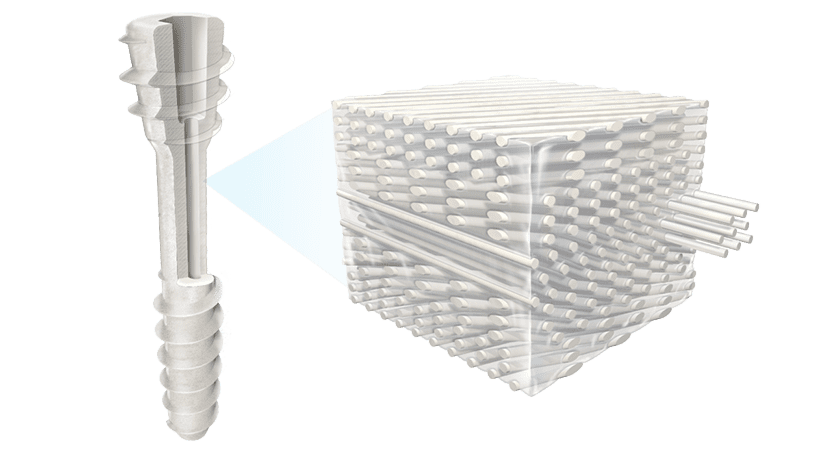
Surgical solutions on the market have been limited to invasive, plate and screw constructs. The CurvaFix Low Profile System is the only IM nail on the market for pelvic fractures. “We are approaching this in a way that is unique to the anatomy of the pelvis,” Mr. Foster said. “What we offer is not just a new screw; it is a new mechanical philosophy and a new minimally invasive procedure that fundamentally shares the load versus bears the load of the implant.”
CurvaFix received FDA 510(k) clearance for its next-generation system in September 2025. The system is built to expand surgical options in challenging scenarios, including pathological bone, curved or narrow pelvic corridors, intersecting fixation pathways and cases where indwelling or adjacent hardware is present. It offers a 65% smaller head geometry for a lower-profile construct, implants with increased compression capability, extended implant lengths that enable connection of intraosseous fixation pathways with a single device, and patented lock technology with improved visual and tactile confirmation.
The company expects more than 300 surgeons to use its system by the end of 2026. Since the launch of the Low Profile System, the CurvaFix’s procedural selling price has increased by 15% to about $7,200, Mr. Foster said.
“The average reimbursement for a pelvic fracture is over $80,000 in the U.S. and the cost of not treating those patients is massive,” he said. “We fit nicely within the economics of these procedures.”
Naitive Technologies
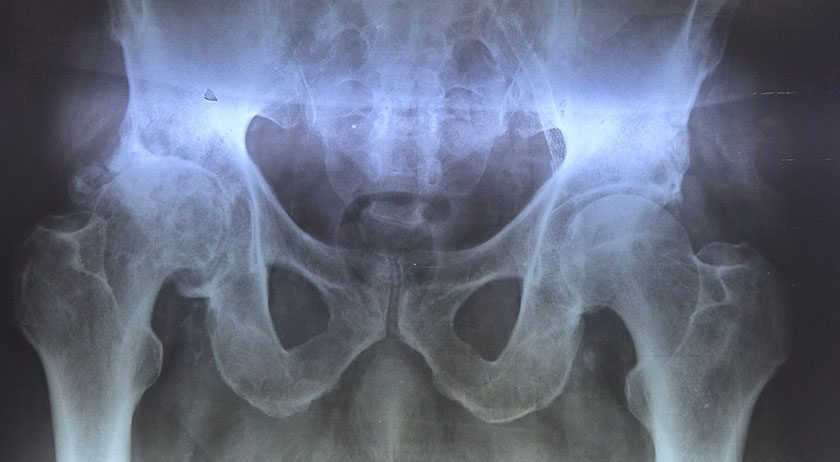
The London-based medical technology company’s AI platform OsteoSight helps orthopedic providers surface at-risk patients, convert them to treatment, and coordinate their care. OsteoSight received FDA 510(k) clearance in September 2025 for the analysis of routine hip and pelvic x-rays in patients 50 years and older and identification of those at risk for low bone mineral density (BMD).
Naitive is primarily focused on the 1,250 orthopedic private practices in the U.S., said Founder and CEO Will Briggs, M.D., Ph.D. The pressures on reimbursement have private practice groups considering non-surgical revenue streams, Dr. Briggs said, noting that revenue from ancillary services has grown from about 10% of the average practice’s revenue to 50% over the last 10 years. Orthopedic practices also have a laser focus on EBITDA and financial predictability, he added.
“There’s a big opportunity to take software and clinical problems and marry the two,” Dr. Briggs said. “The first clinical problem we’re tackling is bone health, osteoporosis and osteopenia.”
He noted that the U.S. spends about $56 billion on fragility fractures annually, and the mortality rate is 30% for patients with an osteoporosis-related hip fracture at 12 months. “The shocking thing about this disease is that the majority of patients go undiagnosed,” Dr. Briggs said. “Statistics show that between 70% to 75% of patients with osteoporosis are diagnosed. The reality we find when we speak to our orthopedic practices is that 90% of people with poor or low bone mass are unknown to the practice.”
Naitive is focused on osteoporosis because it’s treatable if identified in a patient, Dr. Briggs said. The company’s OsteoSight software can be embedded into routine orthopedic clinical workflows without changing existing imaging protocols. It looks through routine x-rays, identifies patients with low BMD, converts them from captured to treated patients and helps coordinate their care.
Naitive recently entered into a research collaboration with Heraeus Medical and the practice Sah Orthopaedic Associates to estimate the prevalence of low BMD in patients with an AP hip or pelvic x-ray who have undergone primary elective total hip replacement or total knee replacement at Sah Orthopaedic Associates. The research study will also assess the proportion of patients with low BMD, as estimated by OsteoSight, who received cementless fixation.
Orthopedic implant and software companies are focusing on the hip and pelvis, two areas that are underserved with innovative technologies compared to the knee and spine. At the Canaccord Genuity Musculoskeletal Conference last month, we heard CytexOrtho, CurvaFix, and Naitive Technologies talk about the large patient populations that could...
Orthopedic implant and software companies are focusing on the hip and pelvis, two areas that are underserved with innovative technologies compared to the knee and spine. At the Canaccord Genuity Musculoskeletal Conference last month, we heard CytexOrtho, CurvaFix, and Naitive Technologies talk about the large patient populations that could benefit from restorative cartilage repair implants; minimally invasive, load-bearing trauma options; and software that can identify patients at risk of future fractures.
CytexOrtho
CytexOrtho’s ReNew Hip Implant is a novel cartilage repair technology for younger patients who suffer from chronic hip pain but are not ready for a total hip replacement.
In October 2024, FDA approved a Phase I clinical trial allowing CytexOrtho to initiate a first-in-human clinical study. CytexOrtho has started enrolling patients in the non-randomized, single-arm study. The goal is to enroll 15 patients aged 14 to 55 years with hip disease resulting in loss of articular cartilage integrity on the femoral head. The study will establish an initial safety profile and evaluate efficacy in improving pain and function over 12 months, while following patients for 60 months post-implantation.
“There are over one million American patients under the age of 65 who suffer from chronic hip pain,” said Brad Estes, Ph.D., CEO and Co-founder, CytexOrtho. “Approximately 20% of these patients get hip replacements. The rest avoid them because of the high risk of wearing them out and the complications that come with a revision replacement, and instead choose to live with increasingly crippling pain.”
The ReNew Hip Implant leverages advanced manufacturing techniques to create a highly porous, bioabsorbable device engineered to mimic the properties of healthy articular cartilage. CytexOrtho’s 3D printing process allows the company to manufacture the implant in any shape or thickness to match the patient’s defect and then press-fit ReNew in during a 10-minute procedure.
ReNew is expected to be an easier, cheaper and more effective option for hip preservation compared to current treatments on the market that range from physical therapy to injections to allograft placement, Dr. Estes said. In animal studies, ReNew Hip demonstrated immediate structural support while supporting the body’s own regenerative, healing processes to restore the joint.
“Our implant restores anatomy and functionality,” Dr. Estes said. “We designed it to restore the active lifestyles of these patients. Over a period of years, the implant is slowly replaced by the patient’s own natural tissues. We think this is the only solution that the patient will need. Also, we’re not burning any bridges if they need future intervention. I call this medtech meets regenerative medicine.”
CurvaFix
CurvaFix seeks to address one of the largest unmet needs in trauma care: the more than 200,000 pelvic fractures that take place in the U.S. each year.
“The pelvis is underpenetrated and under-innovated. It’s the last trauma category that is driven by demographics, in addition to expansion of procedural volume,” said President and CEO Mark Foster. “Pelvic fractures are the fastest growing market in all of orthopedic trauma, growing at 9% to 10% annually.”
While the number of pelvic fractures is increasing each year due to the growing aging population, there’s also a shift taking place in the market about how to treat patients with percutaneous fractures. Today, about 10% of elderly patients with pelvis fractures undergo surgery, Mr. Foster said. However, new literature shows that 85% of patients could benefit from surgery.
Surgical solutions on the market have been limited to invasive, plate and screw constructs. The CurvaFix Low Profile System is the only IM nail on the market for pelvic fractures. “We are approaching this in a way that is unique to the anatomy of the pelvis,” Mr. Foster said. “What we offer is not just a new screw; it is a new mechanical philosophy and a new minimally invasive procedure that fundamentally shares the load versus bears the load of the implant.”
CurvaFix received FDA 510(k) clearance for its next-generation system in September 2025. The system is built to expand surgical options in challenging scenarios, including pathological bone, curved or narrow pelvic corridors, intersecting fixation pathways and cases where indwelling or adjacent hardware is present. It offers a 65% smaller head geometry for a lower-profile construct, implants with increased compression capability, extended implant lengths that enable connection of intraosseous fixation pathways with a single device, and patented lock technology with improved visual and tactile confirmation.
The company expects more than 300 surgeons to use its system by the end of 2026. Since the launch of the Low Profile System, the CurvaFix’s procedural selling price has increased by 15% to about $7,200, Mr. Foster said.
“The average reimbursement for a pelvic fracture is over $80,000 in the U.S. and the cost of not treating those patients is massive,” he said. “We fit nicely within the economics of these procedures.”
Naitive Technologies
The London-based medical technology company’s AI platform OsteoSight helps orthopedic providers surface at-risk patients, convert them to treatment, and coordinate their care. OsteoSight received FDA 510(k) clearance in September 2025 for the analysis of routine hip and pelvic x-rays in patients 50 years and older and identification of those at risk for low bone mineral density (BMD).
Naitive is primarily focused on the 1,250 orthopedic private practices in the U.S., said Founder and CEO Will Briggs, M.D., Ph.D. The pressures on reimbursement have private practice groups considering non-surgical revenue streams, Dr. Briggs said, noting that revenue from ancillary services has grown from about 10% of the average practice’s revenue to 50% over the last 10 years. Orthopedic practices also have a laser focus on EBITDA and financial predictability, he added.
“There’s a big opportunity to take software and clinical problems and marry the two,” Dr. Briggs said. “The first clinical problem we’re tackling is bone health, osteoporosis and osteopenia.”
He noted that the U.S. spends about $56 billion on fragility fractures annually, and the mortality rate is 30% for patients with an osteoporosis-related hip fracture at 12 months. “The shocking thing about this disease is that the majority of patients go undiagnosed,” Dr. Briggs said. “Statistics show that between 70% to 75% of patients with osteoporosis are diagnosed. The reality we find when we speak to our orthopedic practices is that 90% of people with poor or low bone mass are unknown to the practice.”
Naitive is focused on osteoporosis because it’s treatable if identified in a patient, Dr. Briggs said. The company’s OsteoSight software can be embedded into routine orthopedic clinical workflows without changing existing imaging protocols. It looks through routine x-rays, identifies patients with low BMD, converts them from captured to treated patients and helps coordinate their care.
Naitive recently entered into a research collaboration with Heraeus Medical and the practice Sah Orthopaedic Associates to estimate the prevalence of low BMD in patients with an AP hip or pelvic x-ray who have undergone primary elective total hip replacement or total knee replacement at Sah Orthopaedic Associates. The research study will also assess the proportion of patients with low BMD, as estimated by OsteoSight, who received cementless fixation.

You’ve reached your limit.
We’re glad you’re finding value in our content — and we’d love for you to keep going.
Subscribe now for unlimited access to orthopedic business intelligence.

CL
Carolyn LaWell is ORTHOWORLD's Chief Content Officer. She joined ORTHOWORLD in 2012 to oversee its editorial and industry education. She previously served in editor roles at B2B magazines and newspapers.