

 Copy to clipboard

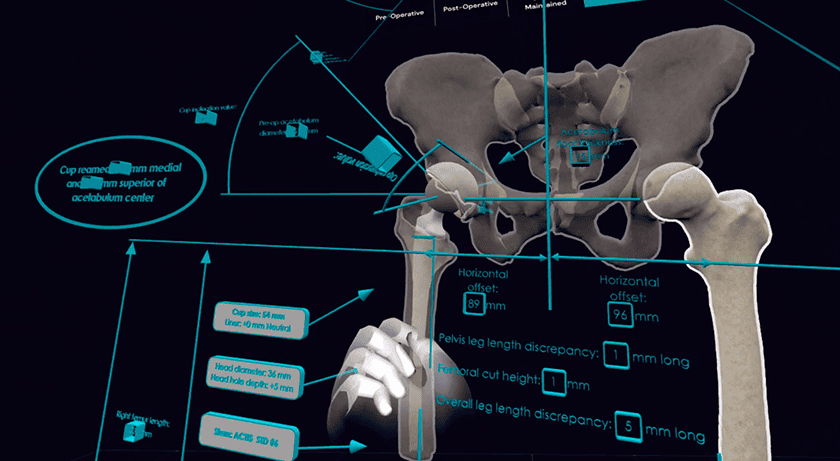
Kinomatic launched Kinect, a unified platform that connects surgical planning, case management, and surgeon collaboration for knee and hip joint replacement. The launch advances Kinomatic’s broader personalized care strategy, building on the company’s preoperative-planning and concierge recovery services, and marking a foundational step in the company’s investment in AI-native surgical planning.
Kinect is designed as the connective layer that brings case data, imaging, communications, and surgeon preferences into one system so that every stage, from pre-planning through recovery, is informed by the same unified data. By capturing a complete, structured record of each patient’s end-to-end surgical experience in one place, Kinect creates the data foundation needed to train and deploy AI models that aid biomedical engineers leading the surgical planning process.
Existing segmentation and planning tools were built to solve isolated tasks. Kinect was developed by Kinomatic from the ground up as a modern, AI-ready platform, purpose-built to connect the entire episode of care and generate the datasets that AI models require to learn. Kinect is already being used to train AI models to perform segmentation, and the same connected data is expected to power AI models that help surgeons identify best practices more quickly and assist them directly during planning.
Kinect was developed as a web app allowing surgeons to review plans, track progress, and manage their surgical preferences from any device, anywhere. Surgical configurations are stored in a surgeon’s profile and applied automatically across cases, allowing for immediate notifications when a plan is ready for review, with progress visible throughout the web app.
Kinect centralizes all case data, including CT scans, segmentation, and planning files, into a structured data lake that will be able to power the AI surgical planning platform. This unified dataset is what enables Kinomatic to move beyond one-size-fits-all workflows toward more personalized surgical planning and recovery for each patient. That same data foundation can extend personalization past the operating room, giving care teams the context to tailor recovery guidance to each patient’s procedure and progress. The platform also manages imaging facilities, surgical configurations, and the implant library directly in system settings. QA review is automated against each plan’s configuration, as well, including a second engineer’s independent peer review, to reduce manual tracking and review steps.
This work continues the focus on personalization into recovery, with Kinomatic also announcing a partnership with WHOOP for its RESTORE pilot, combining continuous biometric monitoring, dedicated patient navigators, evidence-based protocols, and AI-powered care coordination to support patients throughout recovery after joint replacement surgery.
Source: Kinomatic
Kinomatic launched Kinect, a unified platform that connects surgical planning, case management, and surgeon collaboration for knee and hip joint replacement. The launch advances Kinomatic's broader personalized care strategy, building on the company's preoperative-planning and concierge recovery services, and marking a foundational step in the...
Kinomatic launched Kinect, a unified platform that connects surgical planning, case management, and surgeon collaboration for knee and hip joint replacement. The launch advances Kinomatic’s broader personalized care strategy, building on the company’s preoperative-planning and concierge recovery services, and marking a foundational step in the company’s investment in AI-native surgical planning.
Kinect is designed as the connective layer that brings case data, imaging, communications, and surgeon preferences into one system so that every stage, from pre-planning through recovery, is informed by the same unified data. By capturing a complete, structured record of each patient’s end-to-end surgical experience in one place, Kinect creates the data foundation needed to train and deploy AI models that aid biomedical engineers leading the surgical planning process.
Existing segmentation and planning tools were built to solve isolated tasks. Kinect was developed by Kinomatic from the ground up as a modern, AI-ready platform, purpose-built to connect the entire episode of care and generate the datasets that AI models require to learn. Kinect is already being used to train AI models to perform segmentation, and the same connected data is expected to power AI models that help surgeons identify best practices more quickly and assist them directly during planning.
Kinect was developed as a web app allowing surgeons to review plans, track progress, and manage their surgical preferences from any device, anywhere. Surgical configurations are stored in a surgeon’s profile and applied automatically across cases, allowing for immediate notifications when a plan is ready for review, with progress visible throughout the web app.
Kinect centralizes all case data, including CT scans, segmentation, and planning files, into a structured data lake that will be able to power the AI surgical planning platform. This unified dataset is what enables Kinomatic to move beyond one-size-fits-all workflows toward more personalized surgical planning and recovery for each patient. That same data foundation can extend personalization past the operating room, giving care teams the context to tailor recovery guidance to each patient’s procedure and progress. The platform also manages imaging facilities, surgical configurations, and the implant library directly in system settings. QA review is automated against each plan’s configuration, as well, including a second engineer’s independent peer review, to reduce manual tracking and review steps.
This work continues the focus on personalization into recovery, with Kinomatic also announcing a partnership with WHOOP for its RESTORE pilot, combining continuous biometric monitoring, dedicated patient navigators, evidence-based protocols, and AI-powered care coordination to support patients throughout recovery after joint replacement surgery.
Source: Kinomatic

You’ve reached your limit.
We’re glad you’re finding value in our content — and we’d love for you to keep going.
Subscribe now for unlimited access to orthopedic business intelligence.

JV
Julie Vetalice is ORTHOWORLD's Editorial Assistant. She has covered the orthopedic industry for over 20 years, having joined the company in 1999.