

 Copy to clipboard
Orthopedic implant technology and surgical techniques have advanced considerably, but most joint replacement patients still receive standardized plans during their procedures and fragmented support after leaving the operating room. Renowned knee and hip replacement surgeon Andrew B. Wickline, M.D., believes more can be done pre- and post-surgery to improve patient outcomes and companies can help.
Over nearly three decades of orthopedic practice, Dr. Wickline has developed protocols focused on improving recovery and reducing opioid use after knee and hip replacement. He also founded March2aMillion, a national nonprofit that seeks to help one million patients recover from knee and hip replacements with little to no opioids.
Dr. Wickline recently became Chief Medical Officer at Kinomatic, an AI- and VR-driven surgical planning and aftercare company. Kinomatic aims to address both sides of joint replacement procedures by combining patient-specific 3D modeling and VR surgical simulation with postoperative recovery support, long-term outcomes tracking and concierge-level care.
Dr. Wickline will apply his recovery program to strengthen the company’s postoperative protocols. We spoke with him about why orthopedic surgeons and companies should rethink conventional recovery, personalize surgical planning and expand these approaches across orthopedics.
How did you develop your mission to reduce opioid dependence and improve postoperative recovery?
Dr. Wickline: Orthopedic surgeons are conservative by nature. We follow what we’re taught through residency and fellowship, so it can be difficult to adopt unfamiliar approaches.
I began practicing in a small town without a mentor to show me how things were done. I had to listen closely to patients. Many said the first few weeks, and sometimes a few months, were more challenging than expected. They didn’t know what was normal, and some needed hundreds of pain pills. Their spouses would come to me worried about changes in their behavior. I began asking whether there was a better approach and if opioids were really necessary to recover from a joint replacement.
The answer wasn’t one intervention. There were many evidence-based protocol decisions involving education, surgical technique, swelling control, nutrition and recovery support.
I no longer routinely write opioid prescriptions. We recently published findings showing that 88.7% of total knee replacement patients and 98.2% of total hip replacement patients who had not received opioids during the three months before surgery remained opioid-free after surgery.
That grew into March2aMillion. I don’t want patients to experience preventable pain, develop dependence that began with a prescription, or have recovery stall because support wasn’t available.
What is the biggest challenge you face as a joint replacement surgeon today?
Dr. Wickline: The biggest challenge is optimizing the other 3,000 hours. The six weeks before surgery and 12 weeks afterward represent 3,024 hours. The surgery itself may take an hour, followed by several hours in an ambulatory surgery center, but the industry concentrates most of its attention on that small window.
Patients must remain engaged throughout the rest of the experience by improving their health before surgery and following the recovery protocol afterward. Many companies address one element, such as nutrition or physical therapy, but those services are fragmented. Patients need connected services across care so they can prepare effectively and recover comfortably.
What drew you to Kinomatic, and what do you hope to accomplish as Chief Medical Officer?
Dr. Wickline: I approached Kinomatic with skepticism. A colleague who had adopted parts of my recovery protocol later had his own hip replaced. His patient-specific 3D model helped the surgeon identify an anatomical issue that could have led to a less-than-ideal outcome. That made me take a closer look.
When I began using Kinomatic for preoperative planning, the majority of those patients appeared to outperform my already strong baseline. We’re still tracking those observations, but they were meaningful to me as a surgeon who has spent years optimizing every variable.
The technology is only part of what drew me to the company. Kinomatic has a surgeon network, operational infrastructure and representatives who support patients one-on-one. It can make a recovery protocol developed in one practice accessible to surgeons and patients across the country.
For too long, recovery has been the forgotten phase of joint replacement. As Chief Medical Officer, I want to help close the gap between a great surgery and a great outcome.
How do Kinomatic’s core capabilities help surgeons make more informed decisions and support patients before, during and after surgery?
Dr. Wickline: Before surgery, a high-resolution CT scan is converted into a patient-specific 3D model. This gives the surgeon a more complete view of the anatomy and helps inform implant selection, sizing, orientation and placement.
For hip replacement, the model provides information about femoral anteversion, the acetabulum, leg length and offset. It can help surgeons evaluate potential impingement and consider how a stuck or hypermobile spine could affect cup position. For knee replacement, surgeons can compare the patient’s arthritic and estimated pre-arthritic alignment and consider mechanical or kinematic alignment.
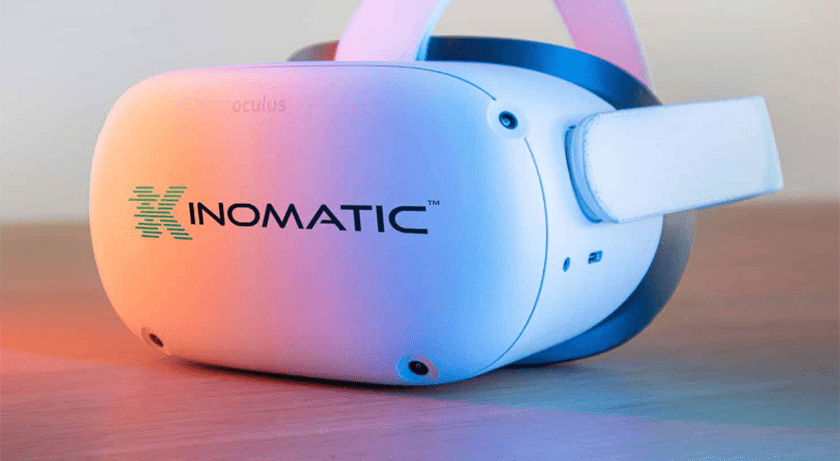
The surgeon can manipulate the plan in virtual reality and rehearse the procedure. I’ve raced cars for years, and every top racer relies on simulation. I’m also a pilot, and simulation allows pilots to practice unusual situations before encountering them in the air. Surgery should be no different. VR offers that advantage by evaluating the anatomy and planning for potential problems before entering the operating room.
During surgery, the personalized plan guides implant positioning and alignment. In my experience, having more information in advance can reduce recuts and unnecessary ligament releases, potentially resulting in less trauma and postoperative swelling.
After surgery, Kinomatic combines recovery optimization with concierge support and long-term outcomes tracking. Patient navigators answer questions, reinforce the protocol and help patients understand whether their recovery is progressing normally. Outcomes tracking helps surgeons and Kinomatic evaluate and refine the approach.
What will it take to scale personalized care and technologies such as VR across orthopedics?
Dr. Wickline: We first have to make patients aware that they have options. Many don’t know that personalized planning or a different recovery experience may be available. They may assume substantial pain and opioid use are simply part of joint replacement.
Surgeons also need to see the value in their own patients. Reviewing patient-specific anatomy shows how often an individual differs from a standardized alignment target. That information can challenge established thinking and encourage personalized decisions.
The technology must also fit the surgeon’s workflow and connect with the full episode of care. Scaling adoption requires more than making VR available; it requires demonstrating clinical value without adding unnecessary complexity.
Orthopedic implant technology and surgical techniques have advanced considerably, but most joint replacement patients still receive standardized plans during their procedures and fragmented support after leaving the operating room. Renowned knee and hip replacement surgeon Andrew B. Wickline, M.D., believes more can be done pre- and...
Orthopedic implant technology and surgical techniques have advanced considerably, but most joint replacement patients still receive standardized plans during their procedures and fragmented support after leaving the operating room. Renowned knee and hip replacement surgeon Andrew B. Wickline, M.D., believes more can be done pre- and post-surgery to improve patient outcomes and companies can help.
Over nearly three decades of orthopedic practice, Dr. Wickline has developed protocols focused on improving recovery and reducing opioid use after knee and hip replacement. He also founded March2aMillion, a national nonprofit that seeks to help one million patients recover from knee and hip replacements with little to no opioids.
Dr. Wickline recently became Chief Medical Officer at Kinomatic, an AI- and VR-driven surgical planning and aftercare company. Kinomatic aims to address both sides of joint replacement procedures by combining patient-specific 3D modeling and VR surgical simulation with postoperative recovery support, long-term outcomes tracking and concierge-level care.
Dr. Wickline will apply his recovery program to strengthen the company’s postoperative protocols. We spoke with him about why orthopedic surgeons and companies should rethink conventional recovery, personalize surgical planning and expand these approaches across orthopedics.
How did you develop your mission to reduce opioid dependence and improve postoperative recovery?
Dr. Wickline: Orthopedic surgeons are conservative by nature. We follow what we’re taught through residency and fellowship, so it can be difficult to adopt unfamiliar approaches.
I began practicing in a small town without a mentor to show me how things were done. I had to listen closely to patients. Many said the first few weeks, and sometimes a few months, were more challenging than expected. They didn’t know what was normal, and some needed hundreds of pain pills. Their spouses would come to me worried about changes in their behavior. I began asking whether there was a better approach and if opioids were really necessary to recover from a joint replacement.
The answer wasn’t one intervention. There were many evidence-based protocol decisions involving education, surgical technique, swelling control, nutrition and recovery support.
I no longer routinely write opioid prescriptions. We recently published findings showing that 88.7% of total knee replacement patients and 98.2% of total hip replacement patients who had not received opioids during the three months before surgery remained opioid-free after surgery.
That grew into March2aMillion. I don’t want patients to experience preventable pain, develop dependence that began with a prescription, or have recovery stall because support wasn’t available.
What is the biggest challenge you face as a joint replacement surgeon today?
Dr. Wickline: The biggest challenge is optimizing the other 3,000 hours. The six weeks before surgery and 12 weeks afterward represent 3,024 hours. The surgery itself may take an hour, followed by several hours in an ambulatory surgery center, but the industry concentrates most of its attention on that small window.
Patients must remain engaged throughout the rest of the experience by improving their health before surgery and following the recovery protocol afterward. Many companies address one element, such as nutrition or physical therapy, but those services are fragmented. Patients need connected services across care so they can prepare effectively and recover comfortably.
What drew you to Kinomatic, and what do you hope to accomplish as Chief Medical Officer?
Dr. Wickline: I approached Kinomatic with skepticism. A colleague who had adopted parts of my recovery protocol later had his own hip replaced. His patient-specific 3D model helped the surgeon identify an anatomical issue that could have led to a less-than-ideal outcome. That made me take a closer look.
When I began using Kinomatic for preoperative planning, the majority of those patients appeared to outperform my already strong baseline. We’re still tracking those observations, but they were meaningful to me as a surgeon who has spent years optimizing every variable.
The technology is only part of what drew me to the company. Kinomatic has a surgeon network, operational infrastructure and representatives who support patients one-on-one. It can make a recovery protocol developed in one practice accessible to surgeons and patients across the country.
For too long, recovery has been the forgotten phase of joint replacement. As Chief Medical Officer, I want to help close the gap between a great surgery and a great outcome.
How do Kinomatic’s core capabilities help surgeons make more informed decisions and support patients before, during and after surgery?
Dr. Wickline: Before surgery, a high-resolution CT scan is converted into a patient-specific 3D model. This gives the surgeon a more complete view of the anatomy and helps inform implant selection, sizing, orientation and placement.
For hip replacement, the model provides information about femoral anteversion, the acetabulum, leg length and offset. It can help surgeons evaluate potential impingement and consider how a stuck or hypermobile spine could affect cup position. For knee replacement, surgeons can compare the patient’s arthritic and estimated pre-arthritic alignment and consider mechanical or kinematic alignment.
The surgeon can manipulate the plan in virtual reality and rehearse the procedure. I’ve raced cars for years, and every top racer relies on simulation. I’m also a pilot, and simulation allows pilots to practice unusual situations before encountering them in the air. Surgery should be no different. VR offers that advantage by evaluating the anatomy and planning for potential problems before entering the operating room.
During surgery, the personalized plan guides implant positioning and alignment. In my experience, having more information in advance can reduce recuts and unnecessary ligament releases, potentially resulting in less trauma and postoperative swelling.
After surgery, Kinomatic combines recovery optimization with concierge support and long-term outcomes tracking. Patient navigators answer questions, reinforce the protocol and help patients understand whether their recovery is progressing normally. Outcomes tracking helps surgeons and Kinomatic evaluate and refine the approach.
What will it take to scale personalized care and technologies such as VR across orthopedics?
Dr. Wickline: We first have to make patients aware that they have options. Many don’t know that personalized planning or a different recovery experience may be available. They may assume substantial pain and opioid use are simply part of joint replacement.
Surgeons also need to see the value in their own patients. Reviewing patient-specific anatomy shows how often an individual differs from a standardized alignment target. That information can challenge established thinking and encourage personalized decisions.
The technology must also fit the surgeon’s workflow and connect with the full episode of care. Scaling adoption requires more than making VR available; it requires demonstrating clinical value without adding unnecessary complexity.

You’ve reached your limit.
We’re glad you’re finding value in our content — and we’d love for you to keep going.
Subscribe now for unlimited access to orthopedic business intelligence.

KT
Kathie Taylor is an ORTHOWORLD contributing writer.