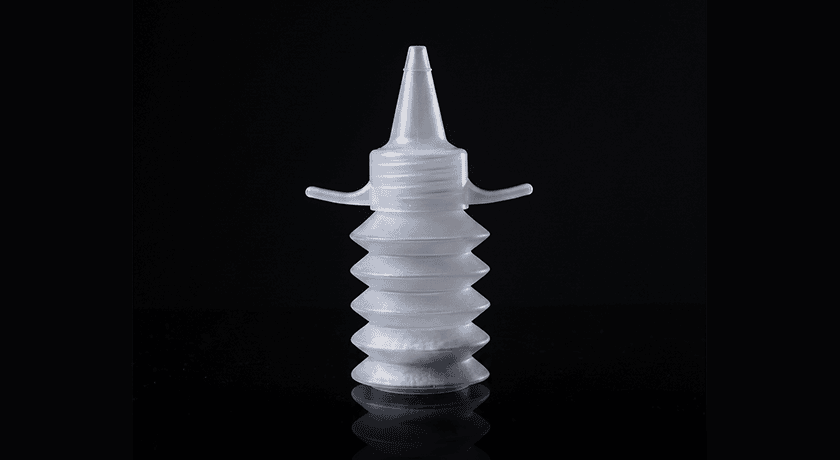
ZSFab marked the performance of a three-level anterior cervical discectomy and fusion using the company’s 20° InterConnect hyperlordotic cervical cages. This case represents the first clinical use of the 20° hyperlordotic implant design, which incorporates advanced 3D-printed Triply Periodic Minimal Surface (TPMS) lattice architecture and nano-surface technology. The procedure achieved a total of 60° of lordosis correction.
Additionally, a recent study highlighted ZSFab cervical cages’ exceptional subsidence performance. Compared to iompetitors with annular and truss designed cages, ZSFab’s cage demonstrates a significant (+14%) improvement in subsidence resistance, even against larger-footprint devices. With 107 cervical interbody sizes available, ZSFab’s portfolio enables patient-specific solutions that support durable deformity correction and helps optimize long-term clinical outcomes.
“We are committed to designing implants that align with the realities of surgical practice—enabling surgeons to achieve meaningful correction while maintaining stability and promoting long-term fusion,” says Jing Zhang, PhD, CEO for ZSFab.
ZSFab marked the performance of a three-level anterior cervical discectomy and fusion using the company's 20° InterConnect hyperlordotic cervical cages. This case represents the first clinical use of the 20° hyperlordotic implant design, which incorporates advanced 3D-printed Triply Periodic Minimal Surface (TPMS) lattice architecture and...
ZSFab marked the performance of a three-level anterior cervical discectomy and fusion using the company’s 20° InterConnect hyperlordotic cervical cages. This case represents the first clinical use of the 20° hyperlordotic implant design, which incorporates advanced 3D-printed Triply Periodic Minimal Surface (TPMS) lattice architecture and nano-surface technology. The procedure achieved a total of 60° of lordosis correction.
Additionally, a recent study highlighted ZSFab cervical cages’ exceptional subsidence performance. Compared to iompetitors with annular and truss designed cages, ZSFab’s cage demonstrates a significant (+14%) improvement in subsidence resistance, even against larger-footprint devices. With 107 cervical interbody sizes available, ZSFab’s portfolio enables patient-specific solutions that support durable deformity correction and helps optimize long-term clinical outcomes.
“We are committed to designing implants that align with the realities of surgical practice—enabling surgeons to achieve meaningful correction while maintaining stability and promoting long-term fusion,” says Jing Zhang, PhD, CEO for ZSFab.


 Copy to clipboard