

 Copy to clipboard
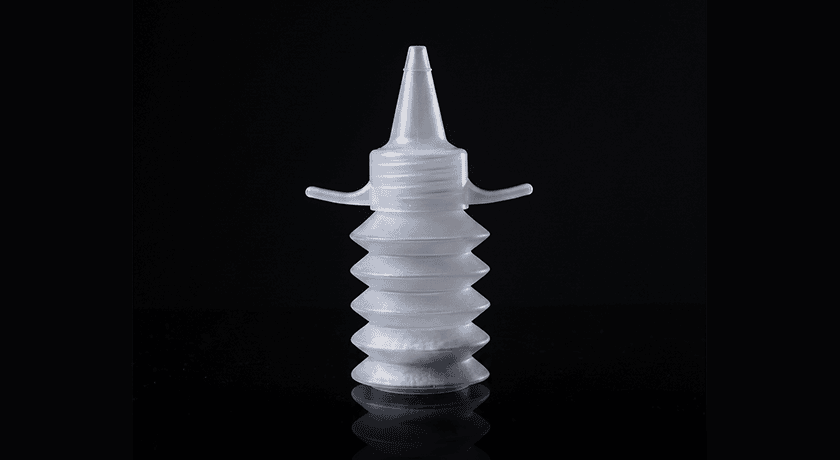
Miach Orthopaedics announced two-year outcomes from the first 200 patients enrolled in the Bridge Registry.
The Bridge Registry was initiated in 2023 to assess real-world outcomes for the BEAR Implant. Primary outcomes being tracked include knee function and feeling measured by the International Knee Documentation Committee Subjective Knee Evaluation at two years and knee laxity measured with Lachman scoring at one year. A total of 300 patients were enrolled at nine sites.
“One of the most encouraging findings from the Bridge Registry is that refinements in BEAR Implant surgical technique can have a meaningful impact on patient outcomes,” said Dr. Jocelyn Wittstein, orthopedic surgeon at Duke University and co-investigator of the Bridge Registry study. “The modified techniques were associated with a lower overall reoperation rate than the original technique, with no difference in other safety outcomes, giving surgeons’ greater confidence as they incorporate the BEAR Implant into their clinical practice.”
“Nearly 10,000 patients have now been treated with the BEAR Implant, and the evidence continues to demonstrate what’s possible when surgeons preserve the native ACL,” said Jamal Rushdy, president and chief executive officer of Miach Orthopaedics. “We are committed to advancing ACL restoration through continued innovation in surgical technique and a growing understanding of the importance of long-term knee health so more surgeons can confidently make ACL restoration an integral part of their treatment algorithm.”
Source: Miach Orthopaedics, Inc.
Miach Orthopaedics announced two-year outcomes from the first 200 patients enrolled in the Bridge Registry.
The Bridge Registry was initiated in 2023 to assess real-world outcomes for the BEAR Implant. Primary outcomes being tracked include knee function and feeling measured by the International Knee Documentation Committee Subjective...
Miach Orthopaedics announced two-year outcomes from the first 200 patients enrolled in the Bridge Registry.
The Bridge Registry was initiated in 2023 to assess real-world outcomes for the BEAR Implant. Primary outcomes being tracked include knee function and feeling measured by the International Knee Documentation Committee Subjective Knee Evaluation at two years and knee laxity measured with Lachman scoring at one year. A total of 300 patients were enrolled at nine sites.
“One of the most encouraging findings from the Bridge Registry is that refinements in BEAR Implant surgical technique can have a meaningful impact on patient outcomes,” said Dr. Jocelyn Wittstein, orthopedic surgeon at Duke University and co-investigator of the Bridge Registry study. “The modified techniques were associated with a lower overall reoperation rate than the original technique, with no difference in other safety outcomes, giving surgeons’ greater confidence as they incorporate the BEAR Implant into their clinical practice.”
“Nearly 10,000 patients have now been treated with the BEAR Implant, and the evidence continues to demonstrate what’s possible when surgeons preserve the native ACL,” said Jamal Rushdy, president and chief executive officer of Miach Orthopaedics. “We are committed to advancing ACL restoration through continued innovation in surgical technique and a growing understanding of the importance of long-term knee health so more surgeons can confidently make ACL restoration an integral part of their treatment algorithm.”
Source: Miach Orthopaedics, Inc.

You’ve reached your limit.
We’re glad you’re finding value in our content — and we’d love for you to keep going.
Subscribe now for unlimited access to orthopedic business intelligence.

JV
Julie Vetalice is ORTHOWORLD's Editorial Assistant. She has covered the orthopedic industry for over 20 years, having joined the company in 1999.