

 Copy to clipboard
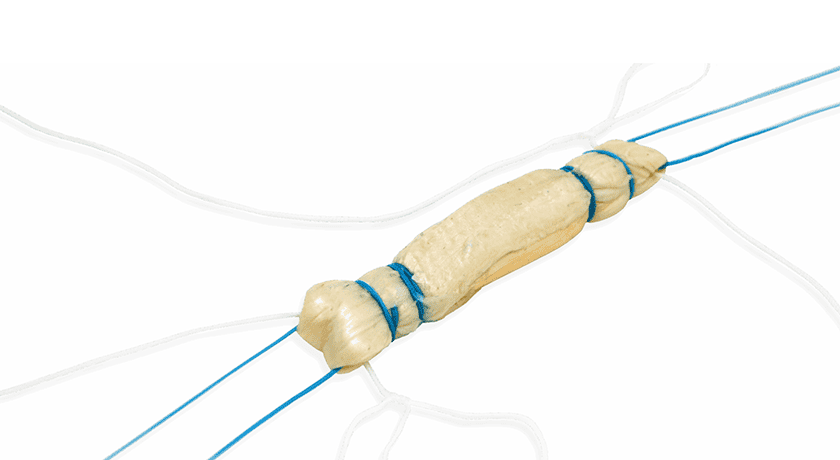
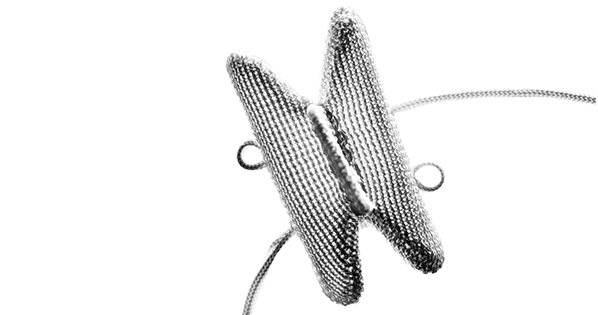
Companion Spine announced that FDA approved its DIAM Spinal Stabilization System. The DIAM Spinal Stabilization System is the first posterior motion-preserving device approved in the U.S. for the treatment of moderate to severe primary low back pain secondary to DDD at a single lumbar level (L2–L5) in patients who remain symptomatic after at least six months of non-operative care.
DIAM Spinal Stabilization was granted Breakthrough Device Designation by FDA in 2021, as it is reasonably expected to address an unmet clinical need in a large and underserved patient population: those inadequately treated by non-operative care but not eligible for more invasive reconstructive procedures, such as spinal fusion.
FDA approval is based on comprehensive clinical evidence, including a prospective, randomized, multicenter Investigational Device Exemption trial and long-term follow-up over an average of 11.5 years.
Key Clinical Findings:
- DIAM Spinal Stabilization demonstrated superiority to non-operative care on the primary endpoint of composite clinical success (CCS) at 24 months:
- 67.4% CCS with DIAM Spinal Stabilization vs. 11.9% with non-operative care
- Bayesian posterior probability of superiority >0.999
- Patients treated with DIAM Spinal Stabilization experienced rapid and sustained improvements across all clinical domains:
- 77.0% Oswestry Disability Index (ODI) responder rate at 24 months
- 83.2% back pain responder rate at 24 months
- Durable improvements through an average of 11.5 years in the long-term follow-up cohort, with 86.4% ODI and 86.4% back pain responder rates
- High and sustained treatment satisfaction, with 87% of the patient population willing to make the same choice 11.5 years later
- Across the randomized cohort, DIAM Spinal Stabilization demonstrated:
- Low rates of device-related serious adverse events: 1.6%
- No device migrations or device failures reported through long-term follow-up of 11.5 years
- 95.7% freedom from device removal at an average of 11.5 years
“FDA’s PMA of DIAM Spinal Stabilization System is a landmark moment in the evolution of Companion Spine as a company solely focused on Total Disease State Solutions for degenerative spine diseases,” said Anthony G. Viscogliosi, Chief Executive Officer of Companion Spine. “We have built this organization through strategic acquisitions and relentless innovation, focused on expanding the world’s largest portfolio of minimally invasive stabilization solutions. Since 1997, Dr. Jean Taylor’s DIAM Spinal Stabilization System has helped patients across the world, and now, with FDA approval, it can also be shared with patients across the U.S.”
Source: Companion Spine
Companion Spine announced that FDA approved its DIAM Spinal Stabilization System. The DIAM Spinal Stabilization System is the first posterior motion-preserving device approved in the U.S. for the treatment of moderate to severe primary low back pain secondary to DDD at a single lumbar level (L2–L5) in patients who remain symptomatic after at...
Companion Spine announced that FDA approved its DIAM Spinal Stabilization System. The DIAM Spinal Stabilization System is the first posterior motion-preserving device approved in the U.S. for the treatment of moderate to severe primary low back pain secondary to DDD at a single lumbar level (L2–L5) in patients who remain symptomatic after at least six months of non-operative care.
DIAM Spinal Stabilization was granted Breakthrough Device Designation by FDA in 2021, as it is reasonably expected to address an unmet clinical need in a large and underserved patient population: those inadequately treated by non-operative care but not eligible for more invasive reconstructive procedures, such as spinal fusion.
FDA approval is based on comprehensive clinical evidence, including a prospective, randomized, multicenter Investigational Device Exemption trial and long-term follow-up over an average of 11.5 years.
Key Clinical Findings:
- DIAM Spinal Stabilization demonstrated superiority to non-operative care on the primary endpoint of composite clinical success (CCS) at 24 months:
- 67.4% CCS with DIAM Spinal Stabilization vs. 11.9% with non-operative care
- Bayesian posterior probability of superiority >0.999
- Patients treated with DIAM Spinal Stabilization experienced rapid and sustained improvements across all clinical domains:
- 77.0% Oswestry Disability Index (ODI) responder rate at 24 months
- 83.2% back pain responder rate at 24 months
- Durable improvements through an average of 11.5 years in the long-term follow-up cohort, with 86.4% ODI and 86.4% back pain responder rates
- High and sustained treatment satisfaction, with 87% of the patient population willing to make the same choice 11.5 years later
- Across the randomized cohort, DIAM Spinal Stabilization demonstrated:
- Low rates of device-related serious adverse events: 1.6%
- No device migrations or device failures reported through long-term follow-up of 11.5 years
- 95.7% freedom from device removal at an average of 11.5 years
“FDA’s PMA of DIAM Spinal Stabilization System is a landmark moment in the evolution of Companion Spine as a company solely focused on Total Disease State Solutions for degenerative spine diseases,” said Anthony G. Viscogliosi, Chief Executive Officer of Companion Spine. “We have built this organization through strategic acquisitions and relentless innovation, focused on expanding the world’s largest portfolio of minimally invasive stabilization solutions. Since 1997, Dr. Jean Taylor’s DIAM Spinal Stabilization System has helped patients across the world, and now, with FDA approval, it can also be shared with patients across the U.S.”
Source: Companion Spine

You’ve reached your limit.
We’re glad you’re finding value in our content — and we’d love for you to keep going.
Subscribe now for unlimited access to orthopedic business intelligence.

PM
Patrick McGuire is an ORTHOWORLD Contributor.