

 Copy to clipboard
Biomimetic Innovations announced approval by MHRA for a first-in-human clinical study evaluating the safety and early performance of OsStic in periarticular fractures.
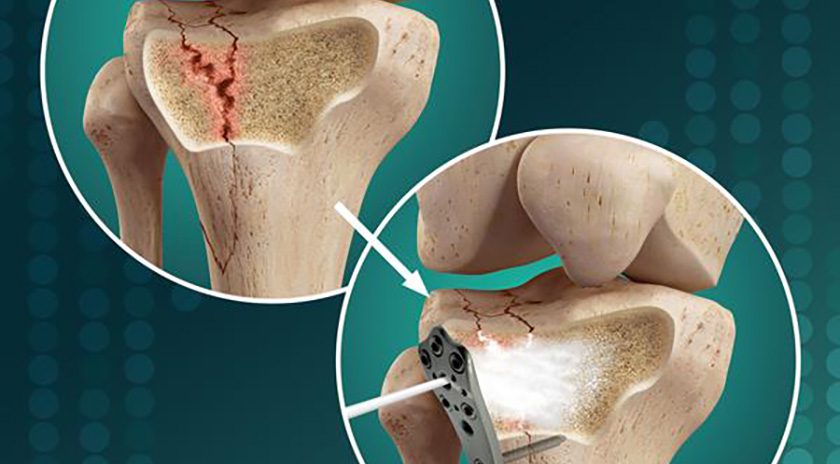
The study will focus on tibial plateau fractures, complex periarticular injuries that often involve depression of the joint surface and loss of subchondral bone support. Following elevation of the articular surface during surgery, surgeons are frequently left with a metaphyseal void that must be filled to maintain reduction and prevent secondary collapse.
Existing solutions, such as autograft, allograft, and conventional synthetic bone substitutes each have limitations, including donor-site morbidity, inconsistent availability, brittleness, or suboptimal biological integration.
OsStic has been developed to address these challenges. The material is designed to harden rapidly, conform to irregular defect geometries, and provide immediate mechanical support to the subchondral bone, while promoting bone ingrowth and remodelling over time.
The forthcoming clinical investigation will be conducted at Leeds University Teaching Hospital in the United Kingdom. The primary objective of the study is to evaluate device safety, including early adverse events, implant-site reactions, and device-related complications. Secondary objectives include assessment of maintenance of fracture reduction, radiographic evidence of bone healing and remodelling, functional recovery, pain outcomes, quality of life, and exploratory gait analysis using plantar pressure mapping.
Patient recruitment is expected to begin in the coming weeks, with study completion anticipated by 2028.
Source: Biomimetic Innovations Ltd and PBC Biomed
Biomimetic Innovations announced approval by MHRA for a first-in-human clinical study evaluating the safety and early performance of OsStic in periarticular fractures.
The study will focus on tibial plateau fractures, complex periarticular injuries that often involve depression of the joint surface and loss of subchondral bone support....
Biomimetic Innovations announced approval by MHRA for a first-in-human clinical study evaluating the safety and early performance of OsStic in periarticular fractures.
The study will focus on tibial plateau fractures, complex periarticular injuries that often involve depression of the joint surface and loss of subchondral bone support. Following elevation of the articular surface during surgery, surgeons are frequently left with a metaphyseal void that must be filled to maintain reduction and prevent secondary collapse.
Existing solutions, such as autograft, allograft, and conventional synthetic bone substitutes each have limitations, including donor-site morbidity, inconsistent availability, brittleness, or suboptimal biological integration.
OsStic has been developed to address these challenges. The material is designed to harden rapidly, conform to irregular defect geometries, and provide immediate mechanical support to the subchondral bone, while promoting bone ingrowth and remodelling over time.
The forthcoming clinical investigation will be conducted at Leeds University Teaching Hospital in the United Kingdom. The primary objective of the study is to evaluate device safety, including early adverse events, implant-site reactions, and device-related complications. Secondary objectives include assessment of maintenance of fracture reduction, radiographic evidence of bone healing and remodelling, functional recovery, pain outcomes, quality of life, and exploratory gait analysis using plantar pressure mapping.
Patient recruitment is expected to begin in the coming weeks, with study completion anticipated by 2028.
Source: Biomimetic Innovations Ltd and PBC Biomed

You’ve reached your limit.
We’re glad you’re finding value in our content — and we’d love for you to keep going.
Subscribe now for unlimited access to orthopedic business intelligence.

JV
Julie Vetalice is ORTHOWORLD's Editorial Assistant. She has covered the orthopedic industry for over 20 years, having joined the company in 1999.