

 Copy to clipboard
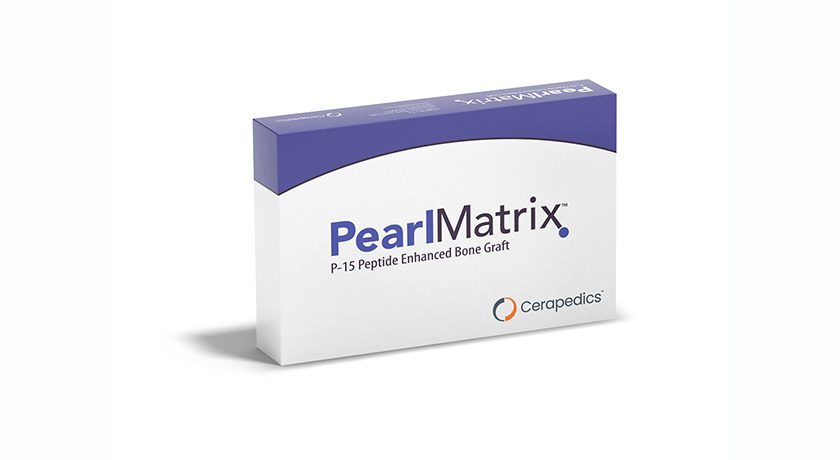
Cerapedics enters 2026 with a wave of momentum behind its PearlMatrix P-15 Peptide Enhanced Bone Graft. The company announced that the Class III drug/device combination product received FDA premarket approval for single-level transforaminal lumbar interbody fusion (TLIF) in June 2025 and closed the year with two back-to-back papers published in Spine that detailed the 24-month outcomes from the company’s ASPIRE study of PearlMatrix. The study results demonstrated that PearlMatrix achieved statistically superior clinical success compared to local autograft.
ASPIRE was a prospective, single-blinded, multicenter, randomized, controlled pivotal U.S. IDE study involving 33 U.S. participating centers and enrolling 293 patients, including approximately 60% of patients considered high-risk for non-union. The statistical highlights from the Spine papers included that with PearlMatrix, more than twice as many patients were fused compared to local autograft at six months. The study also found that higher time-to-fusion rates continued through 12 months and 24 months, resulting in statistically faster time-to-fusion.
“Bone growth acceleration is an important part of our messaging,” said Valeska Schroeder, Ph.D., CEO of Cerapedics. “There are only three drug/device combination products for spinal fusion, and we have two of them, i-FACTOR for the cervical spine and now PearlMatrix for the lumbar spine. Our i-FACTOR physician customers told us that they care about the lumbar and worry about our high-risk patients, so we created a product that addresses their concerns.”
We spoke with Dr. Schroeder about the development of PearlMatrix and the company’s goals for 2026. Commercial launch, additional published papers and discussions with FDA about label expansion into ALIF, PLIF, OLIF/ATP and LLIF surgical approaches are expected to take place.
Excerpts from our conversation are edited for brevity and clarity.
Why did you decide to target the TLIF approach first?
Dr. Schroeder: TLIF was selected because it is the most challenging approach for fusion. Surgeons have a little more difficulty accessing the disc space, and the size of the cage is smaller. We chose the most challenging approach for several reasons. One is that usually you can differentiate your control better if the challenge for the study is higher. The second reason is the ability to expand the indication in the future. If you start with the most challenging approach, it gets easier as you go.
What are the key takeaways from the ASPIRE Study?
Dr. Schroeder: I think surgeons should look at the study’s patient population, both the full cohort and the high-risk patient population, at six months. The full cohort achieved twice as many fusions as the control group, and the high-risk patient population saw a 150% increase in fusions compared to the control group. With PearlMatrix, patients are fusing early and faster.
Now that you’ve received the PMA, what does the commercialization strategy look like?
Dr. Schroeder: Most lumbar procedures are done in hospitals, with a small percentage performed in ASCs. The first step has been getting on contract with GPOs. Step two is working with hospital systems and individual hospitals. We work with large hospital systems, such as HCA Healthcare, small hospitals, and numerous academic centers. We have been able to create partnerships early due to the strength of our clinical evidence. Our true launch will begin in 2026, and we are ahead of schedule with hospital approvals.
We’ve already treated over 1,000 commercial patients in the U.S. with PearlMatrix, and that number is growing rapidly. We quickly shifted from an early launch to a mid-stream launch, and are working with a large number of active users of the product who are already seeing results in their patients.
What are some of the challenges and opportunities of having such a novel product and getting the messaging out?
Dr. Schroeder: Most products on the market don’t have the drug-power activation that we have in our products. In my mind, that is a challenge and an opportunity, because we have amazing data; we need to get that message out to surgeons. Forums like NASS and other meetings are great opportunities for that. We are publishing papers, getting on podiums, and working with clinicians who have been involved in our studies.
I think the spine industry will reach a point where there needs to be more data for these types of products to be successful on the market. I would love to be at that point today, but we’ll continue to get out the message that we are committed to clinical evidence and improving outcomes. We want to be active in bone repair and spinal fusion and show the difference that the right product can make in those procedures. Some societies are conveying the message that level of evidence should influence a surgeon’s decision to use a product, and we want to be part of those conversations.
What lessons from commercializing i-FACTOR did you carry over to PearlMatrix’s development and commercialization?
Dr. Schroeder: A lot, actually. The product development for PearlMatrix stemmed from experience with i-FACTOR, a hydrogel-based product that is flowable and works well in a contained space, making it ideal for the cervical spine indication. I-FACTOR also showed that P-15 has an amazing safety profile. The cervical spine is sensitive to inflammation and ectopic bone growth, and results have shown that the drug doesn’t correlate with those issues.
We learned from physicians that they want a bone graft that stays where you put it while working in a contained space, and they need advanced products for lumbar spine and more complex, high-risk patients. All of that insight helped our development process for PearlMatrix.
From a commercial standpoint, we learned that it’s essential to view hospitals and economic buyers as key stakeholders. That helped us understand how we should frame our messages and roll out our products to them. It’s important to have great teams to secure contracts and educate surgeons on the clinical data. We’re competing in a space with a lot of widgets and hardware that you can touch and feel, but we want to walk people through the clinical data, and that requires a team focused on education.
Are there any other trends in spine that you’re closely watching?
Dr. Schroeder: We hear a fair amount about robotics and navigation, which we’re agnostic to, but it’s important to understand that physicians are looking to these technologies to gain efficiency and improve patient outcomes, because that’s what we’re all about at Cerapedics.
Cerapedics enters 2026 with a wave of momentum behind its PearlMatrix P-15 Peptide Enhanced Bone Graft. The company announced that the Class III drug/device combination product received FDA premarket approval for single-level transforaminal lumbar interbody fusion (TLIF) in June 2025 and closed the year with two back-to-back papers...
Cerapedics enters 2026 with a wave of momentum behind its PearlMatrix P-15 Peptide Enhanced Bone Graft. The company announced that the Class III drug/device combination product received FDA premarket approval for single-level transforaminal lumbar interbody fusion (TLIF) in June 2025 and closed the year with two back-to-back papers published in Spine that detailed the 24-month outcomes from the company’s ASPIRE study of PearlMatrix. The study results demonstrated that PearlMatrix achieved statistically superior clinical success compared to local autograft.
ASPIRE was a prospective, single-blinded, multicenter, randomized, controlled pivotal U.S. IDE study involving 33 U.S. participating centers and enrolling 293 patients, including approximately 60% of patients considered high-risk for non-union. The statistical highlights from the Spine papers included that with PearlMatrix, more than twice as many patients were fused compared to local autograft at six months. The study also found that higher time-to-fusion rates continued through 12 months and 24 months, resulting in statistically faster time-to-fusion.
“Bone growth acceleration is an important part of our messaging,” said Valeska Schroeder, Ph.D., CEO of Cerapedics. “There are only three drug/device combination products for spinal fusion, and we have two of them, i-FACTOR for the cervical spine and now PearlMatrix for the lumbar spine. Our i-FACTOR physician customers told us that they care about the lumbar and worry about our high-risk patients, so we created a product that addresses their concerns.”
We spoke with Dr. Schroeder about the development of PearlMatrix and the company’s goals for 2026. Commercial launch, additional published papers and discussions with FDA about label expansion into ALIF, PLIF, OLIF/ATP and LLIF surgical approaches are expected to take place.
Excerpts from our conversation are edited for brevity and clarity.
Why did you decide to target the TLIF approach first?
Dr. Schroeder: TLIF was selected because it is the most challenging approach for fusion. Surgeons have a little more difficulty accessing the disc space, and the size of the cage is smaller. We chose the most challenging approach for several reasons. One is that usually you can differentiate your control better if the challenge for the study is higher. The second reason is the ability to expand the indication in the future. If you start with the most challenging approach, it gets easier as you go.
What are the key takeaways from the ASPIRE Study?
Dr. Schroeder: I think surgeons should look at the study’s patient population, both the full cohort and the high-risk patient population, at six months. The full cohort achieved twice as many fusions as the control group, and the high-risk patient population saw a 150% increase in fusions compared to the control group. With PearlMatrix, patients are fusing early and faster.
Now that you’ve received the PMA, what does the commercialization strategy look like?
Dr. Schroeder: Most lumbar procedures are done in hospitals, with a small percentage performed in ASCs. The first step has been getting on contract with GPOs. Step two is working with hospital systems and individual hospitals. We work with large hospital systems, such as HCA Healthcare, small hospitals, and numerous academic centers. We have been able to create partnerships early due to the strength of our clinical evidence. Our true launch will begin in 2026, and we are ahead of schedule with hospital approvals.
We’ve already treated over 1,000 commercial patients in the U.S. with PearlMatrix, and that number is growing rapidly. We quickly shifted from an early launch to a mid-stream launch, and are working with a large number of active users of the product who are already seeing results in their patients.
What are some of the challenges and opportunities of having such a novel product and getting the messaging out?
Dr. Schroeder: Most products on the market don’t have the drug-power activation that we have in our products. In my mind, that is a challenge and an opportunity, because we have amazing data; we need to get that message out to surgeons. Forums like NASS and other meetings are great opportunities for that. We are publishing papers, getting on podiums, and working with clinicians who have been involved in our studies.
I think the spine industry will reach a point where there needs to be more data for these types of products to be successful on the market. I would love to be at that point today, but we’ll continue to get out the message that we are committed to clinical evidence and improving outcomes. We want to be active in bone repair and spinal fusion and show the difference that the right product can make in those procedures. Some societies are conveying the message that level of evidence should influence a surgeon’s decision to use a product, and we want to be part of those conversations.
What lessons from commercializing i-FACTOR did you carry over to PearlMatrix’s development and commercialization?
Dr. Schroeder: A lot, actually. The product development for PearlMatrix stemmed from experience with i-FACTOR, a hydrogel-based product that is flowable and works well in a contained space, making it ideal for the cervical spine indication. I-FACTOR also showed that P-15 has an amazing safety profile. The cervical spine is sensitive to inflammation and ectopic bone growth, and results have shown that the drug doesn’t correlate with those issues.
We learned from physicians that they want a bone graft that stays where you put it while working in a contained space, and they need advanced products for lumbar spine and more complex, high-risk patients. All of that insight helped our development process for PearlMatrix.
From a commercial standpoint, we learned that it’s essential to view hospitals and economic buyers as key stakeholders. That helped us understand how we should frame our messages and roll out our products to them. It’s important to have great teams to secure contracts and educate surgeons on the clinical data. We’re competing in a space with a lot of widgets and hardware that you can touch and feel, but we want to walk people through the clinical data, and that requires a team focused on education.
Are there any other trends in spine that you’re closely watching?
Dr. Schroeder: We hear a fair amount about robotics and navigation, which we’re agnostic to, but it’s important to understand that physicians are looking to these technologies to gain efficiency and improve patient outcomes, because that’s what we’re all about at Cerapedics.

You’ve reached your limit.
We’re glad you’re finding value in our content — and we’d love for you to keep going.
Subscribe now for unlimited access to orthopedic business intelligence.

CL
Carolyn LaWell is ORTHOWORLD's Chief Content Officer. She joined ORTHOWORLD in 2012 to oversee its editorial and industry education. She previously served in editor roles at B2B magazines and newspapers.