Advita Ortho announced a series of new peer-reviewed research supporting the continued evolution of its Newton knee balancing intelligence, advancing the potential for more predictive, measurement-based decision-making in total knee arthroplasty.
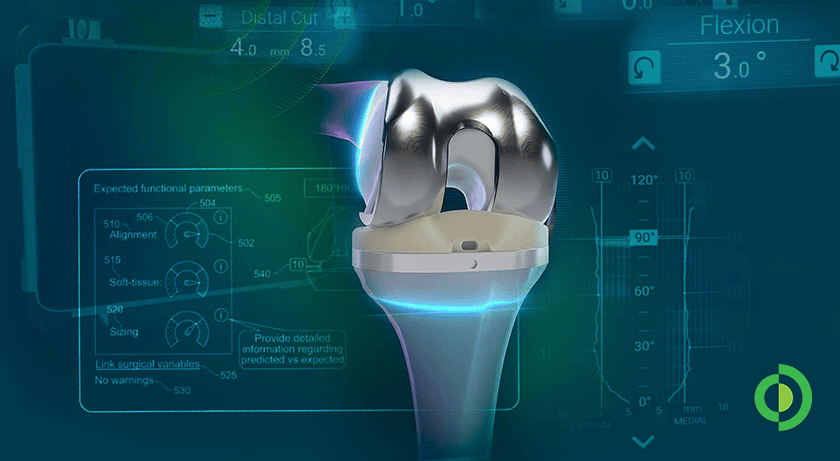
Through real-time measurement of ligament behavior across the full range of motion, Newton converts soft tissue dynamics into actionable intraoperative guidance, supporting more consistent and reproducible surgical execution.
Across recent publications, studies demonstrate the impact of integrating real-time dynamic soft tissue measurements into surgical planning. One study established the benefit of considering the soft-tissue laxity as an input to fuel the planning algorithm, while additional research demonstrated the potential for machine learning models to support predictive decisions, including tibial insert selection and individualized balancing strategies.
A newly introduced classification framework further advances this work, providing a structured method to define knee phenotype based on dynamic intraoperative measurements. Together, the expanding evidence base illustrates how objective measurement, machine learning and standardized frameworks can drive more consistent and personalized outcomes in total knee arthroplasty.
Advita Ortho announced a series of new peer-reviewed research supporting the continued evolution of its Newton knee balancing intelligence, advancing the potential for more predictive, measurement-based decision-making in total knee arthroplasty.
Through real-time measurement of ligament behavior across the full range of motion, Newton...
Advita Ortho announced a series of new peer-reviewed research supporting the continued evolution of its Newton knee balancing intelligence, advancing the potential for more predictive, measurement-based decision-making in total knee arthroplasty.
Through real-time measurement of ligament behavior across the full range of motion, Newton converts soft tissue dynamics into actionable intraoperative guidance, supporting more consistent and reproducible surgical execution.
Across recent publications, studies demonstrate the impact of integrating real-time dynamic soft tissue measurements into surgical planning. One study established the benefit of considering the soft-tissue laxity as an input to fuel the planning algorithm, while additional research demonstrated the potential for machine learning models to support predictive decisions, including tibial insert selection and individualized balancing strategies.
A newly introduced classification framework further advances this work, providing a structured method to define knee phenotype based on dynamic intraoperative measurements. Together, the expanding evidence base illustrates how objective measurement, machine learning and standardized frameworks can drive more consistent and personalized outcomes in total knee arthroplasty.




 Copy to clipboard