PainTEQ commenced U.S. commercial launch of TRAQ SI Joint Fusion, the first posterior SI joint implant designed to engage both the sacral and iliac cortices for bi-cortical fixation through a tissue-sparing, 1-inch incision. TRAQ expands PainTEQ’s posterior platform alongside LINQ, giving interventionalists and surgeons two distinct fixation options within a single surgical approach.
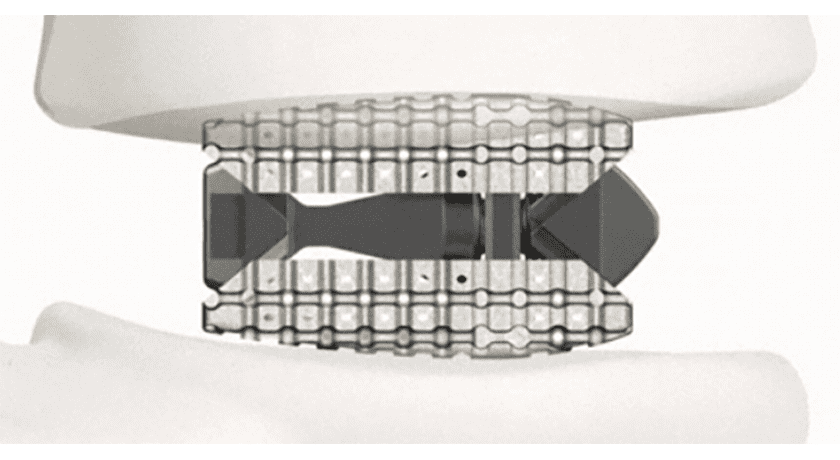
TRAQ is delivered through a tissue-sparing posterior approach using a 1″ incision. The triangular piercing barbs are engineered to engage both the sacral and iliac cortices, transfixing the joint at the two anatomic surfaces where mechanical purchase is strongest. A pre-filled graft window is positioned directly at the fusion interface, to support bony incorporation.
“TRAQ’s triangular piercing barbs were an intentional design choice. They engage both the sacral and iliac cortices, which is what this joint needs to stabilize,” said Dwayne Polzer, Vice President of Research and Development at PainTEQ.
To support continued evidence generation, PainTEQ has initiated TRAQTION, a prospective, multicenter, post-market study evaluating the real-world safety and efficacy of TRAQ. The study is expected to enroll up to 100 subjects across 10 U.S. sites with 24-month follow-up.
PainTEQ commenced U.S. commercial launch of TRAQ SI Joint Fusion, the first posterior SI joint implant designed to engage both the sacral and iliac cortices for bi-cortical fixation through a tissue-sparing, 1-inch incision. TRAQ expands PainTEQ's posterior platform alongside LINQ, giving interventionalists and surgeons two distinct fixation...
PainTEQ commenced U.S. commercial launch of TRAQ SI Joint Fusion, the first posterior SI joint implant designed to engage both the sacral and iliac cortices for bi-cortical fixation through a tissue-sparing, 1-inch incision. TRAQ expands PainTEQ’s posterior platform alongside LINQ, giving interventionalists and surgeons two distinct fixation options within a single surgical approach.
TRAQ is delivered through a tissue-sparing posterior approach using a 1″ incision. The triangular piercing barbs are engineered to engage both the sacral and iliac cortices, transfixing the joint at the two anatomic surfaces where mechanical purchase is strongest. A pre-filled graft window is positioned directly at the fusion interface, to support bony incorporation.
“TRAQ’s triangular piercing barbs were an intentional design choice. They engage both the sacral and iliac cortices, which is what this joint needs to stabilize,” said Dwayne Polzer, Vice President of Research and Development at PainTEQ.
To support continued evidence generation, PainTEQ has initiated TRAQTION, a prospective, multicenter, post-market study evaluating the real-world safety and efficacy of TRAQ. The study is expected to enroll up to 100 subjects across 10 U.S. sites with 24-month follow-up.


 Copy to clipboard