

 Copy to clipboard
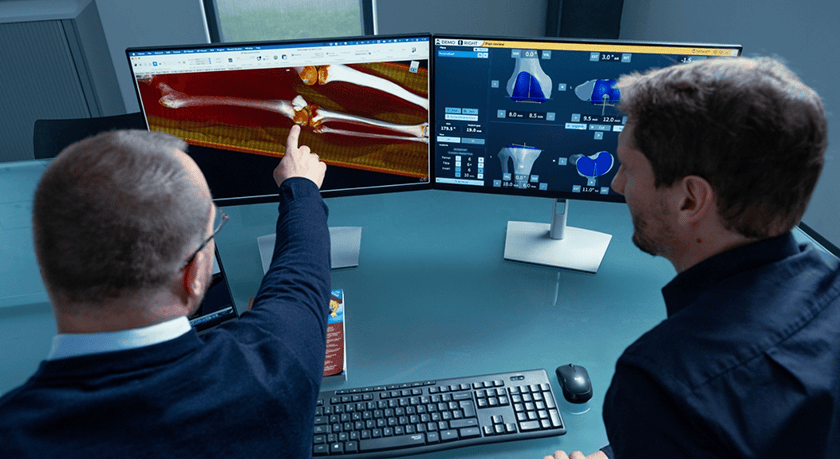
New enabling technologies have led the headlines at the AAOS Annual Meeting over the last few years, but the strategic announcements already made in 2026 have cemented robotics and navigation in orthopedics as a priority topic to be discussed in New Orleans.
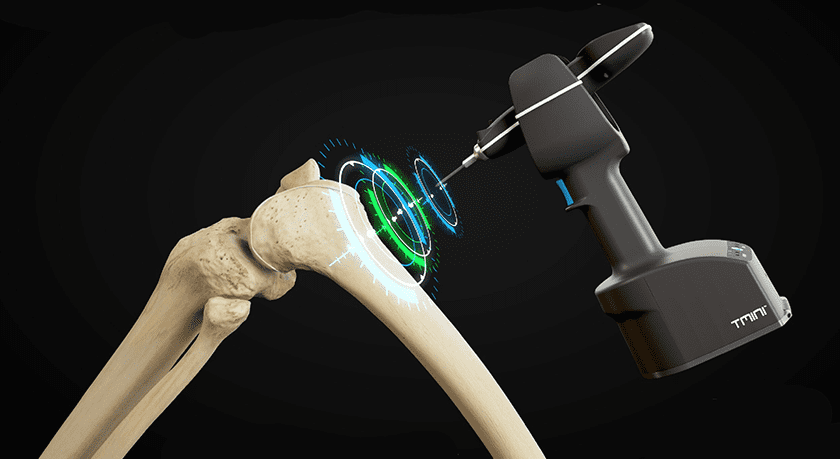
Just last week, THINK Surgical announced the first cases had been completed with its TMINI Miniature Robotic System and Stryker’s Triathlon Knee System. THINK Surgical’s robot can now be used with a significant portion of the knee implant market. The news came just a few weeks after Stryker announced completion of the first clinical cases with its own handheld robot. The Mako RPS (Robotic Power System) for total knee is designed to reach a new audience of surgeons interested in the potential benefits of robotic technology but who want the familiarity of a manual power tool.
These announcements (and those listed below) suggest that enabling technology is at an inflection point. Robotics, navigation and preoperative planning systems have seen steady revenue growth in the high single digits and surpassed $1.5 billion in worldwide sales in 2025, according to our estimates. The segment achieved this growth rate despite a trend toward flexible financing arrangements and volume-based commitments. Adoption of these technologies has remained low despite this.
There are a few questions we’ll be asking this week at AAOS — and watching answers unfold in the future. What strategies will the largest orthopedic companies pursue to diversify their enabling technology portfolios? How will the decoupling of implant portfolios and robotic systems impact joint replacement, spine and technology sales? What technology advancements will ultimately drive greater adoption of robotics and navigation in hospitals and ASCs? What opportunities are there for medium- and small-sized implant companies to enter the enabling technology space?
We aren’t the only ones asking what the future holds for enabling technology. The Canaccord Genuity Musculoskeletal Conference keynote is taking a rare break from covering the economy to discuss non-robotic enabling technology. AAOS and FDA are holding a joint town hall on augmented reality, virtual reality and robotics. The OrthoPitch competition will highlight companies with AI-powered mixed reality and sensing technologies.
The list below notes enabling technology announcements from other orthopedic companies since the beginning of the year.
Acquisitions and Partnerships
CGBIO signed an exclusive domestic distribution agreement with Curexo for the spinal surgery robot CUVIS-spine. Under the agreement, CGBIO will take full responsibility for domestic sales and marketing of the system in South Korea. The CUVIS-spine surgical robot precisely guides the robotic arm during pedicle screw insertion procedures, according to pre-established surgical plans.
Maxx Orthopedics acquired TracPatch, a wearable sensor technology that tracks key recovery metrics for knee replacement patients in real time. The purchase from Granger Capital expands Maxx Ortho’s Quick Recovery Solutions (QRS) platform, an integrated, value-driven offering designed to help surgeons personalize care, improve outcomes, and advance efficient outpatient surgical treatment pathways.
VB Spine acquired Augmedic’s augmented reality xvision Spine System and Robotron Surgical Technologies’ SpineHawk AI-powered visualization platform. The technologies provide VB Spine with its own intraoperative imaging technology. VB Spine was formed after acquiring Stryker’s spinal implant assets and has access to Stryker’s Mako and Copilot systems.
VISIE announced the availability of its partner application programming interfaces (APIs), enabling surgical robotics and navigation partners to integrate VISIE’s spatial computing and real-time scanning capabilities into existing platforms with minimal integration overhead. VISIE’s Partner APIs provide a standardized, documented interface to the company’s core scanning and tracking technology, reducing integration risk and accelerating time to proof-of-concept across a wide range of robotic architectures.
New Market Launches
Advita Ortho’s GPS surgical navigation platform reached the milestone of 100,000 joint replacement procedures worldwide. The company also commenced limited launch of its next-generation GPS Shoulder system, expanding the navigation platform with an updated station and software designed to deliver a faster, more intuitive user experience during shoulder replacements.
Catalyst OrthoScience received FDA 510(k) clearance to market Archer Patient-Specific Instrumentation (PSI). Licensed in partnership with 3D-Side, Archer PSI is a suite of humeral and glenoid guides tailored to the patient’s anatomy that allow orthopedic surgeons to execute 3D preoperative plans intraoperatively. Catalyst is one of the only companies to offer patient-specific guides for both the glenoid and humerus.
Gyder Surgical completed the first commercial surgeries in the U.S. using GYDER Hip Navigation. The GYDER System offers surgeons real-time guidance for accurate acetabular cup placement without invasive metallic pins or reliance on CT or X-ray imaging, reducing risks such as pelvic pain, fracture, bursitis, and retained metal fragments. The navigation system’s quick calibration and registration make it ideal for ambulatory surgery centers.
Medtronic received FDA clearance for the Stealth AXiS surgical system, a next-generation platform that combines planning, navigation, and robotics into a single intelligent system for spine surgery. A key innovation of the system is LiveAlign segmental tracking, which allows surgeons to visualize anatomic motion, surgical adjustments, and patient alignment in real time during spine surgery, without the need for repeated imaging.
OrthAlign expanded its Lantern Hip platform to include support for posterior-based approaches in total hip replacement, allowing surgeons to choose the technology for any total hip procedure, regardless of their clinical preference for patient position (lateral or supine). Lantern Hip initially launched for the supine patient position in 2023 and will be fully commercially available for the lateral patient position by early 2026.
Peek Health’s PeekMed web software received FDA clearance for its automatic 2D-to-3D knee replacement technology. The software is claimed to be the first global platform that can process data hands-off directly from the imaging center. The model generates 3D models that can be fed into automated planning, logistics, implant design, robotic execution, and other applications to drive efficiency for more patients, while using x-rays.
New enabling technologies have led the headlines at the AAOS Annual Meeting over the last few years, but the strategic announcements already made in 2026 have cemented robotics and navigation in orthopedics as a priority topic to be discussed in New Orleans.
Just last week, THINK Surgical announced the first cases had been completed with...
New enabling technologies have led the headlines at the AAOS Annual Meeting over the last few years, but the strategic announcements already made in 2026 have cemented robotics and navigation in orthopedics as a priority topic to be discussed in New Orleans.
Just last week, THINK Surgical announced the first cases had been completed with its TMINI Miniature Robotic System and Stryker’s Triathlon Knee System. THINK Surgical’s robot can now be used with a significant portion of the knee implant market. The news came just a few weeks after Stryker announced completion of the first clinical cases with its own handheld robot. The Mako RPS (Robotic Power System) for total knee is designed to reach a new audience of surgeons interested in the potential benefits of robotic technology but who want the familiarity of a manual power tool.
These announcements (and those listed below) suggest that enabling technology is at an inflection point. Robotics, navigation and preoperative planning systems have seen steady revenue growth in the high single digits and surpassed $1.5 billion in worldwide sales in 2025, according to our estimates. The segment achieved this growth rate despite a trend toward flexible financing arrangements and volume-based commitments. Adoption of these technologies has remained low despite this.
There are a few questions we’ll be asking this week at AAOS — and watching answers unfold in the future. What strategies will the largest orthopedic companies pursue to diversify their enabling technology portfolios? How will the decoupling of implant portfolios and robotic systems impact joint replacement, spine and technology sales? What technology advancements will ultimately drive greater adoption of robotics and navigation in hospitals and ASCs? What opportunities are there for medium- and small-sized implant companies to enter the enabling technology space?
We aren’t the only ones asking what the future holds for enabling technology. The Canaccord Genuity Musculoskeletal Conference keynote is taking a rare break from covering the economy to discuss non-robotic enabling technology. AAOS and FDA are holding a joint town hall on augmented reality, virtual reality and robotics. The OrthoPitch competition will highlight companies with AI-powered mixed reality and sensing technologies.
The list below notes enabling technology announcements from other orthopedic companies since the beginning of the year.
Acquisitions and Partnerships
CGBIO signed an exclusive domestic distribution agreement with Curexo for the spinal surgery robot CUVIS-spine. Under the agreement, CGBIO will take full responsibility for domestic sales and marketing of the system in South Korea. The CUVIS-spine surgical robot precisely guides the robotic arm during pedicle screw insertion procedures, according to pre-established surgical plans.
Maxx Orthopedics acquired TracPatch, a wearable sensor technology that tracks key recovery metrics for knee replacement patients in real time. The purchase from Granger Capital expands Maxx Ortho’s Quick Recovery Solutions (QRS) platform, an integrated, value-driven offering designed to help surgeons personalize care, improve outcomes, and advance efficient outpatient surgical treatment pathways.
VB Spine acquired Augmedic’s augmented reality xvision Spine System and Robotron Surgical Technologies’ SpineHawk AI-powered visualization platform. The technologies provide VB Spine with its own intraoperative imaging technology. VB Spine was formed after acquiring Stryker’s spinal implant assets and has access to Stryker’s Mako and Copilot systems.
VISIE announced the availability of its partner application programming interfaces (APIs), enabling surgical robotics and navigation partners to integrate VISIE’s spatial computing and real-time scanning capabilities into existing platforms with minimal integration overhead. VISIE’s Partner APIs provide a standardized, documented interface to the company’s core scanning and tracking technology, reducing integration risk and accelerating time to proof-of-concept across a wide range of robotic architectures.
New Market Launches
Advita Ortho’s GPS surgical navigation platform reached the milestone of 100,000 joint replacement procedures worldwide. The company also commenced limited launch of its next-generation GPS Shoulder system, expanding the navigation platform with an updated station and software designed to deliver a faster, more intuitive user experience during shoulder replacements.
Catalyst OrthoScience received FDA 510(k) clearance to market Archer Patient-Specific Instrumentation (PSI). Licensed in partnership with 3D-Side, Archer PSI is a suite of humeral and glenoid guides tailored to the patient’s anatomy that allow orthopedic surgeons to execute 3D preoperative plans intraoperatively. Catalyst is one of the only companies to offer patient-specific guides for both the glenoid and humerus.
Gyder Surgical completed the first commercial surgeries in the U.S. using GYDER Hip Navigation. The GYDER System offers surgeons real-time guidance for accurate acetabular cup placement without invasive metallic pins or reliance on CT or X-ray imaging, reducing risks such as pelvic pain, fracture, bursitis, and retained metal fragments. The navigation system’s quick calibration and registration make it ideal for ambulatory surgery centers.
Medtronic received FDA clearance for the Stealth AXiS surgical system, a next-generation platform that combines planning, navigation, and robotics into a single intelligent system for spine surgery. A key innovation of the system is LiveAlign segmental tracking, which allows surgeons to visualize anatomic motion, surgical adjustments, and patient alignment in real time during spine surgery, without the need for repeated imaging.
OrthAlign expanded its Lantern Hip platform to include support for posterior-based approaches in total hip replacement, allowing surgeons to choose the technology for any total hip procedure, regardless of their clinical preference for patient position (lateral or supine). Lantern Hip initially launched for the supine patient position in 2023 and will be fully commercially available for the lateral patient position by early 2026.
Peek Health’s PeekMed web software received FDA clearance for its automatic 2D-to-3D knee replacement technology. The software is claimed to be the first global platform that can process data hands-off directly from the imaging center. The model generates 3D models that can be fed into automated planning, logistics, implant design, robotic execution, and other applications to drive efficiency for more patients, while using x-rays.

You’ve reached your limit.
We’re glad you’re finding value in our content — and we’d love for you to keep going.
Subscribe now for unlimited access to orthopedic business intelligence.

CL
Carolyn LaWell is ORTHOWORLD's Chief Content Officer. She joined ORTHOWORLD in 2012 to oversee its editorial and industry education. She previously served in editor roles at B2B magazines and newspapers.