Copy to clipboard
The L. S. Peery, M.D. Orthopaedic Innovation Center at the Department of Orthopaedics, Spencer Fox Eccles School of Medicine, University of Utah, announced completion of the first clinical case using the Reverse ChondroMatch procedure at the University Orthopaedic Center, University of Utah.
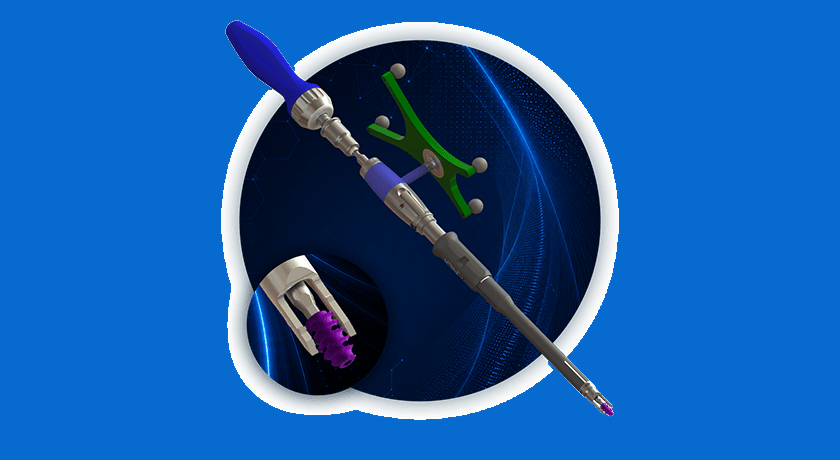
The Reverse ChondroMatch system, formerly known as rOCA, is the first member of the ChondroMatch family of instrumentation solutions for osteochondral allograft repair in the knee and ankle to enter clinical use.
- ChondroMatch Standard: a fully disposable, sterile kit designed for 10–16 mm lesions.
- ChondroMatch Plus: a fully disposable, sterile kit for larger and more complex 15–30 mm lesions.
- Reverse ChondroMatch: a hybrid system combining reusable instrumentation with a sterile kit to enable a fully arthroscopic, retrograde repair of 8–14 mm lesions.
“The ChondroMatch platform is engineered to simplify procedural workflow, reduce operating room time, and improve accuracy in matching the three-dimensional native cartilage anatomy compared to current standard-of-care techniques,” said Zack Evans, Principal Engineer at the L. S. Peery, M.D. Orthopaedic Innovation Center.
“This technology platform reflects the University’s strength in translating orthopedic innovation into real-world solutions,” said Bruce Hunter, CIO at the University of Utah’s Technology Licensing Office. “We’re poised to work with medical device companies and strategic partners to accelerate commercialization and expand access to these transformative technologies.”
The Orthopaedic Innovation Center is actively engaging with medical device companies and strategic partners interested in licensing or acquiring rights to the ChondroMatch System for osteochondral repair.
The L. S. Peery, M.D. Orthopaedic Innovation Center at the Department of Orthopaedics, Spencer Fox Eccles School of Medicine, University of Utah, announced completion of the first clinical case using the Reverse ChondroMatch procedure at the University Orthopaedic Center, University of Utah.
The Reverse ChondroMatch system, formerly known as...
The L. S. Peery, M.D. Orthopaedic Innovation Center at the Department of Orthopaedics, Spencer Fox Eccles School of Medicine, University of Utah, announced completion of the first clinical case using the Reverse ChondroMatch procedure at the University Orthopaedic Center, University of Utah.
The Reverse ChondroMatch system, formerly known as rOCA, is the first member of the ChondroMatch family of instrumentation solutions for osteochondral allograft repair in the knee and ankle to enter clinical use.
- ChondroMatch Standard: a fully disposable, sterile kit designed for 10–16 mm lesions.
- ChondroMatch Plus: a fully disposable, sterile kit for larger and more complex 15–30 mm lesions.
- Reverse ChondroMatch: a hybrid system combining reusable instrumentation with a sterile kit to enable a fully arthroscopic, retrograde repair of 8–14 mm lesions.
“The ChondroMatch platform is engineered to simplify procedural workflow, reduce operating room time, and improve accuracy in matching the three-dimensional native cartilage anatomy compared to current standard-of-care techniques,” said Zack Evans, Principal Engineer at the L. S. Peery, M.D. Orthopaedic Innovation Center.
“This technology platform reflects the University’s strength in translating orthopedic innovation into real-world solutions,” said Bruce Hunter, CIO at the University of Utah’s Technology Licensing Office. “We’re poised to work with medical device companies and strategic partners to accelerate commercialization and expand access to these transformative technologies.”
The Orthopaedic Innovation Center is actively engaging with medical device companies and strategic partners interested in licensing or acquiring rights to the ChondroMatch System for osteochondral repair.

You’ve reached your limit.
We’re glad you’re finding value in our content — and we’d love for you to keep going.
Subscribe now for unlimited access to orthopedic business intelligence.

JV
Julie Vetalice is ORTHOWORLD's Editorial Assistant. She has covered the orthopedic industry for over 20 years, having joined the company in 1999.