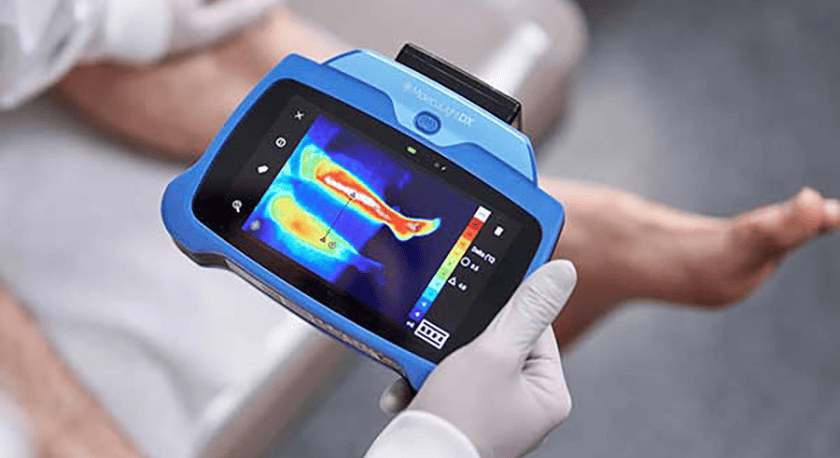
An independently-conducted feasibility study reports the first clinical evidence supporting the use of MolecuLight’s MolecuLightDX imaging device during revision knee arthroplasty for periprosthetic joint infection.
In this prospective 10-patient pilot study, surgeons used MolecuLight fluorescence imaging following standard surgical debridement to assess the operative field for residual bacterial burden. Areas exhibiting bacterial fluorescence that had not been identified during the initial debridement were subsequently biopsied, with microbiological analysis confirming the presence of the same bacterial species responsible for the periprosthetic joint infection.
Publication of this study opens new avenues for MolecuLight’s growing role in perioperative surgical applications worldwide. By providing immediate visual information about residual bacterial burden that may otherwise remain undetected, this technology has the potential to support more informed intraoperative decision making. Further research to relate these findings to positive surgical outcomes could demonstrate a decrease in additional resection surgeries and fewer infection complications.
An independently-conducted feasibility study reports the first clinical evidence supporting the use of MolecuLight's MolecuLightDX imaging device during revision knee arthroplasty for periprosthetic joint infection.
In this prospective 10-patient pilot study, surgeons used MolecuLight fluorescence imaging following standard surgical...
An independently-conducted feasibility study reports the first clinical evidence supporting the use of MolecuLight’s MolecuLightDX imaging device during revision knee arthroplasty for periprosthetic joint infection.
In this prospective 10-patient pilot study, surgeons used MolecuLight fluorescence imaging following standard surgical debridement to assess the operative field for residual bacterial burden. Areas exhibiting bacterial fluorescence that had not been identified during the initial debridement were subsequently biopsied, with microbiological analysis confirming the presence of the same bacterial species responsible for the periprosthetic joint infection.
Publication of this study opens new avenues for MolecuLight’s growing role in perioperative surgical applications worldwide. By providing immediate visual information about residual bacterial burden that may otherwise remain undetected, this technology has the potential to support more informed intraoperative decision making. Further research to relate these findings to positive surgical outcomes could demonstrate a decrease in additional resection surgeries and fewer infection complications.




 Copy to clipboard