

 Copy to clipboard
According to our estimates, orthopedic sales grew 4.3% in 2025 to a worldwide total of $64.6 billion.
The top eight companies in orthopedics all have annual revenue over $1 billion and comprise 67% of worldwide sales. While no new companies entered this tier in 2025, three companies are on the verge of $1 billion in sales. Orthofix, Medacta and ATEC all have sales over $760 million and will enter the top tier soon.
2025E Market Share by Company
Below we’ll look at what we’re expecting from the top eight companies in orthopedics during 2026.
There’s Going to be Some Disruption
Even among the largest companies in the industry, there always seems to be at least one that’s weathering a significant downturn. When I first entered orthopedics in 2018, Zimmer Biomet was besieged by FDA problems. In the post-pandemic period, it was Smith+Nephew’s turn over the barrel.
But Johnson & Johnson MedTech’s orthopedic businesses had been languishing that entire time. Over the last decade, those businesses have a CAGR of just 0.1%. The company finally decided to pull the plug and spin off DePuy Synthes into a stand alone company by 2027.
Company leaders say things will be business as usual until the spin. To be fair, J&J MedTech’s orthopedic business salvaged some growth out of 2025 (1.1%) with a decent fourth quarter performance (5.3%).
However, it seems likely that there will be some bumps in the road as uncertainty among stakeholders, from sales reps to surgeons to suppliers, could create some early impacts.
Zimmer Biomet is also bracing for some tough times after a few years of better performance. During its fourth quarter earnings call, the company provided 2026 organic growth guidance of 1% to 3%.
Zimmer Biomet’s U.S. sales channel has underperformed and is undergoing significant change that the company expects to cause short-term disruption.
“We’ve added a ton of new products. We’ve just got to have dedicated people to leverage that great new product cycle,” said Zimmer Biomet CEO Ivan Tornos. “We couldn’t do this previously because candidly, we didn’t have the products. Not to mention, we’re dealing with other challenges. So now that we have the products, we have to leverage the channel to sell those products at a higher rate.”
Forging the Path to Technology Leadership
One thing Zimmer Biomet has done well is diversify its enabling technology portfolio to give surgeons a wide array of options to compel adoption and utilization.
Stryker’s Mako system continues to drive best-in-class growth. Over the last 10 years, Stryker gained almost 7% knee replacement market share while its peers have all lost share. Those gains were driven predominantly by the strength of the Mako system.
However, robotics in orthopedics remain severely underpenetrated as the vast majority of surgeons have yet to adopt the technology. Compared to other areas of medtech, orthopedics is several years behind.
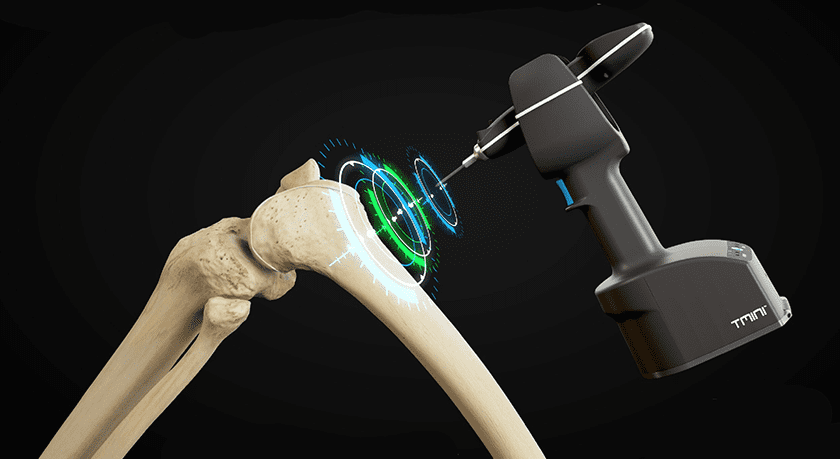
That’s why Zimmer Biomet believes the pathway to robotics leadership is through optionality. In addition to its many versions of ROSA, the company has a handheld system in partnership with THINK Surgical and is working toward launching its fully autonomous mBos system acquired from Monogram.
Zimmer Biomet’s competitors are following suit. While Stryker has dismissed the idea that there’s demand for autonomous systems, it did notably launch a handheld version of Mako.
We expect to see more companies work to expand their technology offerings to lock in key accounts and their lucrative implant volume. Even companies that have been slow to adopt technology wholesale are starting to take notice.
“With respect to enabling tech and robotics, look, we’ve clearly heard the message that enabling tech is a key part of having a complete global portfolio,” said Enovis CEO Damien McDonald. “We’re examining whether large-format robots are cost-effective solutions and improve patient outcomes, and whether entry into the market at this point is really valid. We’ve got resources dedicated to exploring all the viable pathways.”
More M&A Activity (from Some)
Orthopedic M&A activity has sort of fallen off a cliff since 2021. We estimate that there were 173 orthopedic M&A transactions in the five-year period between 2016 and 2020. Over the next five years, transactions declined 37% to a total of 109.
However, there could be pent-up demand that generates more activity in 2026. Signaling from large cap CEOs across medtech have been bullish on M&A, underscoring the demand and existing firepower to get deals done, even for premium targets.
Not all of the top players are in a position to add right now. DePuy Synthes will likely wait until it’s a standalone company to make any major moves. Zimmer Biomet said it isn’t looking to add any complexity in 2026 as it integrates its three previous acquisitions and navigates its U.S. channel overhaul. Enovis was focused on paying down debt in 2025, but it would be unusual for the company to be quiet on the M&A front for long.
Globus, on the other hand, is still looking for complementary pieces after its Nevro purchase. Stryker said M&A is the “number one” use of capital right now. Medtronic said it is “going on offense with strategic M&A” as it looks for tuck-ins that are close to commercialization in high-growth areas. There have been rumblings that Arthrex is making a meaningful move into the joint replacement enabling technology space.
Any coming moves are likely to target commercial-stage companies (although Smith+Nephew has a higher appetite for early-stage) that play in higher-growth markets like sports medicine and enabling technology. We could also envision some of the top players stepping outside of orthopedics and into lucrative adjacencies.
Wrap Up
The orthopedic market will likely be healthy and stable in 2026. Volumes and capital demand have been reliable for several quarters across most segments. Economic indicators are promising for M&A.
These conditions set the stage for the industry’s top companies to further cement their leadership positions in 2026. However, several of these players face significant challenges ahead, and a trio of new competitors preparing to enter the top tier that could shake things up.
According to our estimates, orthopedic sales grew 4.3% in 2025 to a worldwide total of $64.6 billion.
The top eight companies in orthopedics all have annual revenue over $1 billion and comprise 67% of worldwide sales. While no new companies entered this tier in 2025, three companies are on the verge of $1 billion in sales. Orthofix,...
According to our estimates, orthopedic sales grew 4.3% in 2025 to a worldwide total of $64.6 billion.
The top eight companies in orthopedics all have annual revenue over $1 billion and comprise 67% of worldwide sales. While no new companies entered this tier in 2025, three companies are on the verge of $1 billion in sales. Orthofix, Medacta and ATEC all have sales over $760 million and will enter the top tier soon.
2025E Market Share by Company
Below we’ll look at what we’re expecting from the top eight companies in orthopedics during 2026.
There’s Going to be Some Disruption
Even among the largest companies in the industry, there always seems to be at least one that’s weathering a significant downturn. When I first entered orthopedics in 2018, Zimmer Biomet was besieged by FDA problems. In the post-pandemic period, it was Smith+Nephew’s turn over the barrel.
But Johnson & Johnson MedTech’s orthopedic businesses had been languishing that entire time. Over the last decade, those businesses have a CAGR of just 0.1%. The company finally decided to pull the plug and spin off DePuy Synthes into a stand alone company by 2027.
Company leaders say things will be business as usual until the spin. To be fair, J&J MedTech’s orthopedic business salvaged some growth out of 2025 (1.1%) with a decent fourth quarter performance (5.3%).
However, it seems likely that there will be some bumps in the road as uncertainty among stakeholders, from sales reps to surgeons to suppliers, could create some early impacts.
Zimmer Biomet is also bracing for some tough times after a few years of better performance. During its fourth quarter earnings call, the company provided 2026 organic growth guidance of 1% to 3%.
Zimmer Biomet’s U.S. sales channel has underperformed and is undergoing significant change that the company expects to cause short-term disruption.
“We’ve added a ton of new products. We’ve just got to have dedicated people to leverage that great new product cycle,” said Zimmer Biomet CEO Ivan Tornos. “We couldn’t do this previously because candidly, we didn’t have the products. Not to mention, we’re dealing with other challenges. So now that we have the products, we have to leverage the channel to sell those products at a higher rate.”
Forging the Path to Technology Leadership
One thing Zimmer Biomet has done well is diversify its enabling technology portfolio to give surgeons a wide array of options to compel adoption and utilization.
Stryker’s Mako system continues to drive best-in-class growth. Over the last 10 years, Stryker gained almost 7% knee replacement market share while its peers have all lost share. Those gains were driven predominantly by the strength of the Mako system.
However, robotics in orthopedics remain severely underpenetrated as the vast majority of surgeons have yet to adopt the technology. Compared to other areas of medtech, orthopedics is several years behind.
That’s why Zimmer Biomet believes the pathway to robotics leadership is through optionality. In addition to its many versions of ROSA, the company has a handheld system in partnership with THINK Surgical and is working toward launching its fully autonomous mBos system acquired from Monogram.
Zimmer Biomet’s competitors are following suit. While Stryker has dismissed the idea that there’s demand for autonomous systems, it did notably launch a handheld version of Mako.
We expect to see more companies work to expand their technology offerings to lock in key accounts and their lucrative implant volume. Even companies that have been slow to adopt technology wholesale are starting to take notice.
“With respect to enabling tech and robotics, look, we’ve clearly heard the message that enabling tech is a key part of having a complete global portfolio,” said Enovis CEO Damien McDonald. “We’re examining whether large-format robots are cost-effective solutions and improve patient outcomes, and whether entry into the market at this point is really valid. We’ve got resources dedicated to exploring all the viable pathways.”
More M&A Activity (from Some)
Orthopedic M&A activity has sort of fallen off a cliff since 2021. We estimate that there were 173 orthopedic M&A transactions in the five-year period between 2016 and 2020. Over the next five years, transactions declined 37% to a total of 109.
However, there could be pent-up demand that generates more activity in 2026. Signaling from large cap CEOs across medtech have been bullish on M&A, underscoring the demand and existing firepower to get deals done, even for premium targets.
Not all of the top players are in a position to add right now. DePuy Synthes will likely wait until it’s a standalone company to make any major moves. Zimmer Biomet said it isn’t looking to add any complexity in 2026 as it integrates its three previous acquisitions and navigates its U.S. channel overhaul. Enovis was focused on paying down debt in 2025, but it would be unusual for the company to be quiet on the M&A front for long.
Globus, on the other hand, is still looking for complementary pieces after its Nevro purchase. Stryker said M&A is the “number one” use of capital right now. Medtronic said it is “going on offense with strategic M&A” as it looks for tuck-ins that are close to commercialization in high-growth areas. There have been rumblings that Arthrex is making a meaningful move into the joint replacement enabling technology space.
Any coming moves are likely to target commercial-stage companies (although Smith+Nephew has a higher appetite for early-stage) that play in higher-growth markets like sports medicine and enabling technology. We could also envision some of the top players stepping outside of orthopedics and into lucrative adjacencies.
Wrap Up
The orthopedic market will likely be healthy and stable in 2026. Volumes and capital demand have been reliable for several quarters across most segments. Economic indicators are promising for M&A.
These conditions set the stage for the industry’s top companies to further cement their leadership positions in 2026. However, several of these players face significant challenges ahead, and a trio of new competitors preparing to enter the top tier that could shake things up.

You’ve reached your limit.
We’re glad you’re finding value in our content — and we’d love for you to keep going.
Subscribe now for unlimited access to orthopedic business intelligence.

ME
Mike Evers is a Senior Market Analyst and writer with over 15 years of experience in the medical industry, spanning cardiac rhythm management, ER coding and billing, and orthopedics. He joined ORTHOWORLD in 2018, where he provides market analysis and editorial coverage.