

 Copy to clipboard
According to our early estimates, the orthopedic market will grow 4.3% in 2025 to a worldwide total of $64.6 billion. Below we’ll break our projections down by segment and top companies, as well as highlight some trends that drove 2025 performance.
For public companies, our projections are based on three quarters of sales data plus the most recent guidance ranges where available. You can find our newly updated 2025 projections for public and private companies in the Orthopedic Companies Sales Matrix.
While we don’t anticipate major structural changes to these figures, you should expect them to be refined as we gather further data and create the next edition of THE ORTHOPAEDIC INDUSTRY ANNUAL REPORT® which will be available in the spring of 2026.
Sales Performance by Orthopedic Segment
With a few exceptions, procedure volume was healthy across orthopedic segments.
Market Share by Segment – 2025E
Sales by Segment – 2025E
| Segment | 2025E | 2024 | $ Chg | % Chg |
|---|---|---|---|---|
| Joint Replacement | $23,648.4 | $22,617.3 | $1,031.0 | 4.6% |
| Knees | $11,088.8 | $10,637.3 | $451.4 | 4.2% |
| Hips | $9,088.1 | $8,745.8 | $342.3 | 3.9% |
| Extremities | $3,471.5 | $3,234.2 | $237.3 | 7.3% |
| Spine | $11,158.8 | $10,786.9 | $372.0 | 3.4% |
| Trauma | $9,495.0 | $9,070.1 | $424.9 | 4.7% |
| Sports Medicine | $7,555.6 | $7,162.8 | $392.8 | 5.5% |
| Orthobiologics | $5,870.3 | $5,681.8 | $188.6 | 3.3% |
| Enabling Technology | $1,545.3 | $1,422.0 | $123.3 | 8.7% |
| Other | $5,359.4 | $5,197.5 | $161.9 | 3.1% |
| Market Total | $64,632.8 | $61,938.5 | $2,694.3 | 4.3% |
“Procedural volumes remained healthy in the third quarter, in line with our expectations,” said Stryker VP of Finance Jason Beach. “We anticipate continued strength in procedural volumes through the end of the year. Demand for our capital products was strong once again in the quarter, and we exited Q3 with an elevated backlog. With a steady hospital CapEx environment, we expect continued strength in our order book.”
Consensus among companies in the foot and ankle market is that the space was slower again in 2025. Through October, Treace Medical’s survey of its surgeons indicated a 7% drop in bunion surgery volume.
The company said that outpatient elective surgeries were being deferred, especially among commercially insured patients. “The more elective the procedure, the more likely it is to be pushed out,” said company founder and CEO John Treace.
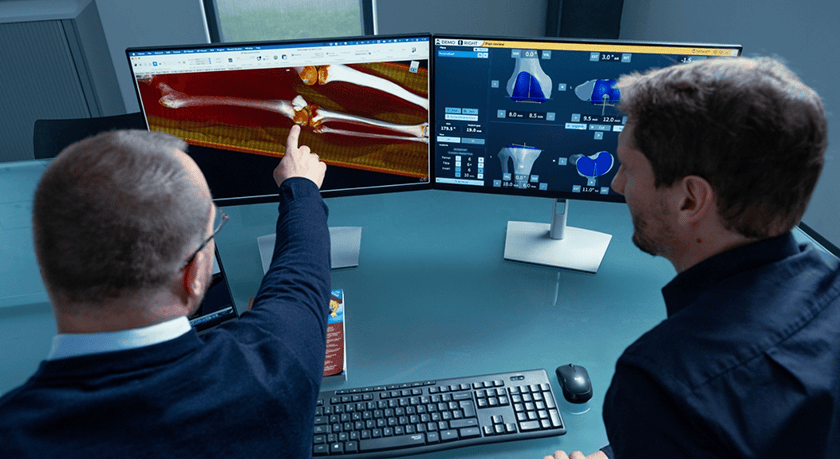
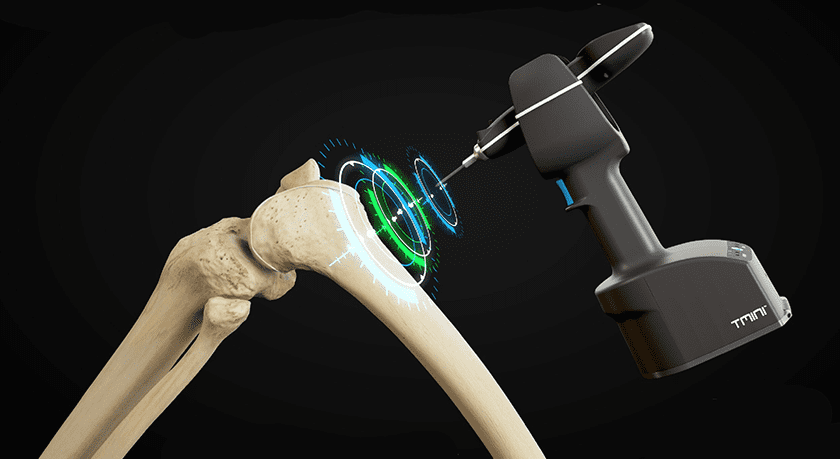
While capital sales are healthy, success of robotic placements varies across companies. In joint replacement, it remains Stryker’s game to lose. Zimmer Biomet’s strategy of technology diversification is unique, but will take some time to play out.
In spine, Globus has hit some roadblocks in its pursuit of Medtronic. Through the third quarter, Globus’ enabling technology sales were down -20% due to elongated selling cycles and the continuing shift away from outright purchases.
Top Orthopedic Companies
While there aren’t any surprises among the 10 largest companies in 2025, there is significant disruption taking place at the top of the market.
The year started with Stryker divesting its spinal implant business to VB Spine while Zimmer Biomet bolstered its growth rate through the acquisition of Paragon 28.
Most recently, J&J MedTech announced its decision to spin off DePuy Synthes into a standalone company within the next two years. The company said that its orthopedic units would operate “business as usual” until the spin; we expect market disruption will precede the move.
Top 10 Orthopedic Players Market Share – 2025E
While the largest orthopedic players manage their portfolios to prioritize growth rates, several mid-tier players are rapidly seizing market share. Below, we present selected companies with more than $100 million in annual sales and growth rates far above the market average.
Notable Growth Companies in 2025
| Company | FY25E | FY24 | $ Chg | % Chg |
|---|---|---|---|---|
| Medacta | $805.6 | $685.1 | $120.5 | 17.6% |
| ATEC | $760.2 | $611.6 | $148.7 | 24.3% |
| Vericel | $238.0 | $197.3 | $40.6 | 20.6% |
| SI-BONE | $198.6 | $167.2 | $31.4 | 18.8% |
| Kuros Biosciences | $140.0 | $95.3 | $44.7 | 47% |
| Centinel Spine | $134.0 | $94.9 | $39.1 | 41.2% |
| Bonesupport | $130.8 | $98.9 | $31.9 | 32.3% |
Medacta and ATEC deserve special mention considering they’ve driven such strong growth against very large sales bases. It is unusual to see hockey stick growth curves for orthopedic companies outside the startup realm, but that is just what Medacta and ATEC have driven.
Medacta and ATEC Sales Trends
The Impact of Robotics on Joint Replacement
Over the last 10 years, Stryker has been the only player among the big four strategics with knee and hip replacement growth above the market average. It is an oversimplification to assign these results to the Mako robotic system alone, but robotics certainly changed the paradigm of competition for these companies.
The same dynamic is playing out in spine. but the picture is a little muddier given all of the consolidation and disruption happening in that segment. However, it will be interesting to see how joint replacement changes once DePuy Synthes separates from J&J MedTech.
Big Four Large Joint Sales Trends
Big Four Large Joint Replacement 10-year CAGR
| Company | Knees | Hips | Combined |
|---|---|---|---|
| Zimmer Biomet | 2.0% | 1.3% | 1.7% |
| Stryker | 6.7% | 4.3% | 5.6% |
| J&J MedTech | 0.3% | 0.6% | 0.7% |
| Smith+Nephew | 0.7% | 0.6% | 0.7% |
| Subtotal | 2.7% | 2.3% | 2.5% |
With Zimmer Biomet, J&J MedTech and Smith+Nephew struggling to unlock their full growth potential, mid-tier companies have filled the gap. Among these companies, full size robotics isn’t a limiting factor. Medacta, for instance, is the exception that proves the rule.
That company’s knee replacement 10-year CAGR is 15% on the strength of innovative implants, medical education and its resilient supply chain (note the 2020 inflection point).
Medacta Sales by Segment
Wrap Up
The orthopedic market’s growth has moderated over the last few years, but remains healthy. We expect the market to grow 4.3% in 2025 and continue to decelerate slightly. However, given the growing patient population and evolution of technology in the space, we expect the market’s overall growth rate to settle close to 4% over the medium term.
According to our early estimates, the orthopedic market will grow 4.3% in 2025 to a worldwide total of $64.6 billion. Below we'll break our projections down by segment and top companies, as well as highlight some trends that drove 2025 performance.
For public companies, our projections are based on three quarters of sales data plus the most...
According to our early estimates, the orthopedic market will grow 4.3% in 2025 to a worldwide total of $64.6 billion. Below we’ll break our projections down by segment and top companies, as well as highlight some trends that drove 2025 performance.
For public companies, our projections are based on three quarters of sales data plus the most recent guidance ranges where available. You can find our newly updated 2025 projections for public and private companies in the Orthopedic Companies Sales Matrix.
While we don’t anticipate major structural changes to these figures, you should expect them to be refined as we gather further data and create the next edition of THE ORTHOPAEDIC INDUSTRY ANNUAL REPORT® which will be available in the spring of 2026.
Sales Performance by Orthopedic Segment
With a few exceptions, procedure volume was healthy across orthopedic segments.
Market Share by Segment – 2025E
Sales by Segment – 2025E
| Segment | 2025E | 2024 | $ Chg | % Chg |
|---|---|---|---|---|
| Joint Replacement | $23,648.4 | $22,617.3 | $1,031.0 | 4.6% |
| Knees | $11,088.8 | $10,637.3 | $451.4 | 4.2% |
| Hips | $9,088.1 | $8,745.8 | $342.3 | 3.9% |
| Extremities | $3,471.5 | $3,234.2 | $237.3 | 7.3% |
| Spine | $11,158.8 | $10,786.9 | $372.0 | 3.4% |
| Trauma | $9,495.0 | $9,070.1 | $424.9 | 4.7% |
| Sports Medicine | $7,555.6 | $7,162.8 | $392.8 | 5.5% |
| Orthobiologics | $5,870.3 | $5,681.8 | $188.6 | 3.3% |
| Enabling Technology | $1,545.3 | $1,422.0 | $123.3 | 8.7% |
| Other | $5,359.4 | $5,197.5 | $161.9 | 3.1% |
| Market Total | $64,632.8 | $61,938.5 | $2,694.3 | 4.3% |
“Procedural volumes remained healthy in the third quarter, in line with our expectations,” said Stryker VP of Finance Jason Beach. “We anticipate continued strength in procedural volumes through the end of the year. Demand for our capital products was strong once again in the quarter, and we exited Q3 with an elevated backlog. With a steady hospital CapEx environment, we expect continued strength in our order book.”
Consensus among companies in the foot and ankle market is that the space was slower again in 2025. Through October, Treace Medical’s survey of its surgeons indicated a 7% drop in bunion surgery volume.
The company said that outpatient elective surgeries were being deferred, especially among commercially insured patients. “The more elective the procedure, the more likely it is to be pushed out,” said company founder and CEO John Treace.
While capital sales are healthy, success of robotic placements varies across companies. In joint replacement, it remains Stryker’s game to lose. Zimmer Biomet’s strategy of technology diversification is unique, but will take some time to play out.
In spine, Globus has hit some roadblocks in its pursuit of Medtronic. Through the third quarter, Globus’ enabling technology sales were down -20% due to elongated selling cycles and the continuing shift away from outright purchases.
Top Orthopedic Companies
While there aren’t any surprises among the 10 largest companies in 2025, there is significant disruption taking place at the top of the market.
The year started with Stryker divesting its spinal implant business to VB Spine while Zimmer Biomet bolstered its growth rate through the acquisition of Paragon 28.
Most recently, J&J MedTech announced its decision to spin off DePuy Synthes into a standalone company within the next two years. The company said that its orthopedic units would operate “business as usual” until the spin; we expect market disruption will precede the move.
Top 10 Orthopedic Players Market Share – 2025E
While the largest orthopedic players manage their portfolios to prioritize growth rates, several mid-tier players are rapidly seizing market share. Below, we present selected companies with more than $100 million in annual sales and growth rates far above the market average.
Notable Growth Companies in 2025
| Company | FY25E | FY24 | $ Chg | % Chg |
|---|---|---|---|---|
| Medacta | $805.6 | $685.1 | $120.5 | 17.6% |
| ATEC | $760.2 | $611.6 | $148.7 | 24.3% |
| Vericel | $238.0 | $197.3 | $40.6 | 20.6% |
| SI-BONE | $198.6 | $167.2 | $31.4 | 18.8% |
| Kuros Biosciences | $140.0 | $95.3 | $44.7 | 47% |
| Centinel Spine | $134.0 | $94.9 | $39.1 | 41.2% |
| Bonesupport | $130.8 | $98.9 | $31.9 | 32.3% |
Medacta and ATEC deserve special mention considering they’ve driven such strong growth against very large sales bases. It is unusual to see hockey stick growth curves for orthopedic companies outside the startup realm, but that is just what Medacta and ATEC have driven.
Medacta and ATEC Sales Trends
The Impact of Robotics on Joint Replacement
Over the last 10 years, Stryker has been the only player among the big four strategics with knee and hip replacement growth above the market average. It is an oversimplification to assign these results to the Mako robotic system alone, but robotics certainly changed the paradigm of competition for these companies.
The same dynamic is playing out in spine. but the picture is a little muddier given all of the consolidation and disruption happening in that segment. However, it will be interesting to see how joint replacement changes once DePuy Synthes separates from J&J MedTech.
Big Four Large Joint Sales Trends
Big Four Large Joint Replacement 10-year CAGR
| Company | Knees | Hips | Combined |
|---|---|---|---|
| Zimmer Biomet | 2.0% | 1.3% | 1.7% |
| Stryker | 6.7% | 4.3% | 5.6% |
| J&J MedTech | 0.3% | 0.6% | 0.7% |
| Smith+Nephew | 0.7% | 0.6% | 0.7% |
| Subtotal | 2.7% | 2.3% | 2.5% |
With Zimmer Biomet, J&J MedTech and Smith+Nephew struggling to unlock their full growth potential, mid-tier companies have filled the gap. Among these companies, full size robotics isn’t a limiting factor. Medacta, for instance, is the exception that proves the rule.
That company’s knee replacement 10-year CAGR is 15% on the strength of innovative implants, medical education and its resilient supply chain (note the 2020 inflection point).
Medacta Sales by Segment
Wrap Up
The orthopedic market’s growth has moderated over the last few years, but remains healthy. We expect the market to grow 4.3% in 2025 and continue to decelerate slightly. However, given the growing patient population and evolution of technology in the space, we expect the market’s overall growth rate to settle close to 4% over the medium term.

You’ve reached your limit.
We’re glad you’re finding value in our content — and we’d love for you to keep going.
Subscribe now for unlimited access to orthopedic business intelligence.

ME
Mike Evers is a Senior Market Analyst and writer with over 15 years of experience in the medical industry, spanning cardiac rhythm management, ER coding and billing, and orthopedics. He joined ORTHOWORLD in 2018, where he provides market analysis and editorial coverage.