

 Copy to clipboard

The orthopedic industry benefits from a strong pipeline of startups, more than 30 of which will be presenting at The Musculoskeletal New Ventures Conference (MNVC) in October. As our team prepares to attend MNVC as a sponsor, we looked at the companies on the agenda to see which ones hit strategic milestones in the last year and highlighted a few of them below.
A benefit of MNVC is hearing from dozens of companies seeking to address the unmet clinical needs in orthopedics — and all in a day and a half. You can find the full list of presenters here. We hope to see you October 27-28 in Memphis.
Implant Startups
Anser Implants’ intramedullary Clavicle Pin is designed for the treatment of midshaft clavicle fractures. The pin stabilizes bone while accommodating micromotion and preserving length, and allows patients to return to normal activities quickly, without compromised motion. The device allows for a one-size-fits-all approach and reduces the need for hardware removal.
Anser seeks to accelerate U.S. commercialization, expand clinical adoption, and develop strategic partnerships.
Capitan Orthopedics, a subsidiary of Genesis Innovation Group, seeks to address painful, irreparable rotator cuff tears in patients aged 25 to 65 with SupraSpacer, a minimally invasive implant designed to offer a long-term, biomechanical solution. The implant restores joint alignment and allows for pain-free range of motion, while also preserving future surgical options. SupraSpacer’s reproducible technique and sterile-packaged components help the system fit into ASC environments.
Formed at the start of 2026, the company then received FDA’s Breakthrough Device Designation, which was followed by the closure of a seed round that brought total capital raised to $4.1 million.
Hyprevention is building a product portfolio based on its STRUTPLASTY Technology to reinforce bones weakened by osteoporosis or cancer.
V-STRUT, indicated for treating vertebral fractures, comprises two PEEK polymer implants that are inserted into the vertebral body through the pedicles and combined with PMMA bone cement. Y-STRUT, indicated for internal fixation of the proximal femur, includes two cannulas in PEEK polymer and is combined with PMMA bone cement to allow bone anchoring.
V-STRUT is available in the U.S. market following two FDA 510(k) clearances. Y-STRUT was recognized as a Breakthrough Device by FDA in mid-2025, and is available for sale in France, Spain, Portugal, Switzerland, Brazil, and Israel.
Meduloc offers an FDA-cleared flexible, nitinol-based intramedullary fixation platform designed to provide length and rotational stability across a range of small long-bone fractures.
The Meduloc design delivers rotational and length stability while allowing surgeons to avoid entry through the joint capsule—a technique that may support earlier mobility, fewer complications, reduced surgical complexity, and faster patient recovery.
The company’s closure of a $4 million Series B financing will support the controlled alpha launch of the device, continued generation of clinical evidence and development of commercial infrastructure.
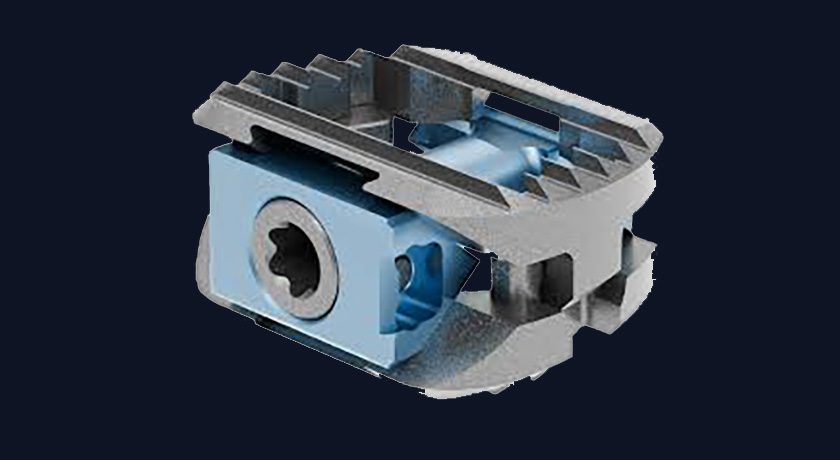
Orthomod has introduced Calcium Acrylate Modified Polymer (CAMP), a new structural spinal biomaterial designed to combine the structural performance and manufacturability of conventional polymers with bioactive bone integration. The MOD-C cervical intervertebral implant family for the treatment of degenerative disc disease of the cervical spine received FDA 510(k) clearance in mid-2026.
The CAMP platform has future applications in sports medicine, extremities, reconstruction, oncology, craniofacial, dental and more.
Orthobiologic Startups
GID BIO is investigating stromal vascular fraction (SVF) cell injection to treat knee osteoarthritis. Using a patient’s adipose tissue, its technology harvests, isolates, and reimplants his own healing cells (fibroblasts, mesenchymal stromal progenitors, etc.) in a 3-hour outpatient procedure.
The company’s FDA IDE Phase III clinical trial results found that patients experienced a 73% reduction in pain and a 115% improvement in function at one year vs. the sham control. GID has filed its Premarket Approval application, with commercialization planned for 3Q27.
Ossiform develops bioactive bone substitutes that provide structure and consistency while facilitating the natural formation of new bone in the treatment of bone defects. The products are 3D-printed from beta-tricalcium phosphate with indication-specific biomechanical considerations to support bone healing and simplify complex procedures.
The company seeks to support bone reconstruction without permanent foreign body implantation or the variability that comes with allografts.
In preclinical studies, the Ossiform Bone demonstrated osteoconduction with a rapid formation of new vascularized bone, osseointegration with native bone, and a simultaneous and balanced bioresorption to ensure structural stability throughout the healing process.
RevBio’s TETRANITE is a synthetic, injectable, self-setting, and osteoconductive bone adhesive. Inspired by the sandcastle worm marine animal, and bioengineered from the worm’s secreted protein, the glue satisfies both the required and desired properties for a bone adhesive: wet field performance, multi-surface bonding, rapid mechanical stability and controlled biodegradability.
Once on the market, TETRANITE will become the first synthetic bone adhesive. Potential applications include extremity fracture repair, pedicle screw augmentation, spinal compression fracture fixation, and more.
SDIP Innovations received FDA 510(k) clearance to market JAZBI Bone Void Filler in mid-2026. The proprietary JAZBI bioresorbable biomaterial platform employs a novel non-inflammatory polymer to support tissue regeneration across a range of medical device applications.
SDIP’s material leaves no acidic/basic by-products behind, and properties can be tuned to address different clinical needs in fixing a range of damaged soft and interface tissues, with potential future indications across spine, craniofacial and dental surgery, and soft-tissue reconstruction.
Enabling Technology Startups
Gyder Surgical has developed GYDER Hip Navigation, pin-less and image-less navigation for accurate positioning of the acetabular cup during total hip replacement. While suitable across all surgical settings, the portable system’s quick calibration and registration make it ideal for ASCs.
The system has been used in surgical procedures conducted in Australia, the U.S., and India.
LEM Surgical has designed an active robotic platform for bone and joint surgery, starting in spine. The flagship Dynamis platform, initially FDA-cleared in mid-2025, is an upper torso surgical humanoid powered by Physical AI. First clinical procedures in the United States occurred later in 2025.
The system features three robotic arms — two for surgical guidance and one for optical navigation — consolidated into a single cart that fits partially beneath the surgical table. Dynamis supports a wide range of surgical instruments through its adjustable end-effectors and intraoperative qualification process.
The company is preparing for a global commercial launch in 2027.
PolarisAR sees a future where technology provides every surgeon with the precise insights and vision they need to eliminate unforeseeable variances during surgery. STELLAR Knee, a mixed-reality surgical navigation platform, is claimed to be the only knee replacement guidance system delivering spatially registered holographic guidance in the surgeon’s field of view. It has been used in over 450 procedures to date.
STELLAR Knee integrates into any O.R. setup and lets surgeons use any implant system for total knee replacement.
The orthopedic industry benefits from a strong pipeline of startups, more than 30 of which will be presenting at The Musculoskeletal New Ventures Conference (MNVC) in October. As our team prepares to attend MNVC as a sponsor, we looked at the companies on the agenda to see which ones hit strategic milestones in the last year and highlighted a few...
The orthopedic industry benefits from a strong pipeline of startups, more than 30 of which will be presenting at The Musculoskeletal New Ventures Conference (MNVC) in October. As our team prepares to attend MNVC as a sponsor, we looked at the companies on the agenda to see which ones hit strategic milestones in the last year and highlighted a few of them below.
A benefit of MNVC is hearing from dozens of companies seeking to address the unmet clinical needs in orthopedics — and all in a day and a half. You can find the full list of presenters here. We hope to see you October 27-28 in Memphis.
Implant Startups
Anser Implants’ intramedullary Clavicle Pin is designed for the treatment of midshaft clavicle fractures. The pin stabilizes bone while accommodating micromotion and preserving length, and allows patients to return to normal activities quickly, without compromised motion. The device allows for a one-size-fits-all approach and reduces the need for hardware removal.
Anser seeks to accelerate U.S. commercialization, expand clinical adoption, and develop strategic partnerships.
Capitan Orthopedics, a subsidiary of Genesis Innovation Group, seeks to address painful, irreparable rotator cuff tears in patients aged 25 to 65 with SupraSpacer, a minimally invasive implant designed to offer a long-term, biomechanical solution. The implant restores joint alignment and allows for pain-free range of motion, while also preserving future surgical options. SupraSpacer’s reproducible technique and sterile-packaged components help the system fit into ASC environments.
Formed at the start of 2026, the company then received FDA’s Breakthrough Device Designation, which was followed by the closure of a seed round that brought total capital raised to $4.1 million.
Hyprevention is building a product portfolio based on its STRUTPLASTY Technology to reinforce bones weakened by osteoporosis or cancer.
V-STRUT, indicated for treating vertebral fractures, comprises two PEEK polymer implants that are inserted into the vertebral body through the pedicles and combined with PMMA bone cement. Y-STRUT, indicated for internal fixation of the proximal femur, includes two cannulas in PEEK polymer and is combined with PMMA bone cement to allow bone anchoring.
V-STRUT is available in the U.S. market following two FDA 510(k) clearances. Y-STRUT was recognized as a Breakthrough Device by FDA in mid-2025, and is available for sale in France, Spain, Portugal, Switzerland, Brazil, and Israel.
Meduloc offers an FDA-cleared flexible, nitinol-based intramedullary fixation platform designed to provide length and rotational stability across a range of small long-bone fractures.
The Meduloc design delivers rotational and length stability while allowing surgeons to avoid entry through the joint capsule—a technique that may support earlier mobility, fewer complications, reduced surgical complexity, and faster patient recovery.
The company’s closure of a $4 million Series B financing will support the controlled alpha launch of the device, continued generation of clinical evidence and development of commercial infrastructure.
Orthomod has introduced Calcium Acrylate Modified Polymer (CAMP), a new structural spinal biomaterial designed to combine the structural performance and manufacturability of conventional polymers with bioactive bone integration. The MOD-C cervical intervertebral implant family for the treatment of degenerative disc disease of the cervical spine received FDA 510(k) clearance in mid-2026.
The CAMP platform has future applications in sports medicine, extremities, reconstruction, oncology, craniofacial, dental and more.
Orthobiologic Startups
GID BIO is investigating stromal vascular fraction (SVF) cell injection to treat knee osteoarthritis. Using a patient’s adipose tissue, its technology harvests, isolates, and reimplants his own healing cells (fibroblasts, mesenchymal stromal progenitors, etc.) in a 3-hour outpatient procedure.
The company’s FDA IDE Phase III clinical trial results found that patients experienced a 73% reduction in pain and a 115% improvement in function at one year vs. the sham control. GID has filed its Premarket Approval application, with commercialization planned for 3Q27.
Ossiform develops bioactive bone substitutes that provide structure and consistency while facilitating the natural formation of new bone in the treatment of bone defects. The products are 3D-printed from beta-tricalcium phosphate with indication-specific biomechanical considerations to support bone healing and simplify complex procedures.
The company seeks to support bone reconstruction without permanent foreign body implantation or the variability that comes with allografts.
In preclinical studies, the Ossiform Bone demonstrated osteoconduction with a rapid formation of new vascularized bone, osseointegration with native bone, and a simultaneous and balanced bioresorption to ensure structural stability throughout the healing process.
RevBio’s TETRANITE is a synthetic, injectable, self-setting, and osteoconductive bone adhesive. Inspired by the sandcastle worm marine animal, and bioengineered from the worm’s secreted protein, the glue satisfies both the required and desired properties for a bone adhesive: wet field performance, multi-surface bonding, rapid mechanical stability and controlled biodegradability.
Once on the market, TETRANITE will become the first synthetic bone adhesive. Potential applications include extremity fracture repair, pedicle screw augmentation, spinal compression fracture fixation, and more.
SDIP Innovations received FDA 510(k) clearance to market JAZBI Bone Void Filler in mid-2026. The proprietary JAZBI bioresorbable biomaterial platform employs a novel non-inflammatory polymer to support tissue regeneration across a range of medical device applications.
SDIP’s material leaves no acidic/basic by-products behind, and properties can be tuned to address different clinical needs in fixing a range of damaged soft and interface tissues, with potential future indications across spine, craniofacial and dental surgery, and soft-tissue reconstruction.
Enabling Technology Startups
Gyder Surgical has developed GYDER Hip Navigation, pin-less and image-less navigation for accurate positioning of the acetabular cup during total hip replacement. While suitable across all surgical settings, the portable system’s quick calibration and registration make it ideal for ASCs.
The system has been used in surgical procedures conducted in Australia, the U.S., and India.
LEM Surgical has designed an active robotic platform for bone and joint surgery, starting in spine. The flagship Dynamis platform, initially FDA-cleared in mid-2025, is an upper torso surgical humanoid powered by Physical AI. First clinical procedures in the United States occurred later in 2025.
The system features three robotic arms — two for surgical guidance and one for optical navigation — consolidated into a single cart that fits partially beneath the surgical table. Dynamis supports a wide range of surgical instruments through its adjustable end-effectors and intraoperative qualification process.
The company is preparing for a global commercial launch in 2027.
PolarisAR sees a future where technology provides every surgeon with the precise insights and vision they need to eliminate unforeseeable variances during surgery. STELLAR Knee, a mixed-reality surgical navigation platform, is claimed to be the only knee replacement guidance system delivering spatially registered holographic guidance in the surgeon’s field of view. It has been used in over 450 procedures to date.
STELLAR Knee integrates into any O.R. setup and lets surgeons use any implant system for total knee replacement.

You’ve reached your limit.
We’re glad you’re finding value in our content — and we’d love for you to keep going.
Subscribe now for unlimited access to orthopedic business intelligence.

JV
Julie Vetalice is ORTHOWORLD's Editorial Assistant. She has covered the orthopedic industry for over 20 years, having joined the company in 1999.