

 Copy to clipboard

Infection is among the most devastating and costly complications in orthopedic surgery.
Despite advances in surgical technique and modern infection prevention protocols, periprosthetic joint infection (PJI) occurs in more than 1% of primary hip and knee replacements and in up to 9% of revision procedures. Based on these rates, PJI affects an estimated 30,000 to 35,000 patients annually in the United States alone. In addition, there are more than 100,000 annual cases of osteomyelitis arising from open fractures, infected diabetic foot ulcers, and following placement of orthopedic and spine hardware.
Both PJI and osteomyelitis are serious conditions that typically require surgical debridement and prolonged administration of systemic antibiotics. Severe osteomyelitis cases may require inpatient care, and PJI patients are frequently managed with exchange arthroplasty. At their worst, such infections may lead to amputation.
Failure rates with the current standard of care, the toxicity associated with prolonged systemic antibiotics, and the emergence of resistant microbial strains have driven the development of antibiotic-eluting implants and new classes of drugs and biologics designed specifically to treat orthopedic-related infections. This review summarizes the commercial landscape, key developments and emerging technologies shaping the U.S. orthopedic and spine antimicrobial market.
Currently Available Technologies
Today, orthopedic surgeons have a limited, but growing number of products for antimicrobial management. Antibiotic-loaded polymethyl methacrylate (PMMA) bone cement is the most established product in this category, but is labeled only for revision arthroplasty. Calcium sulfate beads in combination with antibiotics are widely used, but represent an off-label use of the product.
In 2022, BONESUPPORT’s CERAMENT G became the only bone graft substitute specifically labeled for local antibiotic delivery. This regulatory advancement turned into a commercial success, with CERAMENT G becoming one of the largest revenue-generating bone grafting products on the market. Orthobond’s OSTAGUARD antimicrobial surface treatment is a notable new entrant, though its clinical uptake remains to be seen. Despite these options, no product is specifically labeled for the treatment of PJI.
Antibiotic-Loaded Bone Cement and Calcium Sulfate Beads
Antibiotic-loaded versions of traditional PMMA bone cement are the most widely used and best understood antimicrobial products in orthopedics. These products serve the dual function of reducing the risk of PJI while providing immediate mechanical fixation for the implant. Leading products include Stryker’s Simplex P with Tobramycin and Heraeus Medical’s PALACOS R+G. However, FDA labeling for those products is narrow, limited to the second stage of a two-stage revision arthroplasty after the infection has cleared.
Similarly, the practice of combining rapidly dissolving calcium sulfate beads with antibiotics and implanting them at the site of an active infection is commonplace in orthopedic surgery. Calcium sulfate has been used in surgery for over a century, and FDA first cleared these products as bone void fillers 30 years ago. However, use of calcium sulfate beads as a carrier for antibiotics is an off-label use in the United States, despite widespread acceptance within the clinical community. Per FDA rules, manufacturers are prohibited from promoting calcium sulfate for this purpose, creating a modest impediment to surgeon education and adoption.
CERAMENT G (BONESUPPORT)
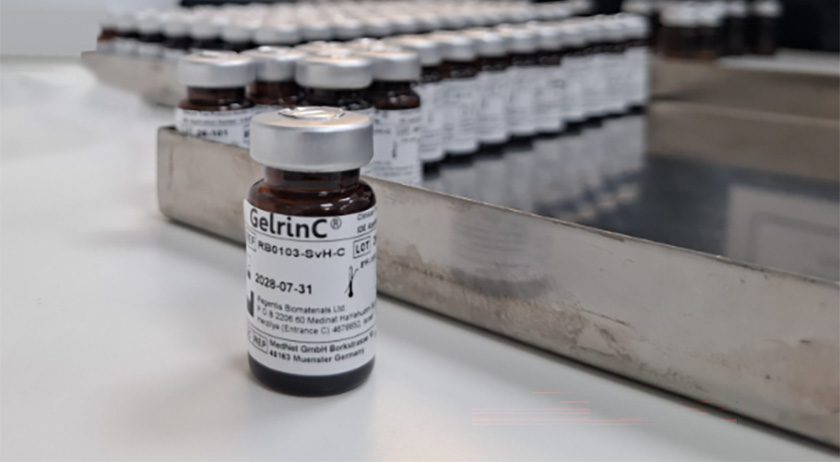
CERAMENT G is an injectable, biphasic bone graft substitute (60% calcium sulfate, 40% hydroxyapatite) that elutes gentamicin while remodeling into host bone over approximately 6 to 12 months. The product is used to fill “dead space” while delivering high concentrations of gentamicin directly to the site. At launch, CERAMENT G was labeled for use in the surgical treatment of osteomyelitis in the extremities. In 2024, labeling was expanded to include use as an adjunct to systemic antibiotics in the management of open fractures. Revenues for CERAMENT G are expected to exceed $100 million in 2026, representing 40% annual growth.
Recent clinical data further strengthen CERAMENT G’s commercial positioning. In September 2026, the New England Journal of Medicine published results from the 500-patient SOLARIO trial (non-industry-sponsored), in which patients with bone infections were treated with a locally implanted antibiotic carrier and a seven-day course of systemic antibiotics.
The majority of patients were treated with CERAMENT G (56%) and compared to those who received a standard course of systemic antibiotics lasting for four weeks or more. At one-year follow-up, success rates were comparable between the two groups, and patients receiving a shorter course of systemic antibiotics had significantly fewer antibiotic-related side effects. These results support broader use of antibiotic-eluting bone substitutes, such as CERAMENT G.
OSTAGUARD (Orthobond)
OSTAGUARD is a non-eluting antibacterial surface treatment developed by Orthobond. Rather than releasing an antibiotic, OSTAGUARD uses a proprietary quaternary ammonium compound coating to mechanically rupture the cell walls of bacteria that come in contact with the implant surface. OSTAGUARD is applied to the device surface during manufacturing before packaging and sterilization. Its intended purpose is to reduce microbial contamination on the surface of the device prior to implantation, not to treat an established infection.
In April 2024, FDA granted the first-ever De Novo request for a non-eluting coating designed to actively kill bacteria on the surface of a medical device. The first commercial application was Orthofix’s (formerly SeaSpine) Mariner pedicle screw system treated with OSTAGUARD. FDA also granted a second De Novo to Onkos Surgical’s ELEOSx Limb Salvage System, which uses the same surface treatment, marketed under the brand NanoCept.
Product Development Landscape
The pipeline of antimicrobial products spans several categories, including antibiotic-eluting bone graft substitutes, surface-modified permanent implants, drug delivery technologies, and novel drugs and biologics specifically designed to treat PJI. Below we spotlight selected programs across these technological areas.
CERAMENT V (BONESUPPORT)
CERAMENT V, a vancomycin-eluting version of the same CERAMENT platform material, has been used clinically in Europe since 2015. Vancomycin is a standard first-line treatment for gram-positive infections, including those caused by Staphylococcus aureus and MRSA, pathogens frequently implicated in difficult-to-treat bone infections. BONESUPPORT originally filed CERAMENT V with FDA under the 510(k) pathway in April 2025, then transferred the application to the De Novo pathway in December 2025 after the agency indicated the product represents a new device category. FDA’s review is ongoing, with a final decision expected by early 2027.
genex G and STIMULAN VG (Biocomposites)
Biocomposites’ genex G combines biphasic calcium sulfate/beta-tricalcium phosphate bone graft with gentamicin. ADOPT GG, a 139-patient pivotal study in extremity osteomyelitis, began enrolling in mid-2026. Separately, Biocomposites is developing STIMULAN VG, which combines STIMULAN calcium sulfate beads with vancomycin and gentamicin. A 60-patient Phase 2 trial in diabetic foot osteomyelitis has completed enrollment. A second 60-patient clinical study with STIMULAN VG for osteomyelitis associated with pressure ulcers is currently enrolling.
Xerafuse TOB (Moroxite AB)
Xerafuse TOB is a tobramycin-eluting bone graft extender intended for spinal fusion surgery. The base material is a composite of calcium sulfate and submicron-textured hydroxyapatite. Moroxite is an early-stage company, and limited information about its development progress is publicly available. That said, Xerafuse TOB received Breakthrough Device Designation from FDA in November 2026, which positions it for expedited FDA review and signals active development.
iTaperloc Complete and iG7 (Zimmer Biomet)
The iTaperloc Complete stem and iG7 Hip System together form a total hip replacement system with a controlled-release, iodine-treated surface technology. The iodine layer is integrated during manufacturing and designed to inhibit bacterial adhesion and biofilm formation, reducing the risk of PJI. Because iodine is an antiseptic, it does not contribute to antibiotic resistance. The product was approved for commercial use in Japan in 2025 and remains in development for the U.S. market.
NEXCHANGE (Osteal Therapeutics)
NEXCHANGE is an implantable arthroplasty spacer designed to treat PJI of the hip or knee. Once implanted, the device automatically delivers alternating irrigation cycles of vancomycin and tobramycin to flush the surrounding tissue. After seven days, the spacer is removed and exchange arthroplasty can be performed. The key intended benefit is a much shorter interval to exchange arthroplasty compared with up to six weeks with the current standard of care. Osteal sought FDA marketing approval supported by data from its APEX and APEX-2 trials, which together enrolled 152 patients. In July 2026, however, FDA issued a Complete Response Letter indicating the product is not currently approvable, citing irregularities in the conduct of the clinical trials and evidence of an increased risk of fungal infection among treated patients. The decision is a significant setback that raises questions about the future of both the program and the technology.
PLG0206 (Peptilogics)
PLG0206 is an engineered cationic antimicrobial peptide designed to penetrate and disrupt bacterial biofilm, a primary reason PJI resists treatment. Rather than requiring removal of the infected implant, PLG0206 is applied as a 15- to 18-minute intra-articular irrigation as part of an implant retention procedure. In a 14-patient Phase 1b study, 86% of patients remained infection-free with their prosthesis retained at 12 months. The randomized, triple-blind, placebo-controlled Phase 2/3 RETAIN registration trial enrolled its first patient in March 2026 and plans to enroll 240 patients.
Novel Drug and Biologic Products
Other notable PJI programs include Trellis Bioscience’s calpurbatug (TRL1068), an anti-biofilm monoclonal antibody whose Phase 2 trial is fully enrolled with topline results expected in Q2 2027. TenNor Therapeutics’ rifaquizinone, a rifamycin-quinolizinone conjugate that reported positive data from a proof-of-concept study in September 2026. Additionally, Armata Pharmaceuticals and Phagenix are developing bacteriophages—viruses that target and kill specific bacteria but do not infect human cells—as alternatives to antibiotics in PJI management.
In Summary
Local antibiotic delivery has evolved from a surgeon-driven practice into an established product category, with CERAMENT G as the clear leader. A favorable De Novo decision for CERAMENT V, expected in 2027, would further reinforce BONESUPPORT’s dominant market position.
Meanwhile, Biocomposites continues to advance its two antibiotic-eluting products: genex G and STIMULAN VG. Orthobond’s OSTAGUARD and Zimmer Biomet’s iodine-treated implants take a different technological approach, leveraging surface treatments to reduce infection risk.
In PJI, Peptilogics appears closest to FDA approval, with several competitors also pursuing implant-sparing treatments that could ultimately reshape the standard of care for one of orthopedics’ most feared complications.
James Petricek, MSE, MBA is a Senior Principal at Dark Horse Consulting Regenerative Medicine (DHCRM), where he leads engagements in product strategy, business analytics, market assessment, financial modeling, and due diligence. Additionally, he directs DHCRM’s orthobiologic market research practice, tracking emerging trends and innovations in bone, tendon, ligament, cartilage, osteoarthritis, and intervertebral disc regeneration.
Scott Bruder, MD, PhD, FORS is the General Manager of Dark Horse Consulting Regenerative Medicine, which was formed through the acquisition of Bruder Consulting & Venture Group. DHCRM has completed over 1,000 projects for more than 150 client partners located worldwide in the field of regenerative medicine.
Infection is among the most devastating and costly complications in orthopedic surgery.
Despite advances in surgical technique and modern infection prevention protocols, periprosthetic joint infection (PJI) occurs in more than 1% of primary hip and knee replacements and in up to 9% of revision procedures. Based on these rates, PJI affects an...
Infection is among the most devastating and costly complications in orthopedic surgery.
Despite advances in surgical technique and modern infection prevention protocols, periprosthetic joint infection (PJI) occurs in more than 1% of primary hip and knee replacements and in up to 9% of revision procedures. Based on these rates, PJI affects an estimated 30,000 to 35,000 patients annually in the United States alone. In addition, there are more than 100,000 annual cases of osteomyelitis arising from open fractures, infected diabetic foot ulcers, and following placement of orthopedic and spine hardware.
Both PJI and osteomyelitis are serious conditions that typically require surgical debridement and prolonged administration of systemic antibiotics. Severe osteomyelitis cases may require inpatient care, and PJI patients are frequently managed with exchange arthroplasty. At their worst, such infections may lead to amputation.
Failure rates with the current standard of care, the toxicity associated with prolonged systemic antibiotics, and the emergence of resistant microbial strains have driven the development of antibiotic-eluting implants and new classes of drugs and biologics designed specifically to treat orthopedic-related infections. This review summarizes the commercial landscape, key developments and emerging technologies shaping the U.S. orthopedic and spine antimicrobial market.
Currently Available Technologies
Today, orthopedic surgeons have a limited, but growing number of products for antimicrobial management. Antibiotic-loaded polymethyl methacrylate (PMMA) bone cement is the most established product in this category, but is labeled only for revision arthroplasty. Calcium sulfate beads in combination with antibiotics are widely used, but represent an off-label use of the product.
In 2022, BONESUPPORT’s CERAMENT G became the only bone graft substitute specifically labeled for local antibiotic delivery. This regulatory advancement turned into a commercial success, with CERAMENT G becoming one of the largest revenue-generating bone grafting products on the market. Orthobond’s OSTAGUARD antimicrobial surface treatment is a notable new entrant, though its clinical uptake remains to be seen. Despite these options, no product is specifically labeled for the treatment of PJI.
Antibiotic-Loaded Bone Cement and Calcium Sulfate Beads
Antibiotic-loaded versions of traditional PMMA bone cement are the most widely used and best understood antimicrobial products in orthopedics. These products serve the dual function of reducing the risk of PJI while providing immediate mechanical fixation for the implant. Leading products include Stryker’s Simplex P with Tobramycin and Heraeus Medical’s PALACOS R+G. However, FDA labeling for those products is narrow, limited to the second stage of a two-stage revision arthroplasty after the infection has cleared.
Similarly, the practice of combining rapidly dissolving calcium sulfate beads with antibiotics and implanting them at the site of an active infection is commonplace in orthopedic surgery. Calcium sulfate has been used in surgery for over a century, and FDA first cleared these products as bone void fillers 30 years ago. However, use of calcium sulfate beads as a carrier for antibiotics is an off-label use in the United States, despite widespread acceptance within the clinical community. Per FDA rules, manufacturers are prohibited from promoting calcium sulfate for this purpose, creating a modest impediment to surgeon education and adoption.
CERAMENT G (BONESUPPORT)
CERAMENT G is an injectable, biphasic bone graft substitute (60% calcium sulfate, 40% hydroxyapatite) that elutes gentamicin while remodeling into host bone over approximately 6 to 12 months. The product is used to fill “dead space” while delivering high concentrations of gentamicin directly to the site. At launch, CERAMENT G was labeled for use in the surgical treatment of osteomyelitis in the extremities. In 2024, labeling was expanded to include use as an adjunct to systemic antibiotics in the management of open fractures. Revenues for CERAMENT G are expected to exceed $100 million in 2026, representing 40% annual growth.
Recent clinical data further strengthen CERAMENT G’s commercial positioning. In September 2026, the New England Journal of Medicine published results from the 500-patient SOLARIO trial (non-industry-sponsored), in which patients with bone infections were treated with a locally implanted antibiotic carrier and a seven-day course of systemic antibiotics.
The majority of patients were treated with CERAMENT G (56%) and compared to those who received a standard course of systemic antibiotics lasting for four weeks or more. At one-year follow-up, success rates were comparable between the two groups, and patients receiving a shorter course of systemic antibiotics had significantly fewer antibiotic-related side effects. These results support broader use of antibiotic-eluting bone substitutes, such as CERAMENT G.
OSTAGUARD (Orthobond)
OSTAGUARD is a non-eluting antibacterial surface treatment developed by Orthobond. Rather than releasing an antibiotic, OSTAGUARD uses a proprietary quaternary ammonium compound coating to mechanically rupture the cell walls of bacteria that come in contact with the implant surface. OSTAGUARD is applied to the device surface during manufacturing before packaging and sterilization. Its intended purpose is to reduce microbial contamination on the surface of the device prior to implantation, not to treat an established infection.
In April 2024, FDA granted the first-ever De Novo request for a non-eluting coating designed to actively kill bacteria on the surface of a medical device. The first commercial application was Orthofix’s (formerly SeaSpine) Mariner pedicle screw system treated with OSTAGUARD. FDA also granted a second De Novo to Onkos Surgical’s ELEOSx Limb Salvage System, which uses the same surface treatment, marketed under the brand NanoCept.
Product Development Landscape
The pipeline of antimicrobial products spans several categories, including antibiotic-eluting bone graft substitutes, surface-modified permanent implants, drug delivery technologies, and novel drugs and biologics specifically designed to treat PJI. Below we spotlight selected programs across these technological areas.
CERAMENT V (BONESUPPORT)
CERAMENT V, a vancomycin-eluting version of the same CERAMENT platform material, has been used clinically in Europe since 2015. Vancomycin is a standard first-line treatment for gram-positive infections, including those caused by Staphylococcus aureus and MRSA, pathogens frequently implicated in difficult-to-treat bone infections. BONESUPPORT originally filed CERAMENT V with FDA under the 510(k) pathway in April 2025, then transferred the application to the De Novo pathway in December 2025 after the agency indicated the product represents a new device category. FDA’s review is ongoing, with a final decision expected by early 2027.
genex G and STIMULAN VG (Biocomposites)
Biocomposites’ genex G combines biphasic calcium sulfate/beta-tricalcium phosphate bone graft with gentamicin. ADOPT GG, a 139-patient pivotal study in extremity osteomyelitis, began enrolling in mid-2026. Separately, Biocomposites is developing STIMULAN VG, which combines STIMULAN calcium sulfate beads with vancomycin and gentamicin. A 60-patient Phase 2 trial in diabetic foot osteomyelitis has completed enrollment. A second 60-patient clinical study with STIMULAN VG for osteomyelitis associated with pressure ulcers is currently enrolling.
Xerafuse TOB (Moroxite AB)
Xerafuse TOB is a tobramycin-eluting bone graft extender intended for spinal fusion surgery. The base material is a composite of calcium sulfate and submicron-textured hydroxyapatite. Moroxite is an early-stage company, and limited information about its development progress is publicly available. That said, Xerafuse TOB received Breakthrough Device Designation from FDA in November 2026, which positions it for expedited FDA review and signals active development.
iTaperloc Complete and iG7 (Zimmer Biomet)
The iTaperloc Complete stem and iG7 Hip System together form a total hip replacement system with a controlled-release, iodine-treated surface technology. The iodine layer is integrated during manufacturing and designed to inhibit bacterial adhesion and biofilm formation, reducing the risk of PJI. Because iodine is an antiseptic, it does not contribute to antibiotic resistance. The product was approved for commercial use in Japan in 2025 and remains in development for the U.S. market.
NEXCHANGE (Osteal Therapeutics)
NEXCHANGE is an implantable arthroplasty spacer designed to treat PJI of the hip or knee. Once implanted, the device automatically delivers alternating irrigation cycles of vancomycin and tobramycin to flush the surrounding tissue. After seven days, the spacer is removed and exchange arthroplasty can be performed. The key intended benefit is a much shorter interval to exchange arthroplasty compared with up to six weeks with the current standard of care. Osteal sought FDA marketing approval supported by data from its APEX and APEX-2 trials, which together enrolled 152 patients. In July 2026, however, FDA issued a Complete Response Letter indicating the product is not currently approvable, citing irregularities in the conduct of the clinical trials and evidence of an increased risk of fungal infection among treated patients. The decision is a significant setback that raises questions about the future of both the program and the technology.
PLG0206 (Peptilogics)
PLG0206 is an engineered cationic antimicrobial peptide designed to penetrate and disrupt bacterial biofilm, a primary reason PJI resists treatment. Rather than requiring removal of the infected implant, PLG0206 is applied as a 15- to 18-minute intra-articular irrigation as part of an implant retention procedure. In a 14-patient Phase 1b study, 86% of patients remained infection-free with their prosthesis retained at 12 months. The randomized, triple-blind, placebo-controlled Phase 2/3 RETAIN registration trial enrolled its first patient in March 2026 and plans to enroll 240 patients.
Novel Drug and Biologic Products
Other notable PJI programs include Trellis Bioscience’s calpurbatug (TRL1068), an anti-biofilm monoclonal antibody whose Phase 2 trial is fully enrolled with topline results expected in Q2 2027. TenNor Therapeutics’ rifaquizinone, a rifamycin-quinolizinone conjugate that reported positive data from a proof-of-concept study in September 2026. Additionally, Armata Pharmaceuticals and Phagenix are developing bacteriophages—viruses that target and kill specific bacteria but do not infect human cells—as alternatives to antibiotics in PJI management.
In Summary
Local antibiotic delivery has evolved from a surgeon-driven practice into an established product category, with CERAMENT G as the clear leader. A favorable De Novo decision for CERAMENT V, expected in 2027, would further reinforce BONESUPPORT’s dominant market position.
Meanwhile, Biocomposites continues to advance its two antibiotic-eluting products: genex G and STIMULAN VG. Orthobond’s OSTAGUARD and Zimmer Biomet’s iodine-treated implants take a different technological approach, leveraging surface treatments to reduce infection risk.
In PJI, Peptilogics appears closest to FDA approval, with several competitors also pursuing implant-sparing treatments that could ultimately reshape the standard of care for one of orthopedics’ most feared complications.
James Petricek, MSE, MBA is a Senior Principal at Dark Horse Consulting Regenerative Medicine (DHCRM), where he leads engagements in product strategy, business analytics, market assessment, financial modeling, and due diligence. Additionally, he directs DHCRM’s orthobiologic market research practice, tracking emerging trends and innovations in bone, tendon, ligament, cartilage, osteoarthritis, and intervertebral disc regeneration.
Scott Bruder, MD, PhD, FORS is the General Manager of Dark Horse Consulting Regenerative Medicine, which was formed through the acquisition of Bruder Consulting & Venture Group. DHCRM has completed over 1,000 projects for more than 150 client partners located worldwide in the field of regenerative medicine.

You’ve reached your limit.
We’re glad you’re finding value in our content — and we’d love for you to keep going.
Subscribe now for unlimited access to orthopedic business intelligence.