Copy to clipboard
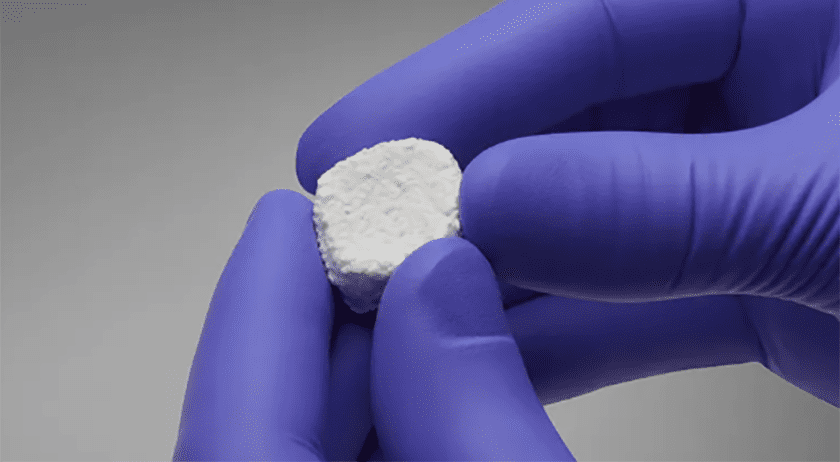
Zavation Medical Products is releasing an integration of NanoPrime Titanium Ion Bond Technology with the company’s proprietary Labyrinth porous PEEK architecture. This combination is engineered to elevate the mechanical advantages of PEEK with the biological benefits of titanium.
NanoPrime utilizes a nano-engineering process involving evaporation and ion beam bombardment in a high vacuum environment. As an alternative to conventional coatings, the technique allows intermixing of coating and substrate atoms, with the intent to improve adhesion and minimize risk of delamination.
Rather than relying on a single material’s strengths, the NanoPrime Labyrinth Cervical interbody leverages the complementary benefits of two technologies:
- NanoPrime, a nano-textured titanium ion bond surface, creates a high-adhesion, nano-textured surface shown to support cellular activity associated with bone formation.
- Labyrinth, Zavation’s patented porous PEEK structure, designed to mimic cancellous bone architecture and improve the biological response compared to smooth PEEK or traditional solid structures.
Combined, these technologies deliver an implant platform that maintains the imaging clarity and elastic modulus of PEEK while introducing an osteoconductive nano-surface intended to promote early cell attachment, induce hydrophilic wicking, and reduce stress shielding.
Derek Kuyper, Chief Executive Officer of Zavation, said, “By integrating NanoPrime and Labyrinth technologies into our cervical line, we’re offering a world first interbody cage with the macro, micro, and nano level features of 3D Titanium with the imaging characteristics and device stiffness of PEEK, the best of both in one device.”
Source: Zavation Medical Products, LLC
Zavation Medical Products is releasing an integration of NanoPrime Titanium Ion Bond Technology with the company's proprietary Labyrinth porous PEEK architecture. This combination is engineered to elevate the mechanical advantages of PEEK with the biological benefits of titanium.
NanoPrime utilizes a nano-engineering process involving...
Zavation Medical Products is releasing an integration of NanoPrime Titanium Ion Bond Technology with the company’s proprietary Labyrinth porous PEEK architecture. This combination is engineered to elevate the mechanical advantages of PEEK with the biological benefits of titanium.
NanoPrime utilizes a nano-engineering process involving evaporation and ion beam bombardment in a high vacuum environment. As an alternative to conventional coatings, the technique allows intermixing of coating and substrate atoms, with the intent to improve adhesion and minimize risk of delamination.
Rather than relying on a single material’s strengths, the NanoPrime Labyrinth Cervical interbody leverages the complementary benefits of two technologies:
- NanoPrime, a nano-textured titanium ion bond surface, creates a high-adhesion, nano-textured surface shown to support cellular activity associated with bone formation.
- Labyrinth, Zavation’s patented porous PEEK structure, designed to mimic cancellous bone architecture and improve the biological response compared to smooth PEEK or traditional solid structures.
Combined, these technologies deliver an implant platform that maintains the imaging clarity and elastic modulus of PEEK while introducing an osteoconductive nano-surface intended to promote early cell attachment, induce hydrophilic wicking, and reduce stress shielding.
Derek Kuyper, Chief Executive Officer of Zavation, said, “By integrating NanoPrime and Labyrinth technologies into our cervical line, we’re offering a world first interbody cage with the macro, micro, and nano level features of 3D Titanium with the imaging characteristics and device stiffness of PEEK, the best of both in one device.”
Source: Zavation Medical Products, LLC

You’ve reached your limit.
We’re glad you’re finding value in our content — and we’d love for you to keep going.
Subscribe now for unlimited access to orthopedic business intelligence.

JV
Julie Vetalice is ORTHOWORLD's Editorial Assistant. She has covered the orthopedic industry for over 20 years, having joined the company in 1999.