

 Copy to clipboard
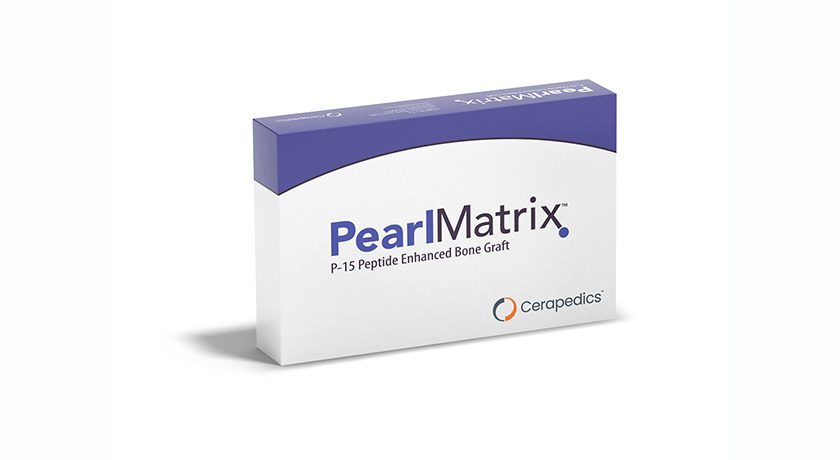
Cerapedics announced the publication of two back-to-back papers in Spine detailing 24-month outcomes from the ASPIRE pivotal U.S. Investigational Device Exemption (IDE) study of PearlMatrix P-15 Peptide Enhanced Bone Graft. Results demonstrated that PearlMatrix achieved statistically superior clinical success and statistically faster time-to-fusion compared to local autograft when used in single-level transforaminal lumbar interbody fusion (TLIF) surgery in adult patients with degenerative disc disease.
ASPIRE was a prospective, single-blinded, multicentre, randomized, controlled pivotal U.S. IDE study that evaluated the safety and efficacy of PearlMatrix compared to use of local autograft bone graft when applied in TLIF. ASPIRE involved 33 U.S. participating centers and enrolled 293 patients, including approximately 60 percent of patients who were considered high-risk for non-union.
The first paper published in Spine evaluated the safety and efficacy of PearlMatrix compared to local autograft when applied in TLIF surgery using the primary outcome of Composite Clinical Success (CCS) at 24 months, which is comprised of five components: fusion, function gains (ODI), neurological success, no serious device-related adverse events, and no index-level secondary surgical interventions. To be considered an overall clinical success for an individual patient, all five components must be met.
PearlMatrix met the primary endpoint of CCS at 24 months and further demonstrated statistical superiority versus local autograft in CCS. Additionally, PearlMatrix was associated with substantially higher fusion rates compared to local autograft at 24 months. There were no significant differences between treatment groups with respect to ODI improvement, neurological deficits (motor and sensory), and serious device-related adverse events.
The second paper published in Spine evaluated secondary endpoints of PearlMatrix compared to local autograft through 24 months following TLIF procedure, including time-to-fusion using Kaplan-Meier survival analysis, back and leg pain measured by the Visual Analog Scale (VAS) and quality of life assessed using the Short Form Survey.
At 6 months, PearlMatrix demonstrated that more than twice as many patients were fused compared to local autograft. Higher time-to-fusion rates continued through to 12 months and 24 months resulting in statistically faster time-to-fusion. PearlMatrix also produced significant improvements compared to baseline in pain reduction and quality of life 24 months after single-level TLIF surgery, with outcomes similar to those achieved with local autograft.
“The publication of the ASPIRE study results in Spine underscores the strength of our clinical data for PearlMatrix as the first and only drug/device spinal bone graft product proven to accelerate lumbar fusion in patients with degenerative disc disease,” said Valeska Schroeder, PhD, Chief Executive Officer of Cerapedics. “Cerapedics is dedicated to robust human clinical evidence to help surgeons provide safe and effective treatment options for their patients.”
Source: Cerapedics
Cerapedics announced the publication of two back-to-back papers in Spine detailing 24-month outcomes from the ASPIRE pivotal U.S. Investigational Device Exemption (IDE) study of PearlMatrix P-15 Peptide Enhanced Bone Graft. Results demonstrated that PearlMatrix achieved statistically superior clinical success and statistically faster...
Cerapedics announced the publication of two back-to-back papers in Spine detailing 24-month outcomes from the ASPIRE pivotal U.S. Investigational Device Exemption (IDE) study of PearlMatrix P-15 Peptide Enhanced Bone Graft. Results demonstrated that PearlMatrix achieved statistically superior clinical success and statistically faster time-to-fusion compared to local autograft when used in single-level transforaminal lumbar interbody fusion (TLIF) surgery in adult patients with degenerative disc disease.
ASPIRE was a prospective, single-blinded, multicentre, randomized, controlled pivotal U.S. IDE study that evaluated the safety and efficacy of PearlMatrix compared to use of local autograft bone graft when applied in TLIF. ASPIRE involved 33 U.S. participating centers and enrolled 293 patients, including approximately 60 percent of patients who were considered high-risk for non-union.
The first paper published in Spine evaluated the safety and efficacy of PearlMatrix compared to local autograft when applied in TLIF surgery using the primary outcome of Composite Clinical Success (CCS) at 24 months, which is comprised of five components: fusion, function gains (ODI), neurological success, no serious device-related adverse events, and no index-level secondary surgical interventions. To be considered an overall clinical success for an individual patient, all five components must be met.
PearlMatrix met the primary endpoint of CCS at 24 months and further demonstrated statistical superiority versus local autograft in CCS. Additionally, PearlMatrix was associated with substantially higher fusion rates compared to local autograft at 24 months. There were no significant differences between treatment groups with respect to ODI improvement, neurological deficits (motor and sensory), and serious device-related adverse events.
The second paper published in Spine evaluated secondary endpoints of PearlMatrix compared to local autograft through 24 months following TLIF procedure, including time-to-fusion using Kaplan-Meier survival analysis, back and leg pain measured by the Visual Analog Scale (VAS) and quality of life assessed using the Short Form Survey.
At 6 months, PearlMatrix demonstrated that more than twice as many patients were fused compared to local autograft. Higher time-to-fusion rates continued through to 12 months and 24 months resulting in statistically faster time-to-fusion. PearlMatrix also produced significant improvements compared to baseline in pain reduction and quality of life 24 months after single-level TLIF surgery, with outcomes similar to those achieved with local autograft.
“The publication of the ASPIRE study results in Spine underscores the strength of our clinical data for PearlMatrix as the first and only drug/device spinal bone graft product proven to accelerate lumbar fusion in patients with degenerative disc disease,” said Valeska Schroeder, PhD, Chief Executive Officer of Cerapedics. “Cerapedics is dedicated to robust human clinical evidence to help surgeons provide safe and effective treatment options for their patients.”
Source: Cerapedics

You’ve reached your limit.
We’re glad you’re finding value in our content — and we’d love for you to keep going.
Subscribe now for unlimited access to orthopedic business intelligence.

PM
Patrick McGuire is an ORTHOWORLD Contributor.