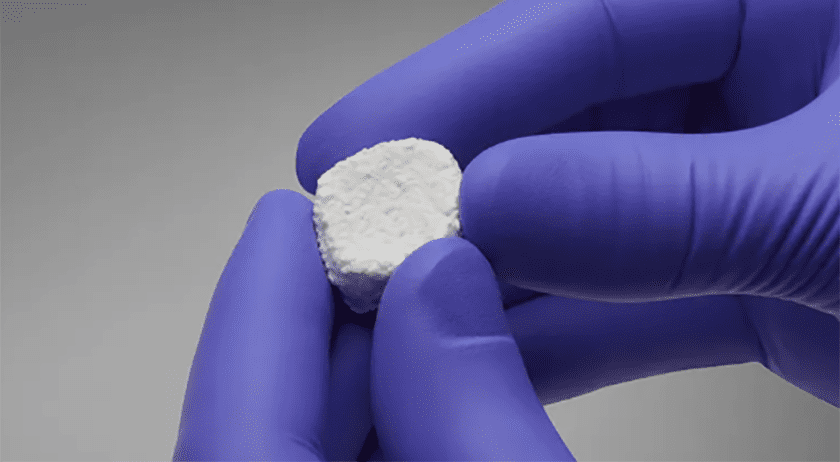
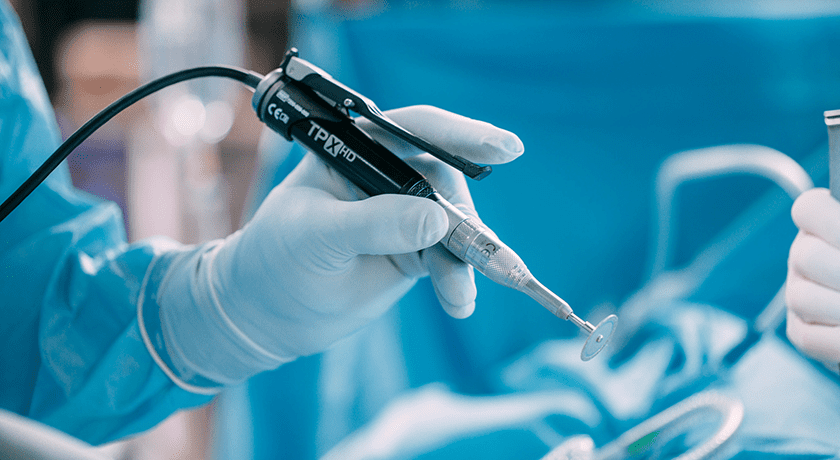
Studies indicate that RTI Surgical’s TETRAfuse® PEKK implants demonstrated bone ingrowth, no radiographic interference, no fibrotic tissue membrane formation, a significant increase in bony apposition over time and a significantly higher push-out strength vs. standard polyetheretherketone (PEEK).
PEEK and titanium-coated PEEK are commonly used in spinal interbody implants. However, surface delamination and lack of bone apposition have led to research into additional materials, such as TETRAfuse 3D Technology featured in RTI’s Fortilink® Interbody Fusion Systems. Its nano-rough surface and antibacterial characteristics are designed to participate in fusion without compromising mechanical integrity or radiographic visibility.
In the ovine study, implants were analyzed at 8 and 16 weeks with respect to their osseointegrative capacities using a push-out method, histological staining and radiographic tests.
In 2Q19, RTI announced a milestone of 5,000 implants of Fortilink-C, -TS and -L IBF Systems with TETRAfuse 3D Technology in the U.S.
Studies indicate that RTI Surgical's TETRAfuse® PEKK implants demonstrated bone ingrowth, no radiographic interference, no fibrotic tissue membrane formation, a significant increase in bony apposition over time and a significantly higher push-out strength vs. standard polyetheretherketone (PEEK).
PEEK and titanium-coated PEEK are commonly used...
Studies indicate that RTI Surgical’s TETRAfuse® PEKK implants demonstrated bone ingrowth, no radiographic interference, no fibrotic tissue membrane formation, a significant increase in bony apposition over time and a significantly higher push-out strength vs. standard polyetheretherketone (PEEK).
PEEK and titanium-coated PEEK are commonly used in spinal interbody implants. However, surface delamination and lack of bone apposition have led to research into additional materials, such as TETRAfuse 3D Technology featured in RTI’s Fortilink® Interbody Fusion Systems. Its nano-rough surface and antibacterial characteristics are designed to participate in fusion without compromising mechanical integrity or radiographic visibility.
In the ovine study, implants were analyzed at 8 and 16 weeks with respect to their osseointegrative capacities using a push-out method, histological staining and radiographic tests.
In 2Q19, RTI announced a milestone of 5,000 implants of Fortilink-C, -TS and -L IBF Systems with TETRAfuse 3D Technology in the U.S.
You’ve reached your limit.
We’re glad you’re finding value in our content — and we’d love for you to keep going.
Subscribe now for unlimited access to orthopedic business intelligence.
Mike Evers is a Senior Market Analyst and writer with over 15 years of experience in the medical industry, spanning cardiac rhythm management, ER coding and billing, and orthopedics. He joined ORTHOWORLD in 2018, where he provides market analysis and editorial coverage.


 Copy to clipboard