

 Copy to clipboard
In the first half of the year, FDA’s 510(k) database logged 271 orthopedic-related clearances from OEM companies, including 22 from companies earning their first clearance. The 10 selected here represent entries into the subsegments of spine, trauma, sports medicine, orthobiologics and enabling technologies.
ArthroTAK Tendon Anchor Kit
510(k) Number: K252635
The kit is a sterile, single-use, sutureless soft-tissue-to-bone fixation system. A PEEK implant is delivered through the tendon and into bone in a single, mallet-driven step, then locked into place by simple clockwise rotation of the inserter knob. The system eliminates the need for sutures, suture passers, knot-tying, or power equipment, reducing surgical complexity and procedural time. ArthroTAK is actively evaluating the modular fixation platform for additional sports medicine applications.
The company, located in Orlando, Florida, was founded in 2025 and operates under the medical technology venture studio, Exodus New Ventures. Leadership brings experience across orthopedics, including the supplier side and venture capital, as well as OEMs that include Biomet/Zimmer Biomet, BioPoly, DePuy, DVO Extremity Solutions, Medartis, and Tornier.
Biomendex AdaptosFuse Bone Graft
510(k) Number: K253524
Adaptos Fuse is indicated for use in surgically created osseous defects and defects resulting from traumatic injury, including applications in the posterolateral spine, intervertebral disc space, and the pelvic area. The material is designed to resorb over time and be replaced by bone during the natural healing process. The platform has been utilized in more than 2,700 veterinary orthopedic and dental procedures.
This marks Biomendex’s entry into the U.S. bone graft substitute market. Biomendex, founded in 2018, is based in Tampere, Finland, and its initial research was conducted at Tampere University. As of 2019, the company has raised $2.6 million in funding from the European Innovation Council.
BlueOcean Global Excelsior System
510(k) Number: K253291
Excelsior is a next-gen circular external fixation platform designed to support bone reconstruction and soft tissue management within a single system. It was developed to address clinical complexity associated with diabetes, vascular disease, infection, trauma and chronic non-healing wounds. These conditions often require coordinated management of skeletal stability and vulnerable soft tissue.
The system is guided by FASTR (Fixator Assisted Soft Tissue Repair), a procedural framework that incorporates soft tissue protection, offloading and support directly into the external fixation construct rather than treating soft tissue management as a separate phase of care.
BlueOcean was founded in 2021 and is headquartered in Miami, Florida. Leadership and staff bring experience from FDA, Arthrex, Biomimetic Therapeutics, Bioventus, CONMED, Medtronic, Misonix, Orchid, Small Bone Innovations and Smith+Nephew.
BoxSpine DUET Spinal Fixation System
510(k) Number: K253169
DUET is a 3-piece stabilization system designed to eliminate the need for traditional rods. A halo device captures a spherical implant head, creating 360° contact and allowing 35° to 60° of articulation, depending on patient anatomy. The components are secured with a locking cap that engages directly with the implant. The platform is streamlined, with minimal SKUs and a disposable, single-use sterile instrument kit.
Formed in 2021, BoxSpine works with technology providers to bring tools, including spinal navigation systems, directly to ASCs. Leadership has held past roles at numerous distributorships, as well as PathKeeper, SpineCraft, SpineGuard and WishBone Medical.
McNicoll Surgical Falco Fusion System
510(k) Number: K253611
Falco is designed for minimally invasive sacroiliac joint fusion in patients with SI joint disruption or degenerative sacroiliitis and is suitable for ambulatory surgery settings. Falco comprises titanium alloy screws in 11mm and 13mm diameters, with lengths ranging from 35mm to 75mm. The system comes with disposable Kirschner wires and reusable surgical instruments.
McNicoll was founded in 2023 and is headquartered in Quebec City, Canada. Leadership brings over 12 combined years of experience in roles at Bodycad. The company holds Scottish origins and has its own corporate tartan registered with The Scottish Register of Tartans.
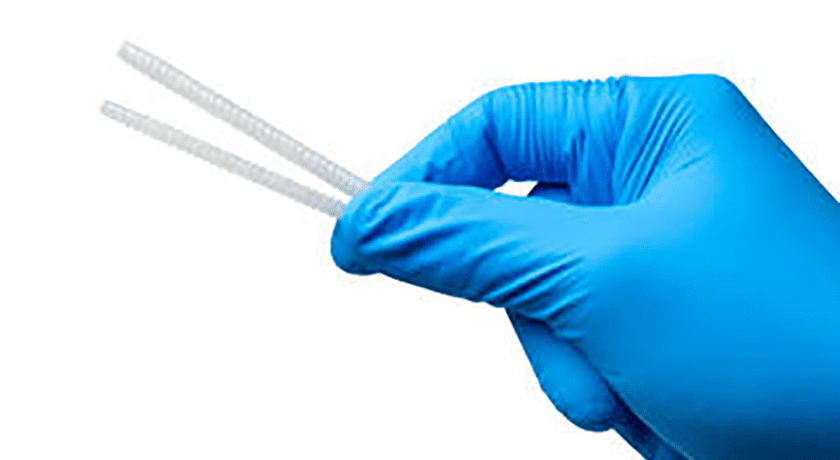
Movmedix LARS ACJ
510(k) Number: K253115
Made from biocompatible polyethylene terephthalate (PET), LARS ACJ (acromioclavicular joint) is a 3rd-generation synthetic implant. The knitted surgical scaffold provides fixation following syndesmotic trauma and includes the LARS Screws and dedicated surgical instruments.
The clearance marks the launch of a platform that has transformed ligament reconstruction and reinforcement across multiple anatomical indications for more than three decades. LARS technologies support more than 11 clinical indications and have been implanted in more than 250,000 patients worldwide. Additional products from the LARS portfolio are already planned for future FDA submissions.
Movmedix was founded in 1992 under the name of L.A.R.S. (Laboratoire d’Application et de Recherche Scientifique). The background of leadership and staff includes ApaTech, Bioventus, EOS Imaging, Orthofix, Stryker and Zimmer Biomet.
Orthomod MOD-C Cervical Implant
510(k) Number: K242303
The clearance marks the introduction of the calcium-acrylic modified polymer (CAMP), a composite of an acrylic polymer and synthetic beta-tricalcium phosphate/hydroxyapatite designed with a broad range of potential applications in spine, reconstructive orthopedics, dentistry, sports medicine, etc. The MOD-C implant family is planned for clinical launch in 2H26.
Orthomod, founded in 2023, is headquartered in Dayton, Ohio. A seed round of funding is in progress as of May 2026, and leadership brings experience from roles at companies that include Johnson & Johnson (Ethicon Endo-Surgery) and X-spine Systems/Xtant Medical.
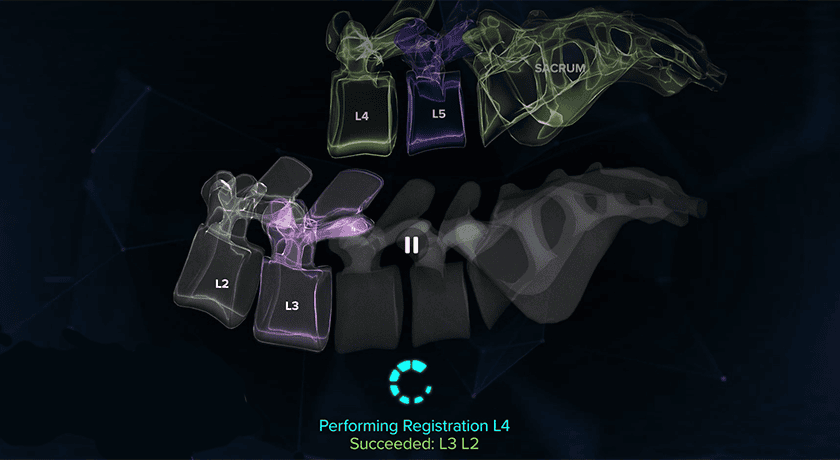
Pytheas Navigation Pytheas Your Guided Trajectory
510(k) Number: K252880
The navigation system is an aid for open pedicle cannulation and screw delivery procedures in the thoracic, lumbar and sacral spine as an augment to a standard surgical technique. Conclusions from a prospective, two-center, single-arm, open-label, first-in-human study recruited revealed that the device provided accurate pedicular screws placement in thoracic, lumbar and sacral levels, with an excellent safety profile and user satisfaction.
The company, based in Marseille, France, was established in 2015.
Reselute Reselute Tibial Nail
510(k) Number: K253517
The nail is intended to stabilize fractures of the proximal and distal tibia and the tibial shaft, open and closed tibial shaft fractures, certain pre- and post-isthmic fractures and tibial malunions and non-unions.
The company is reported to have raised approximately $5.7M in funding, including a seed round and grants. Nondilutive funding from 2025 will support R&D for the Reselution Intramedullary System in expanded indications for orthopedic infection solutions.
Reselute was established in 2022 and is headquartered in Durham, North Carolina. Leadership brings experience from roles at MedShape Solutions, restor3d, Vertera Spine and service on numerous boards.
SDIP Innovations JAZBI Resorbable Bone Void Filler
510(k) Number: K252797
This clearance marks the company’s entry into the U.S. bone graft substitute market and represents the first clearance of a device based on its proprietary, novel JAZBI biomaterial.
The underlying biomaterial has been engineered to enable the tailoring of its physical, mechanical, and biological characteristics to different clinical requirements, creating a foundation for a broader portfolio of regenerative products.
Potential future applications for the material include spine, craniofacial surgery, dental surgery, and soft-tissue reconstruction. SDIP remarks that JAZBI is 32x less expensive than the current gold standard bioresorbable materials, and 5x more cost-effective than ceramics alternatives to manufacture.
Headquartered in Sydney, New South Wales, Australia, the company was founded in 2018. A distinguishing feature of SDIP’s strategy has been its investment in local manufacturing; the company has established comprehensive in-house manufacturing capabilities. In 2025, the company was the recipient of funding from the Australian Government’s Industry Growth Program; total funding to date is approximately US $8 million.
In the first half of the year, FDA’s 510(k) database logged 271 orthopedic-related clearances from OEM companies, including 22 from companies earning their first clearance. The 10 selected here represent entries into the subsegments of spine, trauma, sports medicine, orthobiologics and enabling technologies.
ArthroTAK Tendon Anchor Kit...
In the first half of the year, FDA’s 510(k) database logged 271 orthopedic-related clearances from OEM companies, including 22 from companies earning their first clearance. The 10 selected here represent entries into the subsegments of spine, trauma, sports medicine, orthobiologics and enabling technologies.
ArthroTAK Tendon Anchor Kit
510(k) Number: K252635
The kit is a sterile, single-use, sutureless soft-tissue-to-bone fixation system. A PEEK implant is delivered through the tendon and into bone in a single, mallet-driven step, then locked into place by simple clockwise rotation of the inserter knob. The system eliminates the need for sutures, suture passers, knot-tying, or power equipment, reducing surgical complexity and procedural time. ArthroTAK is actively evaluating the modular fixation platform for additional sports medicine applications.
The company, located in Orlando, Florida, was founded in 2025 and operates under the medical technology venture studio, Exodus New Ventures. Leadership brings experience across orthopedics, including the supplier side and venture capital, as well as OEMs that include Biomet/Zimmer Biomet, BioPoly, DePuy, DVO Extremity Solutions, Medartis, and Tornier.
Biomendex AdaptosFuse Bone Graft
510(k) Number: K253524
Adaptos Fuse is indicated for use in surgically created osseous defects and defects resulting from traumatic injury, including applications in the posterolateral spine, intervertebral disc space, and the pelvic area. The material is designed to resorb over time and be replaced by bone during the natural healing process. The platform has been utilized in more than 2,700 veterinary orthopedic and dental procedures.
This marks Biomendex’s entry into the U.S. bone graft substitute market. Biomendex, founded in 2018, is based in Tampere, Finland, and its initial research was conducted at Tampere University. As of 2019, the company has raised $2.6 million in funding from the European Innovation Council.
BlueOcean Global Excelsior System
510(k) Number: K253291
Excelsior is a next-gen circular external fixation platform designed to support bone reconstruction and soft tissue management within a single system. It was developed to address clinical complexity associated with diabetes, vascular disease, infection, trauma and chronic non-healing wounds. These conditions often require coordinated management of skeletal stability and vulnerable soft tissue.
The system is guided by FASTR (Fixator Assisted Soft Tissue Repair), a procedural framework that incorporates soft tissue protection, offloading and support directly into the external fixation construct rather than treating soft tissue management as a separate phase of care.
BlueOcean was founded in 2021 and is headquartered in Miami, Florida. Leadership and staff bring experience from FDA, Arthrex, Biomimetic Therapeutics, Bioventus, CONMED, Medtronic, Misonix, Orchid, Small Bone Innovations and Smith+Nephew.
BoxSpine DUET Spinal Fixation System
510(k) Number: K253169
DUET is a 3-piece stabilization system designed to eliminate the need for traditional rods. A halo device captures a spherical implant head, creating 360° contact and allowing 35° to 60° of articulation, depending on patient anatomy. The components are secured with a locking cap that engages directly with the implant. The platform is streamlined, with minimal SKUs and a disposable, single-use sterile instrument kit.
Formed in 2021, BoxSpine works with technology providers to bring tools, including spinal navigation systems, directly to ASCs. Leadership has held past roles at numerous distributorships, as well as PathKeeper, SpineCraft, SpineGuard and WishBone Medical.
McNicoll Surgical Falco Fusion System
510(k) Number: K253611
Falco is designed for minimally invasive sacroiliac joint fusion in patients with SI joint disruption or degenerative sacroiliitis and is suitable for ambulatory surgery settings. Falco comprises titanium alloy screws in 11mm and 13mm diameters, with lengths ranging from 35mm to 75mm. The system comes with disposable Kirschner wires and reusable surgical instruments.
McNicoll was founded in 2023 and is headquartered in Quebec City, Canada. Leadership brings over 12 combined years of experience in roles at Bodycad. The company holds Scottish origins and has its own corporate tartan registered with The Scottish Register of Tartans.
Movmedix LARS ACJ
510(k) Number: K253115
Made from biocompatible polyethylene terephthalate (PET), LARS ACJ (acromioclavicular joint) is a 3rd-generation synthetic implant. The knitted surgical scaffold provides fixation following syndesmotic trauma and includes the LARS Screws and dedicated surgical instruments.
The clearance marks the launch of a platform that has transformed ligament reconstruction and reinforcement across multiple anatomical indications for more than three decades. LARS technologies support more than 11 clinical indications and have been implanted in more than 250,000 patients worldwide. Additional products from the LARS portfolio are already planned for future FDA submissions.
Movmedix was founded in 1992 under the name of L.A.R.S. (Laboratoire d’Application et de Recherche Scientifique). The background of leadership and staff includes ApaTech, Bioventus, EOS Imaging, Orthofix, Stryker and Zimmer Biomet.
Orthomod MOD-C Cervical Implant
510(k) Number: K242303
The clearance marks the introduction of the calcium-acrylic modified polymer (CAMP), a composite of an acrylic polymer and synthetic beta-tricalcium phosphate/hydroxyapatite designed with a broad range of potential applications in spine, reconstructive orthopedics, dentistry, sports medicine, etc. The MOD-C implant family is planned for clinical launch in 2H26.
Orthomod, founded in 2023, is headquartered in Dayton, Ohio. A seed round of funding is in progress as of May 2026, and leadership brings experience from roles at companies that include Johnson & Johnson (Ethicon Endo-Surgery) and X-spine Systems/Xtant Medical.
Pytheas Navigation Pytheas Your Guided Trajectory
510(k) Number: K252880
The navigation system is an aid for open pedicle cannulation and screw delivery procedures in the thoracic, lumbar and sacral spine as an augment to a standard surgical technique. Conclusions from a prospective, two-center, single-arm, open-label, first-in-human study recruited revealed that the device provided accurate pedicular screws placement in thoracic, lumbar and sacral levels, with an excellent safety profile and user satisfaction.
The company, based in Marseille, France, was established in 2015.
Reselute Reselute Tibial Nail
510(k) Number: K253517
The nail is intended to stabilize fractures of the proximal and distal tibia and the tibial shaft, open and closed tibial shaft fractures, certain pre- and post-isthmic fractures and tibial malunions and non-unions.
The company is reported to have raised approximately $5.7M in funding, including a seed round and grants. Nondilutive funding from 2025 will support R&D for the Reselution Intramedullary System in expanded indications for orthopedic infection solutions.
Reselute was established in 2022 and is headquartered in Durham, North Carolina. Leadership brings experience from roles at MedShape Solutions, restor3d, Vertera Spine and service on numerous boards.
SDIP Innovations JAZBI Resorbable Bone Void Filler
510(k) Number: K252797
This clearance marks the company’s entry into the U.S. bone graft substitute market and represents the first clearance of a device based on its proprietary, novel JAZBI biomaterial.
The underlying biomaterial has been engineered to enable the tailoring of its physical, mechanical, and biological characteristics to different clinical requirements, creating a foundation for a broader portfolio of regenerative products.
Potential future applications for the material include spine, craniofacial surgery, dental surgery, and soft-tissue reconstruction. SDIP remarks that JAZBI is 32x less expensive than the current gold standard bioresorbable materials, and 5x more cost-effective than ceramics alternatives to manufacture.
Headquartered in Sydney, New South Wales, Australia, the company was founded in 2018. A distinguishing feature of SDIP’s strategy has been its investment in local manufacturing; the company has established comprehensive in-house manufacturing capabilities. In 2025, the company was the recipient of funding from the Australian Government’s Industry Growth Program; total funding to date is approximately US $8 million.

You’ve reached your limit.
We’re glad you’re finding value in our content — and we’d love for you to keep going.
Subscribe now for unlimited access to orthopedic business intelligence.

JV
Julie Vetalice is ORTHOWORLD's Editorial Assistant. She has covered the orthopedic industry for over 20 years, having joined the company in 1999.